Get Full Government Meeting Transcripts, Videos, & Alerts Forever!
Get email alerts on the Mcts Budget Deficit topic
No spam. Unsubscribe anytime.
Milwaukee County transit officials outline $10.9 million 2025 shortfall, propose frequency cuts and other measures
Summary
Milwaukee County Transit System leaders told the County Board’s Transportation and Transit Committee they expect about a $10.9 million shortfall in 2025 driven by people costs, overtime and paratransit contractor performance, and outlined service-frequency reductions, use of federal COVID relief funds and operational changes to narrow the gap.
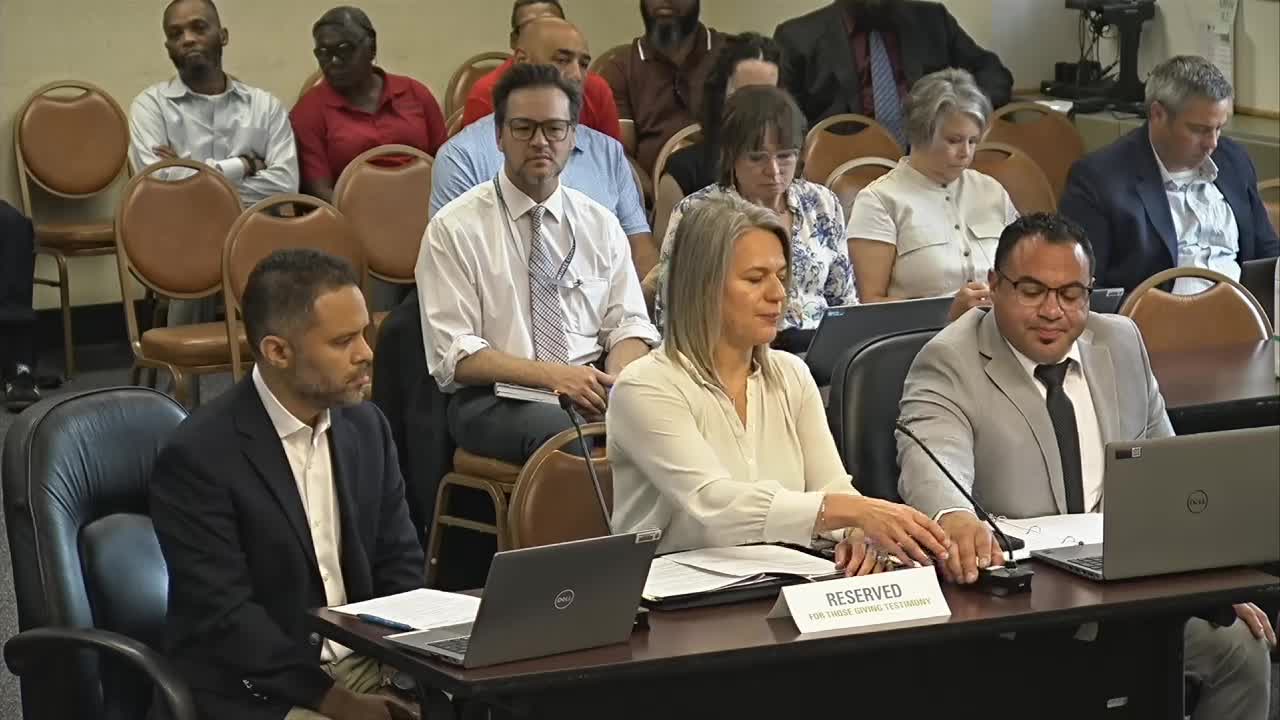
Milwaukee — Milwaukee County Transit System (MCTS) officials on Tuesday told the County Board Transportation and Transit Committee they are projecting roughly a $10.9 million operating shortfall for 2025 and described a mix of near-term steps and longer-term reforms to limit the damage.
The shortfall is driven primarily by higher-than-expected people costs — especially overtime and benefits — along with weaker passenger revenue and higher vehicle parts and contract costs, MCTS interim president and chief administrative officer Sandy Kellner and CFO Alexander Corona told the committee.
Kellner opened the presentation with an apology for how service-change information was communicated to the public and board. “It is our goal to share information as soon as possible. And in this instance, we did not meet our own standards,” she said.
Why it matters: the deficit has immediate operational consequences. Transit leaders said they will use a portion of remaining federal COVID-relief funds to cover part of the 2025 overrun while also trimming weekday midday and some weekend frequencies on high‑frequency routes and pursuing cost reductions. Several supervisors expressed frustration that the board and public learned of the shortfall via press reports before receiving complete internal notice.
What officials told the committee - Magnitude and drivers: Corona said MCTS is trending about 6% over budget for 2025. He identified two principal categories: people costs (wages, overtime and benefits) and paratransit/contractor costs. He said fixed‑route people costs represent about 80% of total personnel costs and that overtime has risen to roughly 25% (compared with about 17% in a similar period last year). He also said passenger revenue is running about 5% below estimates and vehicle parts and supplies are about 6% higher than budgeted.
- Contractor performance: Corona told the committee that a paratransit contractor (Transdev) has productivity of about 1.4 passengers per hour against a contractual minimum of 1.7; that divergence is increasing billed hours and contract costs.
- Near-term fixes: MCTS leaders described several immediate actions: using federal COVID relief funds to reduce the 2025 gap, pausing nonessential hiring and capital expansion, implementing lean operating reviews and Power BI dashboards tied to a new ERP for more frequent financial reporting, negotiating contract terms with vendors, and targeted schedule reductions concentrated in midday and lower‑demand weekend periods on some high‑frequency routes. A staff example: “instead of a bus coming every 15 minutes, that means a bus may come every 20 minutes,” a staffer told supervisors.
Board reaction and oversight demands Supervisors pressed for clearer and earlier reporting. Several members said they were surprised the shortfall was not reported earlier and asked for monthly projections and written follow‑ups. Supervisor Steven A. (Belinski) and others asked for line‑item explanations of the roughly $4.7 million wage/benefit overrun and the residual $1.7 million in that category; CFO Corona said the variance reflects overtime plus payroll taxes, pension contributions and rising health‑care costs.
County staff and audit Joe Lamers, director of the Office of Strategy, Budget and Performance, said central administration is reviewing the numbers and is concerned about the confluence of negative trends (paratransit costs, overtime, farebox revenue and parts). He said federal relief funds are available to prevent the 2025 deficit from falling directly to the county’s bottom line but warned that using those funds will bring timing pressure on the 2026 budget.
Audit commitment: Kellner told the committee MCTS “has already a preparation and collaboration plan for the auditors” and said she is meeting with the comptroller’s office staff. Committee members requested a public commitment; Kellner said MCTS welcomes the audit as an opportunity to strengthen trust.
Public testimony and labor response Union leaders and operators who testified urged that management practices, scheduling and working conditions — not just employee behavior — account for much of the overtime and attendance pressure. Michael Brown of ATU Local 998 said operators are “fed up,” describing forced overtime, long consecutive work blocks and safety concerns on the street. Mechanics and operators also raised problems with a new ERP and maintenance workflow that they say have added shop time and delayed repairs.
Transdev and contractor issues Supervisors asked about options under the Transdev contract after the operator missed productivity targets; Transdev’s senior vice president, Paul Beharin, later told the committee the company has adjusted schedules and is seeing daily improvements since a June 29 schedule change. County legal staff advised that some strategy details should be discussed in closed session before public disclosure.
Next steps and oversight requests Committee members asked MCTS for more frequent reporting and a clear timeline to prevent future surprises. MCTS agreed to provide monthly projections, to meet immediately with controllers and budget staff, to continue negotiating with vendors and to cooperate with a county audit. Several supervisors urged MCTS to provide district‑specific notices to supervisors if route changes will affect particular districts so constituents can be informed.
What was not decided The committee received the report as informational; no budget appropriation or binding policy change was adopted in committee. The board will consider budget tradeoffs as part of county budget cycles and in finance committee review.
Speakers (first reference shows full name and role): Sandy Kellner, Interim President and CEO/Chief Administrative Officer, Milwaukee County Transit System; Alexander Corona, Chief Financial Officer, MCTS; Eddie Santiago, Interim Deputy Director, Milwaukee County Department of Transportation; Joe Lamers, Director, Office of Strategy, Budget and Performance (County); Michael Brown, President, ATU Local 998; Kyle Bridal, ATU Local 998 member and mechanic; Paul Beharin, Senior Vice President, Transdev (North America operations oversight).