Get Full Government Meeting Transcripts, Videos, & Alerts Forever!
Get email alerts on the Real Time Information topic
No spam. Unsubscribe anytime.
Overland Park plans real‑time information center with private sponsor; officials say it will improve emergency coordination
Summary
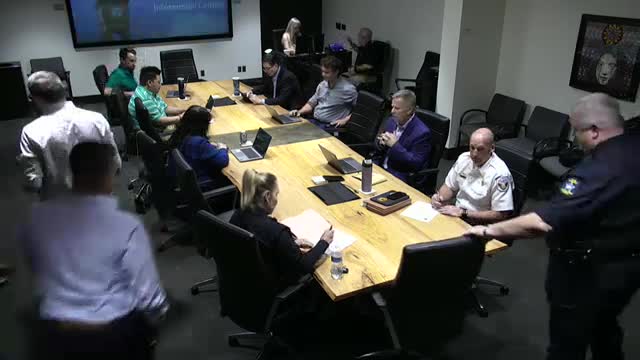
Overland Park public safety and IT staff presented a proposal on July 7 for a Real‑Time Information Center to aggregate live video, body‑worn camera and drone feeds to speed field response and coordination.
Overland Park public safety and IT staff presented a proposal on July 7 for a Real‑Time Information Center (RTIC) to collect, analyze and share live data—video feeds, body‑worn camera streams, drone imagery, license‑plate readers and open‑source social media—to support faster, data‑driven decisions during emergencies and daily operations.
City staff said the RTIC is intended to centralize multiple data streams that today do not interoperate, provide live mapping of units in the field, and enable faster tactical response by distributing live feeds to battalion chiefs, field commanders and other departments. Presenters said the RTIC is designed to support emergency responses, weather incidents, large public events and routine traffic management.
Officials described several specific capabilities: automated overlay mapping to show unit and camera locations in real time; live drone streaming to field commanders; integration with body‑worn cameras (subject to policy); predictive analysis using historical CAD and report data; and a unified display for city leadership in the Emergency Operations Center. Presenters said vendors would provide the fusion software (identified at the meeting by the generic name “fusus”) that aggregates and overlays multiple systems into one visual interface.
City IT and operations staff said the project will require policy development, cybersecurity protections and storage decisions because new continuous streams of video and other data will raise open‑records, retention and technical‑capacity questions. Legal staff told the committee that recordings held by law enforcement remain subject to the Kansas Open Records Act; publicly owned camera streams and body‑worn footage follow existing retention rules, while privately owned feeds that are accessed via memoranda of understanding would remain the property of their owners.
Officials told the committee that a private partner, Kwik Trip, committed roughly $500,000 toward start‑up costs; city staff said the overall startup cost is about $1 million, with the partner providing half and the city budget covering the remainder. Staff said the city will present a more detailed purchase plan and line‑item budget later but that the 2025 operating budget has funds available to cover the remainder for the year and additional budget requests would be included in the 2026 process if needed.
Staff gave an expected deployment window of March–April 2026 so the center is operational and staff trained before major events such as the FIFA World Cup/related tournaments. The city described a phased staffing approach—initial daytime staffing by reassigned personnel with potential future budget requests for dedicated analysts if workload requires. Training, governance and access rules for remote viewing, including when remote access to body‑worn cameras is allowed, will be developed before full operations.
Committee members asked about interoperability, cloud vs. on‑premises hosting, data retention, voluntary access to privately owned cameras and cybersecurity. Staff replied that the vendor software will be cloud‑enabled, that camera participation from businesses and residents would be voluntary under MOUs, and that city IT is leading security planning. Staff said other Kansas cities run similar centers and that the city visited centers in Tulsa and Kansas City to study operations.
Committee members generally supported the project while asking for more detail on budget specifics, privacy and cybersecurity. City staff said they will return with a more detailed implementation plan, procurement steps, proposed policy language on access and retention, and training and governance protocols.