Get Full Government Meeting Transcripts, Videos, & Alerts Forever!
Get email alerts on the Impact Fees topic
No spam. Unsubscribe anytime.
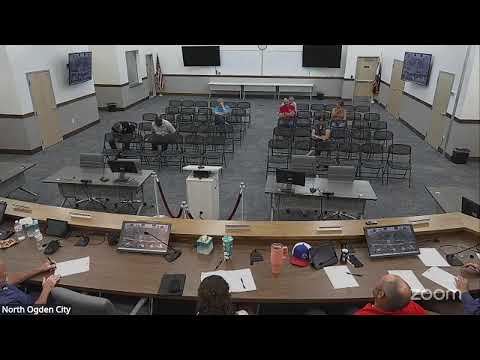
North Ogden council adopts higher culinary water impact fee, directs staff to seek business offsets and new transportation study
Summary
The North Ogden City Council on July 8 approved Ordinance 2025-18 to raise the culinary water impact fee for new construction, and authorized staff to issue an RFP for a new transportation impact-fee study and to explore discounts for traffic that uses Utah Department of Transportation corridors and sales-tax–based offsets for developers.
The North Ogden City Council on July 8 adopted Ordinance 2025-18, raising the city’s culinary water impact fee for new construction and directing staff to return with policies to offset fees for prospective businesses. Council members also authorized staff to issue a request for proposals for a new transportation impact-fee study and to evaluate discounts for traffic that uses state (UDOT) roads.
City Manager John Call told the council the single-family home culinary water fee recommended in the consultant update is lower than the study’s original proposal for this year and that the new schedule would take effect Oct. 15 because state rules require a 90‑day delay after adoption. “These fees are governed by the state, and they set the rules that we have to follow by,” Call said.
Call said the new single-family culinary water fee proposed for this year is $6,273.70, down from an earlier draft of $7,384.71 — a reduction of $1,111.01 — and that the current fee in place for roughly two decades is about $3,312. He told council members impact fees may be used only for capital projects that serve new growth, not for operations or maintenance.
Why it matters: Council members framed the votes as part of a broader effort to balance funding for infrastructure with the city’s ability to attract commercial development and broaden the tax base. Several council members warned that high impact fees can discourage businesses from locating in North Ogden, which would leave more of the tax burden on residential property owners.
Council debate and direction
Council member Pulver stressed that North Ogden’s situation differs from many neighboring cities because it operates its own wells and has planned capital costs for new wells and pumping. “We surely need to cover our costs, our incremental costs, but there may not be any incremental costs if we run businesses out of the city because we’re so high in our fees,” Pulver said.
Council member Watson supported rapidly implementing a transportation discount for commercial applicants while undertaking a new study: “I would be a fan of the discount. I think especially where we’re trying to recruit new businesses right now… staff discount ASAP and the traffic study seems like a good idea to me,” she said.
Council members asked staff to develop clear, repeatable parameters for any offsets so the city would not make ad hoc, case‑by‑case decisions without documented methodology. Call said he would return with a policy/work session outlining how incremental sales tax or other identified revenue streams could be used to offset impact fees for specific development proposals.
Transportation study and UDOT discount
Council authorized staff to solicit proposals for a new transportation impact-fee study and to include an analysis of “UDOT” or state-road pass‑by traffic so commercial applicants could receive a discount when a sizeable portion of patronage uses state-maintained corridors. John Call told the council a refreshed study is appropriate because the existing analysis is about 10 years old; he estimated a study would take roughly six months and suggested a consultant cost in the low tens of thousands of dollars depending on scope.
Call and other staff members described two possible approaches: 1) commission a full new transportation impact-fee study to re‑set fees for the entire city and include UDOT pass‑by computations; or 2) run a narrower updated analysis focused on near‑term roads and projects to limit cost. Several council members favored getting RFPs and cost estimates before deciding scope.
Votes at the meeting
- Motion to table the culinary-water item until after the transportation discussion (mover: Council member Dalpez; second: Council member Watson) — outcome: passed unanimously.
- Motion to authorize staff to issue an RFP for a transportation impact-fee study and to investigate UDOT-road discounts (mover: Council member Barker; second: Council member Watson) — outcome: approved unanimously.
- Motion to adopt Ordinance 2025‑18, the culinary water impact fee schedule, and to direct staff to develop parameters for offsets and incentives for incoming businesses (mover: Council member Watson; second: Council member Pulver) — outcome: approved unanimously. Call reminded the council the new culinary water fee cannot be charged until Oct. 15, 2025 (90 days after adoption).
What was not decided
The council did not adopt any specific discount schedule, sales‑tax offset formula or use of RDA funds at the meeting. Instead, it directed staff to prepare policy options, metrics and thresholds by which the council could approve targeted offsets for commercial projects, and to bring back RFP results for the transportation study.
Context and next steps
Call noted the consultant’s review reduced the immediate single‑family water fee compared with an earlier draft because projected new-project needs declined and the city has more existing system capacity. Call also noted neighboring jurisdictions are updating fees, and the council asked staff to compare North Ogden’s fees with surrounding cities after the new studies are returned.
Council members asked staff to craft transparent, consistent criteria for any offset or incentive — for example, using a developer’s projected first‑year sales tax to pay a portion of impact fees rather than blanket discounts — so decisions would be defensible and predictable for applicants.
The ordinance will take effect Oct. 15, 2025, unless the council amends the schedule beforehand; staff will return with draft offset/incentive language and with RFP responses for the transportation study.