Get Full Government Meeting Transcripts, Videos, & Alerts Forever!
Get email alerts on the Restorative Justice topic
No spam. Unsubscribe anytime.
College Park receives African American Redress Network report laying out repair proposals for Lakeland
Summary
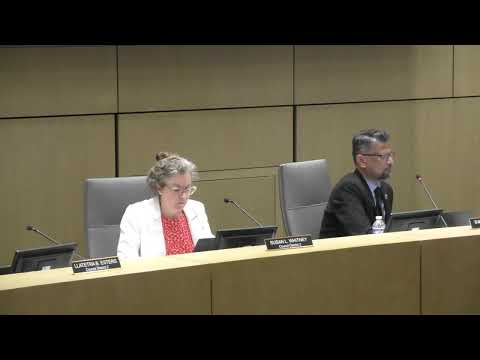
The City of College Park’s council heard a presentation of a final report on restorative justice for the Lakeland neighborhood on a recent council meeting night. The African American Redress Network (AARN) and the city’s interim staff liaison presented historical research, community outreach findings and a suite of policy proposals intended to address harms caused by the Lakeland urban renewal process.
The City of College Park’s council heard a presentation of a final report on restorative justice for the Lakeland neighborhood on a recent council meeting night. The African American Redress Network (AARN) and the city’s interim staff liaison presented historical research, community outreach findings and a suite of policy proposals intended to address harms caused by the Lakeland urban renewal process.
The report documents that urban renewal and related public projects removed homes and disrupted Lakeland’s social and economic fabric and recommends a set of policy responses. Lead presenter Linda Mann said the report is intended to serve as a “guiding document for government officials to act upon the findings presented, explore remaining research areas, and design equitable policies that uplift the Lakeland community.”
AARN’s research team outlined four pillars for repair: housing, connectivity, nature and learning, and matched each pillar to policy proposals that the group says are actionable. Among the proposals: (1) a city‑led investigation of acquisition records and “just compensation” for differences between acquisition prices and fair market values; (2) a “Return to Lakeland” program to track and incentivize descendants and displaced residents who want to reclaim property or return; (3) restoring access to Lake Artemisia via either a pedestrian bridge (estimated at roughly $1 million–$2 million) or partial wall replacement with reinforced glass (estimated $100,000–$500,000); (4) a residential clean‑energy/net‑metering pilot to help homeowners install solar panels while leveraging the federal residential clean energy tax credit; (5) a Lakeland Pass to subsidize or provide free transit for Lakeland residents and diaspora; and (6) a proposed partnership with the University of Maryland to create a free undergraduate/graduate scholarship program for Lakeland residents and to coordinate K‑12 education revitalization.
On the housing proposals, AARN staff said archival deed and appraisal records show acquisition prices that in many cases were far below appraised fair‑market values. Research team members noted their sample of appraisals found acquisition entries listed as $10 on deeds alongside “other good and valuable considerations,” while appraisals from the 1970s assigned values in the tens of thousands of dollars to those same parcels. The team recommended a collaborative city effort to complete the appraisal dataset, document heirs and impacted families, and pursue mechanisms to compensate owners or heirs for any underpayment identified.
On education, AARN presented cost estimates for a University of Maryland scholarship track: the team estimated one year of nonresident full‑time cost at $44,276.60 and projected that enrolling 25 Lakeland students in four‑year degrees would represent an approximate $4,427,660 investment — about 0.14% of UMD’s stated operating budget for FY2025, according to the figures presented. Presenters suggested the university could pilot smaller inaugural cohorts as a lower‑cost starting point.
Council members thanked AARN and Lakeland community partners for the report and noted the proposals range from immediately actionable to long‑term and multi‑jurisdictional. Several council members emphasized the need to engage county, state and federal partners (AARN and presenters repeatedly noted Housing and Urban Development’s historical role in funding urban renewal projects) and cautioned that full reparative funding cannot rely on city funds alone.
City staff clarified the presentation was informational; no formal council vote to adopt the report was required that night. Councilmembers expressed general support for accepting the findings and for working with the restorative justice commission and AARN on follow‑up steps including additional research, community outreach, steering committees and funding strategies. The presenters urged the council to consider the report a starting point and to prioritize collaboration with the Lakeland community in next steps.
The council’s conversation included repeated calls to center Lakeland residents’ voices in designing any program or pilot. AARN also left a small number of research threads open for further study and recommended the council accept the report and commit to a process to operationalize the recommendations.
The report, the presenters said, is intended to be iterative: AARN described the research method as cyclical — historical analysis, contemporary impact measurement, and policy design — and urged periodic review and updates as programs are implemented and impacts measured.
Councilmembers asked staff about prior investments in restorative justice work and about next steps the city should take; city staff summarized departments that supported the effort and noted additional intergovernmental partners would be needed for major budgetary commitments. No formal council action was taken at the meeting; city staff and commissioners signaled plans to bring follow‑up items and work sessions back to council for action and budgeting.