Get Full Government Meeting Transcripts, Videos, & Alerts Forever!
Get email alerts on the Drainage Infrastructure topic
No spam. Unsubscribe anytime.
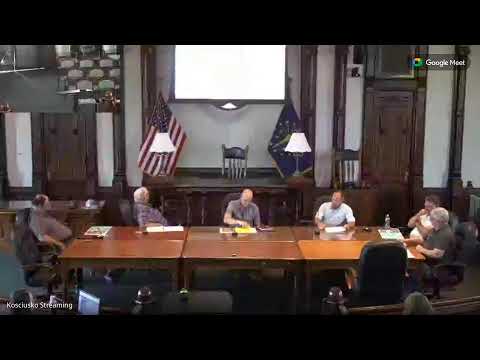
Drainage board moves to remove Chinworth–Augusta tile from county system after long record uncertainty
Summary
Board voted to vacate the Chinworth–Augusta drainage tile from county maintenance after staff said records are inconsistent and the drain has not been actively maintained; one board member abstained.
The Kosciusko County Drainage Board voted in June to remove the Chinworth–Augusta drain from the county-maintained system, concluding the county’s records are too inconsistent to confirm responsibility for that tile.
Board staff told the meeting the Chinworth–Augusta drain was established in 1908 and that the written descriptions in county records do not match current maps. The surveyor’s office reported no tracked maintenance expenditures for the tile in recent years and said it cannot reliably prove the drain’s legal location from existing records.
Staff recommended vacating the drain from the county’s maintenance obligations so that, if a tile exists on private land, it would become the property owner’s responsibility. The board sought comment from nearby landowners. A representative for Creighton Brothers said he could help identify physical features but did not object to further investigation.
A motion to vacate the drain as shown in county records passed by voice vote; the chair recorded, “All those in favor signify by saying aye,” followed by “Aye” and an abstention noted in the transcript. Staff said property owners may petition the drainage board in the future for a reconstruction project if a reconstructed drain with an outlet is needed and if owners agree to assessment terms.
Board staff said a small investigative budget (up to $1,500) was available to locate physical evidence before further action, and recommended removing the flawed record rather than spending funds to maintain an uncertain, century-old line.