Get Full Government Meeting Transcripts, Videos, & Alerts Forever!
Get email alerts on the Food Safety topic
No spam. Unsubscribe anytime.
Assembly committee backs SB 68 to require written menu allergen information at many restaurants
Summary
SB 68, authored by Senator Menjivar, would require restaurants with six or more locations (and chain restaurants) to provide written notice of the top nine allergens on menus or via QR codes; the committee passed the bill to appropriations after amendments that allow flexibility for smaller and independent establishments.
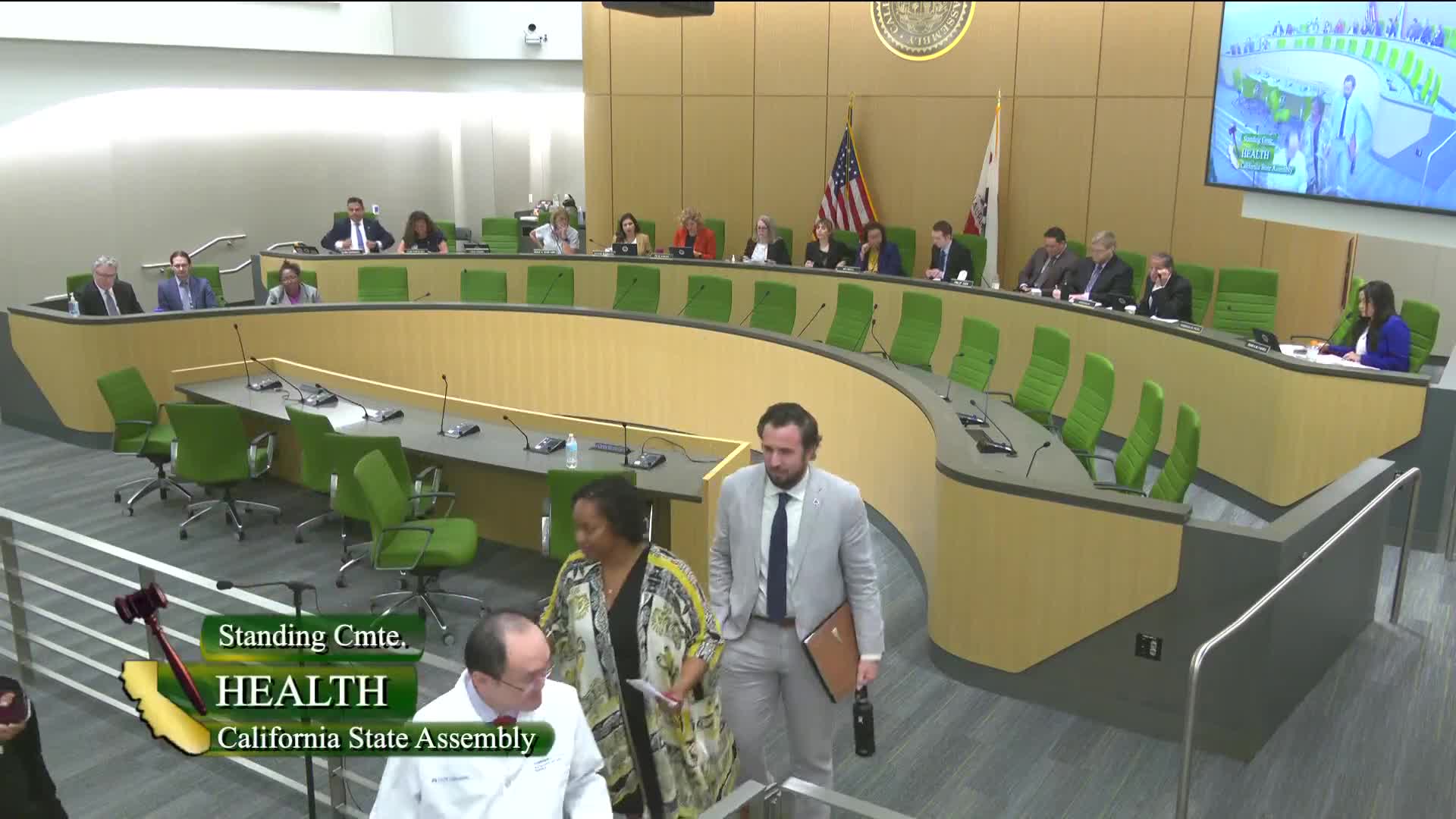
The Assembly Health Committee voted July 8 to send SB 68 to the Appropriations Committee after accepting amendments that seek to balance consumer safety and small-business flexibility. The bill would require specified restaurants to provide written information about the nine recognized major food allergens on menus (or via a QR code when a QR-based menu is offered) and would allow smaller or single-location restaurants a flexible way to communicate allergen information.
Senator Menjivar described the bill as a straightforward public-health transparency measure: "If you're going to a restaurant... when you get a menu, it has the 9 recognized allergens telling you what's in there." Nine-year-old witness Addie, who testified alongside the senator, told the committee that written labeling at restaurants would reduce the uncertainty that people with food allergies face. "When we ask the waiter, they don't know and often need to check... If they're wrong, I won't just get a rash. I will get very sick. I could die," Addie said.
The bill attracted broad support from patient and medical groups, nurses, children's hospitals and advocacy organizations; the California Restaurant Association said it was close to a negotiated compromise but remained opposed unless further amendments were accepted to protect restaurants from liability and to allow flexible communication methods consistent with the National Model Food Code. Matt Sutton of the restaurant association said his group proposed a national-model approach that permits multiple communication methods (menus, brochures, allergen grids, QR codes) and requested a liability-protection sentence that had been discussed with the Senate judiciary earlier.
Committee action and next steps
The author accepted amendments to create a tiered approach so that large chains and restaurants with six or more locations would apply more prescriptive menu disclosure rules while smaller establishments would have flexibility on how they disclose allergens. The committee passed the measure to the Appropriations Committee.
Why this matters
Advocates cited data presented to the committee indicating that clear menu allergen labeling reduces the proportion of allergic reactions tied to dining out; supporters said written labeling plus staff conversation yields the largest risk reduction. Restaurants and small-business advocates warned about implementation costs and asked for clear liability rules and flexible disclosure options for smaller operators.
Votes at a glance
Action: Motion to pass SB 68 (as amended) to Appropriations — Passed (committee roll call recorded)