Get Full Government Meeting Transcripts, Videos, & Alerts Forever!
Get email alerts on the Streets And Transportation topic
No spam. Unsubscribe anytime.
Amarillo Public Works says Durapatcher trucks sped pothole repairs; staff will monitor winter performance
Summary
Public Works Director Alan Harder told the council that three Durapatcher trucks and emulsion storage tanks have increased pothole productivity: staff reported more than 2,000 street patches and more than 700 alley patches since deployment, with patches holding up in high heat so far.
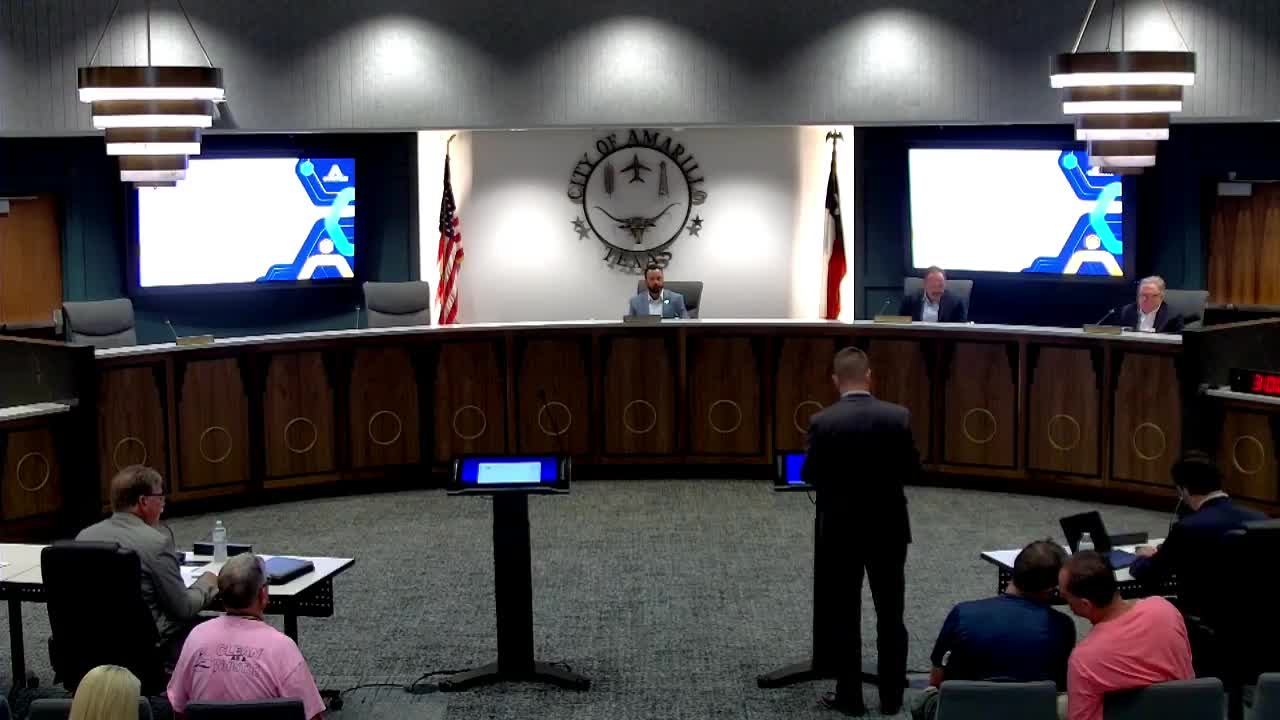
Public Works Director Alan Harder told the Amarillo City Council on July 8 that the city's three new Durapatcher pothole‑patching trucks have significantly increased repair productivity since training began in March and operations commenced in May.
Harder said the trucks clean potholes with compressed air, apply an asphalt‑emulsion tack coat, inject an emulsion‑coated rock mix and finish with dry rock; roads are opened to traffic immediately after the truck leaves. He said crews have completed more than 2,000 street patches and more than 700 alley patches through the first phase of the rollout, with a single‑day record of 146 potholes patched historically using traditional trucks but typical daily totals of 20–30 with previous methods.
Harder described several implementation details: the city purchased three heated emulsion storage tanks at its service center to keep emulsion at working temperature, has a follow pickup towing an arrow board for safety and quality control, and is soliciting quotes for truck‑mounted crash attenuators so the follow truck may be retired and staff reassigned. He said crews adjusted rock‑to‑emulsion ratios and replaced an early batch of oil (emulsion) that performed poorly; the vendor refunded the initial supply.
On durability, Harder said patches observed during a 90°+ day did not depress under pressure and that early results have been promising. He cautioned that full assessment requires a winter cycle to evaluate freeze/thaw performance and that the city will monitor completed patches over time.
Council members asked about backlog and response time; Harder said potholes that are reported are generally handled quickly and that the new equipment shortens response from a week or more to one or two days for new potholes created by rain. He said the Durapatcher is best for repairs under about one square yard (roughly 3 feet by 3 feet); larger or wider areas typically require a cut‑out and traditional minor patch or full mill and overlay.
Harder credited equipment operators and supervisors, specifically naming Mister Lundgren for his role in the demonstration and early operations.
Why it matters: Faster, targeted pothole repairs can extend pavement life and reduce costs over time by addressing small defects before they propagate into larger, more expensive repairs. The public‑facing benefit is fewer and quicker repairs in neighborhoods and arterial corridors.
What’s next: Staff will keep the follow trucks in place for safety while seeking crash‑attenuator quotes, continue monitoring patch performance through winter, and post related street‑maintenance schedules and project dashboards online as construction progresses.