Get Full Government Meeting Transcripts, Videos, & Alerts Forever!
Get email alerts on the Healthcare topic
No spam. Unsubscribe anytime.
CHRISTUS Trinity Clinic reviews Hays County indigent care program; county hears rising cost figures
Summary
CHRISTUS Trinity Clinic presented enrollment, services and cost details for the county's indigent healthcare contract, reporting roughly 113 enrolled patients, common diagnoses and specialty referral practices; clinic leaders and county staff said total program costs are approaching $2 million annually when measured comprehensively.
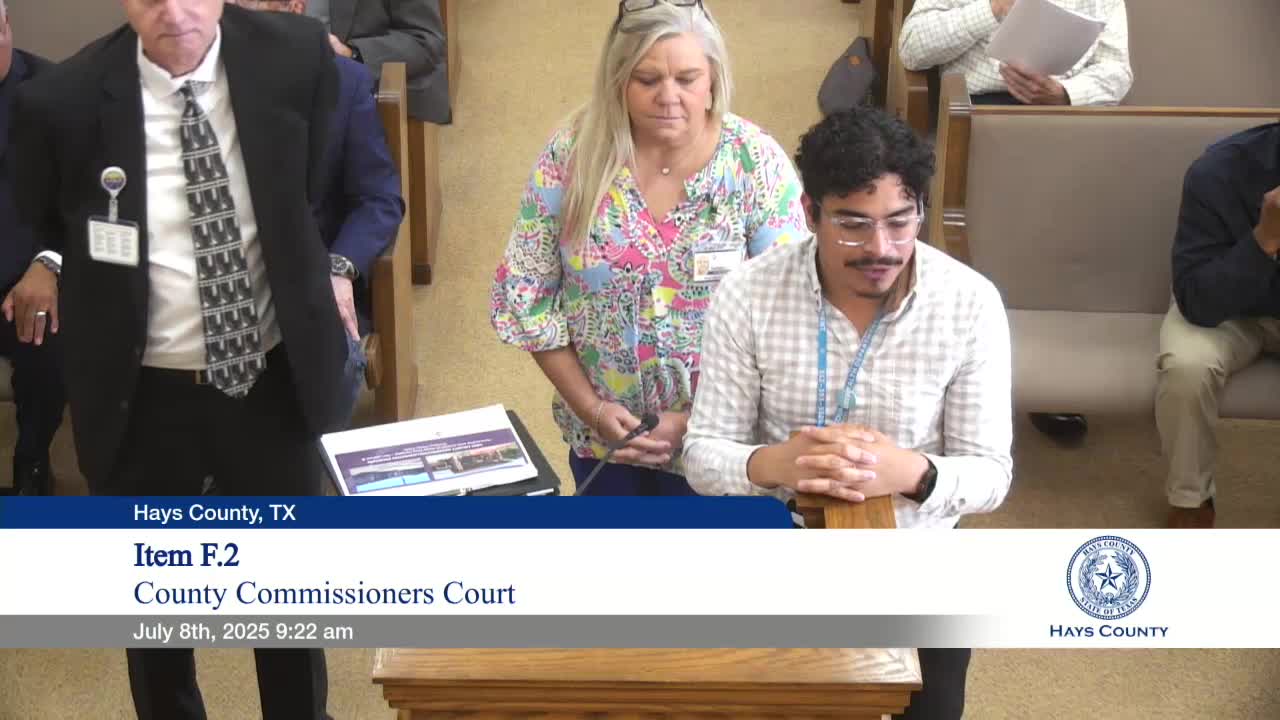
CHRISTUS Trinity Clinic visited the July 8 Hays County Commissioners Court to present three years of data on the county's indigent health care contract and to describe clinic operations, patient demographics and program costs.
Clinic leaders said 113 Hays County patients were enrolled on the indigent program as of the presentation date and the average enrolled patient's age is near 50. The clinic described primary-care services, specialty referrals and a pharmacy arrangement that now allows patients to access prescriptions through local pharmacies as a convenience measure.
Kathleen Schumel, director of clinical operations for CHRISTUS Trinity Clinic, said the program offers a primary care home through a dedicated primary-care provider and that specialty services are available with an aggregate per‑patient specialty cap of $30,000 per fiscal year. Clinic staff reported that diabetes, hypertension and hyperlipidemia are the top diagnoses among those on the county program.
David Glazener, the clinic's finance vice president, told the court the program's direct operating costs have risen and that CHRISTUS estimates combined clinic operations, third-party administrator payouts and hospital‑based uncompensated services bring the program near $1.9 million to $2.0 million annually when direct and readily quantifiable costs are included; he emphasized that additional non‑monetized administrative and overhead support the clinic provides is not included in that number.
County staff and commissioners asked questions about access, hours and behavioral health expansion; clinic leaders said an urgent‑care location now provides additional access (8 a.m. to 8 p.m. plus weekends) and that the Broadway clinic maintains weekday hours with no‑appointment immunizations and routine primary‑care visits. The clinic said it is exploring behavioral‑health options, including tele‑psych services and partnerships with local providers.
Commissioner Inglesby reminded the court that the $30,000 specialty cap stems from state statute (the Indigent Health and Treatment Act) and Commissioner Smith asked county health staff about efforts to stabilize enrollment; county health staff said they now have a dedicated enrollment manager and that coordination with CHRISTUS helps reduce dropoff during re‑enrollment periods.
No formal action was taken; county staff were asked to continue monitoring costs and bring updated fiscal information into the FY‑26 budget process.