Get Full Government Meeting Transcripts, Videos, & Alerts Forever!
Get email alerts on the Town Budget topic
No spam. Unsubscribe anytime.
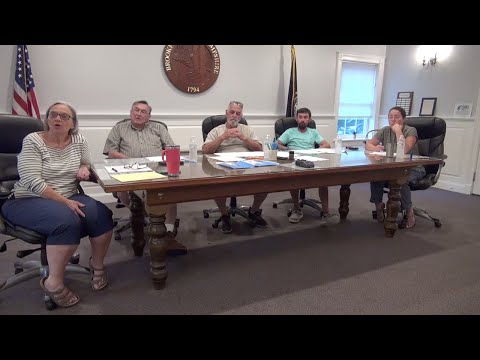
Brookfield officials agree to cover a $9,000 legal bill; review midyear budget pressures
Summary
During a regular town meeting, Brookfield officials reviewed midyear budget obligations, agreed to reassign $5,000 from contingency to cover legal costs and discussed constrained flexibility across salaries, roads and building repairs.
Brookfield officials reviewed midyear budget obligations and agreed during the meeting to apply $5,000 from a contingency line to cover an unexpected legal bill, while flagging several other short-term budget pressures including road work, building repairs and salaries.
The budget discussion opened with a request to identify known or committed expenditures so the town can record obligations in the accounting system. Participants noted $20,000 already committed for road paving, roughly $2,000 spent on painting, and a newly received legal invoice of roughly $9,000.
Faced with that legal bill, members agreed to reallocate $5,000 from the contingency line to the legal account. A member summarized the immediate decision: the contingency line will be reduced by $5,000 and used to offset legal expenses. No formal roll-call vote was recorded in the transcript for this reallocation; the meeting record reflects a consensus direction to move the funds.
The town’s road and public-works obligations were a significant part of the conversation. Chris, identified in discussion as the town road agent, told the board that the additional $20,000 for paving “would come out of money that was already obligated,” indicating the expense is covered by previously approved line items rather than new appropriations.
Members also reviewed building and grounds items: painting inside the salt shed and planned repairs to the town garage were described as potential costs that could be deferred if budgets remain tight. The town had budgeted $26,000 for town garage repairs; participants said the work could be pushed into a future year if necessary.
On personnel and salary obligations, the group noted that salaries are effectively committed and cannot be treated like purchase orders in the town’s obligations module. Staff clarified that salaries are handled in a separate payroll module and do not reduce the “obligated” column in the same way as purchase orders.
Other line items discussed included technology and website support, election-related equipment for accessibility, trustee and trust-fund expenses, and the possibility of shifting money from welfare or other categories if necessary. Several participants asked staff to confirm line-item encumbrances and to rerun obligation tallies so the board can see available margins before making further transfers.
Clarifying details recorded in the meeting included the following: the road paving overrun is about $20,000; a legal invoice of about $9,000 was presented; the town’s garage repair line is budgeted at $26,000; salt-shed interior painting is expected to cost far less than the $10,000 amount budgeted for larger repairs; and website support is usually billed in December (the town budgets roughly $2,500 for that annual fee).
Members asked staff to circulate updated encumbrance totals and to bring a formal recommendation back to a future meeting if any further transfers are required. The board also noted it will ask the auditor to appear at a future meeting to walk members through audit findings (separately discussed in the audit agenda item).