Get Full Government Meeting Transcripts, Videos, & Alerts Forever!
Get email alerts on the Land Use Vacation topic
No spam. Unsubscribe anytime.
Commissioners deny vacation of East 60 Fourth Avenue right of way after land-use hearing
Summary
After a public hearing with neighbor testimony and legal advice, the board voted 5–0 to deny VAC2024-2, a request to vacate a portion of East 60 Fourth Avenue right of way. Staff had recommended approval with conditions; commissioners cited concerns about long-term access and conformity with subdivision intent.
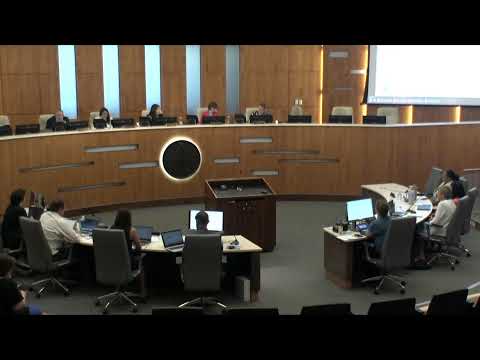
The Adams County Board of Commissioners denied a request to vacate a portion of East 60 Fourth Avenue (case VAC2024-2) after a July 8 land-use hearing that included staff presentations, neighbor testimony and legal advice. The motion to deny passed 5–0.
Staff presentation and recommendation: Planning staff described the request as a roadway vacation for a section of county right of way east of Highway 79 and west of Kiowa Creek. Principal planner Jen Rudder (presenting on behalf of the case planner) told the board the right of way is currently unmaintained and that staff had determined the vacation would comply with the six criteria for vacation under the development standards. Staff recommended approval with six findings of fact and three conditions — including signage that the road is private, provision of an access key/code to the sheriff and fire district, and designation of an emergency contact.
Public testimony and neighbors’ concerns: Neighbors who helped construct and maintain the dirt roadway for decades testified that they maintain the road and opposed giving future rights to a mining company, Martin Marietta, that owns adjacent property. Shauna Du Bois and other neighbors said Martin Marietta’s proposed easement initially included language that would have allowed the company to bill neighbors for improvements; neighbors said they would not sign that version. A representative from Martin Marietta testified that its current mining permits direct truck access through a different gate (north gate) and that the company seeks to preserve future access for long-term flexibility.
Legal analysis: County attorneys reviewed Colorado law on roadway vacations. The county attorney cited Colorado statute (Title 43, Section 2-303) and the county development standards requiring that a vacation not leave adjoining land without an established public road or private access easement. Counsel told the board that Martin Marietta and the Lincoln property have access to an established public road (East 70 Second Avenue) and that vacating the portion of East 60 Fourth Avenue would not leave those properties without legal access to a public road, which reduced the likelihood of a successful takings challenge.
Board deliberation and outcome: Commissioners discussed multiple factors, including the development-standard criteria, the potential long-term effect on land assembly and future redevelopment, and public-safety considerations. Commissioners expressed particular concern about criteria three and four (consistency with subdivision regulations and detriment to public health/safety). Commissioner Steve O’Dorisio and others noted the county’s obligation to consider long-term development patterns and the potential loss of conduit access for future redevelopment.
Motion and vote: Commissioner Baca (motion recorded on the dais) moved to deny VAC2024-2; a second was recorded and the motion carried 5–0. The planning staff had requested approval; the board instead denied the vacation.
Why it matters: The decision preserves the county’s right of way in that section and maintains county control over the corridor; commissioners said the outcome protects future access options and aligns with the county’s subdivision-intent standards. Neighbors who sought the vacation said they sought greater control of the road to address local safety and trespass concerns, which the board said should be addressed through other enforcement and public-safety measures.
Next steps: With the denial, the right of way remains a county right of way. Commissioners directed continued coordination among public works, planning and public safety staff to address neighborhood concerns about safety and maintenance.