Get Full Government Meeting Transcripts, Videos, & Alerts Forever!
Get email alerts on the Elections topic
No spam. Unsubscribe anytime.
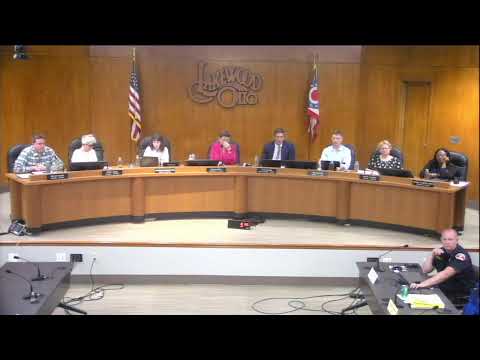
Lakewood council hears experts and residents on charter amendment to enable ranked‑choice voting
Summary
Justin Mills, former executive director of Rank the Vote Ohio, told the Committee of the Whole that ranked‑choice voting asks voters to rank candidates rather than choose a single candidate.
Justin Mills, former executive director of Rank the Vote Ohio, told the Committee of the Whole that ranked‑choice voting (RCV) asks voters to rank candidates instead of choosing a single candidate, and that winners must secure a majority rather than a plurality. Mills said, “the idea of ranked choice voting, is instead of just choosing the 1, you rank your choices.”
The Committee of the Whole and members of city council discussed a June recommendation from the Charter Review Commission that would place a charter amendment before Lakewood voters allowing council to adopt ranked‑choice voting for municipal elections. Council members pressed technical, legal and operational questions — including tally transparency, software, local election administration and whether a state House bill would block local action.
Why it matters: the change would alter how municipal winners are determined (majority rather than plurality), could remove or change the need for some primaries and would go to voters as a charter amendment. Supporters said RCV can increase turnout and representation; some council members and the public asked for more local data and time to study operational impacts and legal risk.
Mills, addressing recount and transparency concerns, said recounts can be performed by hand and that software providers used by state and county boards of election already support RCV. He said voters “can show, exactly who voted in what way, the numbers as they go through, each round.” League of Women Voters chapters and local residents who spoke supported the recommendation. Teresa Permentor, identified as the Lakewood League of Women Voters chapter president, told council the League “from top to bottom really supports ranked choice voting.”
Council members raised legal questions after the legislative service commission (LSC) issued an analysis of a state House bill that would prohibit local governments from enacting RCV by ordinance. Council members and the administration noted the LSC opinion appears to indicate the House bill’s prohibition would not apply to charter amendments, a point counsel said the law department and legislative service commission have flagged as a key difference. As Council President Keppel summarized, charters “are like a constitution” for a municipality and can be an avenue for voters to decide changes the state statute would otherwise restrict.
Action and next steps: Council voted to ask the city law department to draft ballot language for the Charter Review Commission’s recommendations, including language that would put the RCV option before voters as a charter amendment. The council record notes the administration and legal staff will review LSC analyses and that a Sept. 5 deadline exists to submit items for the November ballot; council members said they need time to review legal and operational details before deciding whether to place the amendment on this year’s ballot.
What council asked for and what remains unresolved: members requested clearer estimates of administrative costs, a precise tally method to use (instant runoff, single transferable vote, Condorcet and other variants were discussed), and whether the Cuyahoga County Board of Elections could run local RCV elections with only a software update. Mills and administration staff said the county’s equipment likely would not require replacement, only program updates.
Quotes are limited to speakers on the record. The law department and legislative service commission analysis were cited by council and staff but not adopted as policy in this meeting. Council directed legal staff to draft proposed language so council can schedule committee review and public hearings before deciding whether to place an amendment on the ballot.
Council will receive the draft language from the law department and decide in committee whether to introduce ordinances or charter amendment language at the next full council meeting. The council record shows broad public interest; several residents who served on the Charter Review Commission and other community advocates urged adoption or further study.