Get Full Government Meeting Transcripts, Videos, & Alerts Forever!
Get email alerts on the Public Comment Policy topic
No spam. Unsubscribe anytime.
West Fargo commission adopts formal public‑comment policy requiring topic to be on agenda or previous agenda
Summary
The West Fargo City Commission adopted a formal public‑comment policy that requires speakers at regular meetings to address items on that meeting’s agenda or the prior meeting’s agenda and requires nonresidents to disclose if speaking for a business or other property‑taxpaying entity.
The West Fargo City Commission voted to adopt a formal public‑comment policy that implements changes required by recent state legislation and codifies the city’s existing procedures.
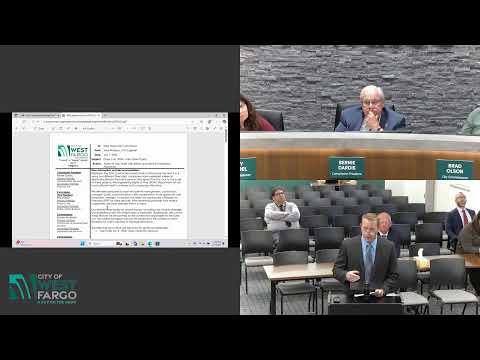
"What you have is, essentially our procedures that we've had in place, with only a couple minor changes," Rachel Lorteman, the city’s manager of public affairs, told the commission. She said the new policy adds a requirement that speakers address a topic on that meeting’s agenda or the previous meeting’s agenda and that non‑West Fargo residents note if they speak for a business, organization or other property‑taxpaying entity.
Commissioner Jorgensen moved to approve the policy; Commissioner Anderson seconded the motion. The commission approved the policy by voice vote. Staff said the legislation requires adoption by Aug. 1; Lorteman said the city could make the policy effective immediately or on the next meeting and that the city’s existing procedure already set a speaker‑registration deadline of noon the day of the meeting.
The adopted policy otherwise maintains the city’s existing limits on speakers’ time and the number of speakers allowed per meeting, city staff said. The change to require topics to be on the current or previous agenda reflects legislative direction that the public should know what will be discussed at a governing‑board meeting.
The commission recorded no roll‑call tallies in the meeting minutes; the action passed by voice vote.