Get Full Government Meeting Transcripts, Videos, & Alerts Forever!
Get email alerts on the Waste Management Pay As You Throw topic
No spam. Unsubscribe anytime.
Residents, environmental groups urge Miami-Dade to pursue pay-as-you-throw and composting
Summary
Public commentators and environmental groups told the committee that a pay-as-you-throw program and expanded composting would cut waste and reward low-waste households; the item (2B) will return to the full commission on July 16 for further action.
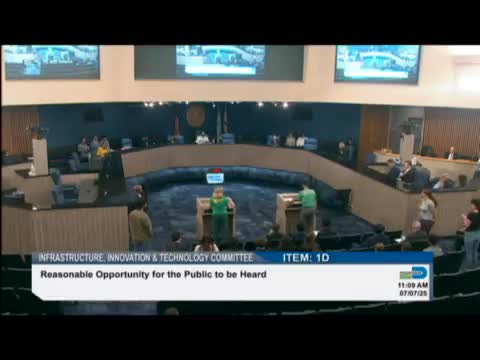
Dozens of residents and representatives of local environmental groups urged the Solid Waste & Infrastructure Committee on July 9 to advance a pay-as-you-throw program and expand composting and residential drop‑off options.
The speakers framed the change as an incentives-based approach. Noel Cleland, a resident and member of the City of South Miami green task force, told commissioners: “If you're interested in getting people to reduce the amount of waste ... then you incentivize that by making the ... efforts to reduce their waste stream be something that's a positive influence in their wallet.” Priscilla Carolyn Schmidt, who said she works with Fertile Earthworm Farm, said a pay-as-you-throw model would “reward residents who already are doing, quote, unquote, the right thing in terms of reducing their waste.”
Why it matters: Supporters said the program would both reduce the volume sent to landfills and reward households and businesses that already compost and recycle. Maddie Kaufman, program director of Debris Free Oceans, cited the Environmental Protection Agency’s account of Gainesville’s program and said it reduced solid waste collection by 18% in the first year and increased recycling recovery by 25%.
Committee process and next steps: Commissioners did not vote on item 2B today; staff and commissioners repeatedly said the proposal will return to the commission on July 16, where fiscal and operational details are expected to be considered alongside other solid-waste items. Multiple commenters and commissioners urged pairing any pay-as-you-throw design with measures to protect low-income households and to expand local composting infrastructure.
Details from public comment and local operators: Several speakers described the current costs of composting and existing local programs. Bernice Yanes said, “I personally pay $20 a month to compost my waste,” and urged that the county recognize households that already reduce trash. Priscilla Schmidt and others described private and institutional composting arrangements (stadiums, hospitals) that currently pay for diversion services and said broader programs could expand market scale.
Commissioners’ questions and concerns: Commissioners said they supported innovation but stressed the need for careful design. Commissioner Rebeca Sosa Regalado (District 7) noted that composting programs currently require subsidies at the district level and warned that pay-as-you-throw will create winners and losers unless paired with targeted protections. Several commissioners asked staff to include equity protections and to analyze household-level impacts before any fee structure is set.
What commissioners and staff asked to see next: Commenters and commissioners asked the department to quantify distributional impacts, identify pilot neighborhoods, and outline how pay-as-you-throw would interact with existing residential drop-off and municipal programs. Commissioners also requested fiscal scenarios tying any new program to overall collection and disposal budgets.
Ending: Item 2B remains on the committee docket for the July 16 full commission meeting where staff will present fiscal and programmatic details; no final county action on pay-as-you-throw was recorded on July 9.