
Commission discusses larger interstate signage; directs staff to draft overlay standards
Get AI-powered insights, summaries, and transcripts
Subscribe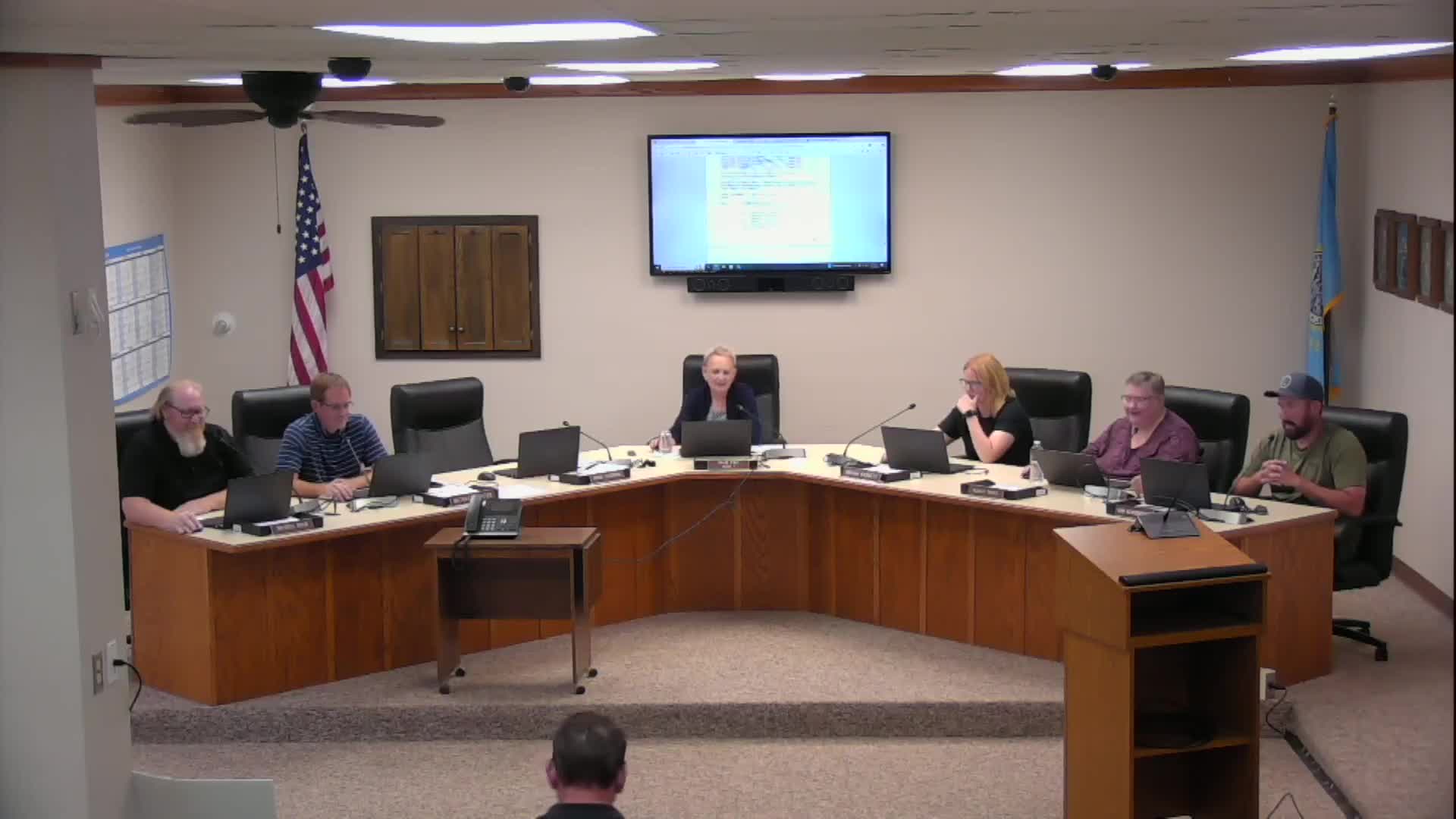
Summary
Commissioners debated allowing large, tall signs in the I‑90 overlay district after City Council approved a single, very large high‑mounted sign. The commission asked staff to draft language that permits greater area at higher elevations while limiting ground‑level impacts and clarifying frontage rules; no formal vote was taken.
The Planning and Zoning Commission spent the longest single block of Tuesday’s meeting reviewing proposed standards for the I‑90 interstate signage overlay and related general business (GB) freestanding sign rules.
Commissioners began from a factual point: City Council recently approved a large, high‑mounted sign — roughly 600 square feet up to 90 feet tall — for a site in the interstate corridor. Commissioners debated whether to codify similar allowances in the overlay district and, if so, how to limit ground‑level visual impact and how to calculate multiple signs for large parcels. One commissioner proposed a tiered approach tying maximum sign area to height: smaller maximums at 30 feet, larger at 50 feet, up to a 600‑square‑foot allowance at 70–90 feet, with the bulk of sign area required to be mounted higher to reduce street‑level visual impact.
A recurring technical proposal was to treat very large high‑mounted signs differently for spacing calculations: instead of counting a 600‑square‑foot high sign at full size when computing separation distances for a second sign, treat it as 200 square feet for that multiplicity calculation because most of the visual impact of a tall sign is not at street level. Commissioners discussed a 1:1 frontage calculation on frontage up to a threshold (e.g., 1 sq ft of sign per 1 linear ft of frontage up to 200 sq ft), with a graduated approach after the threshold in the general business district, and simpler 1:1 treatment inside the interstate overlay to allow larger cornerstone signs.
Commissioners also debated whether the interstate itself should count as frontage for the purpose of calculating allowed freestanding sign area. Some commissioners favored treating the interstate as a lot frontage; others cautioned that doing so could allow very large signage for lots with multiple frontages and might need cap provisions. Staff noted the ordinance language currently treats frontage as the side of a lot abutting a street and that the definition does not explicitly exclude an interstate.
No formal ordinance vote was taken. Commissioners asked staff to return with a written draft that would: (1) incorporate a height/area tier (examples discussed were 30/50/70/90 feet with 200/400/600 sq ft thresholds), (2) calculate multiple‑sign separation using a reduced linear calculation for tall signs (for example count tall sign as 200 sq ft for separation purposes), (3) propose whether interstate should be treated as frontage or propose alternate frontage rules for the overlay, and (4) limit the number of tall signs on a single lot (suggestion: one sign above 30 feet per lot).
Staff said they will draft language for a future meeting. Commissioners indicated they wanted the overlay to permit the Council‑approved high sign in appropriate locations without opening the entire corridor to uncontrolled ground‑level large signage.
Background: The discussion referenced an existing approval for a 600‑square‑foot sign up to 90 feet and the QuickStar/Quick Start development as an example of a parcel with large frontage.