
Ojai commission receives Nordhoff pool update, agrees to place community-pool study on a future agenda
Get AI-powered insights, summaries, and transcripts
Subscribe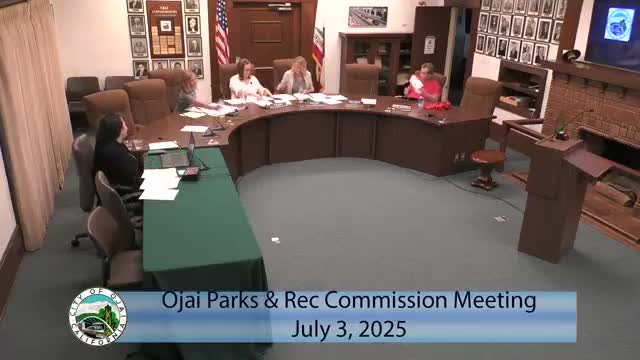
Summary
The Ojai Parks and Recreation Commission received an update from staff on the new Nordhoff High School pool and agreed to 'receive and file' the report, direct staff to agendize a broader community-pool discussion and consider forming an ad hoc committee to study options including partnership with OUSD or other sites.
The Ojai Parks and Recreation Commission on July 3 received an update from staff on the Nordhoff High School pool and agreed to “receive and file the update,” while directing staff to place a broader community-pool feasibility discussion on a future agenda.
The vote to receive and file came after Interim Recreation Manager Christy described recent outreach with the Ojai Unified School District (OUSD) and a staff response to the district’s proposal. “After reviewing our staffing resources and the possibility of managing the pool at Nordhoff High School, we’ve determined that for now we can only support public access during designated free swim times on weekends and throughout the summer months or vacation times,” Christy said during the meeting.
The nut of the discussion: commissioners and public commenters said the valley lacks a public pool and pushed for a more detailed feasibility study, clear operating-cost estimates and formal commission involvement in negotiations with the district. Council Member and Mayor Pro Tem Rachel Lang said she would ask the City Council to expand its planned discussion and collaborate with the commission.
Commission members noted that OUSD has begun early talks with the Channel Islands YMCA about running aquatic programming but that those discussions were nascent. City staff said they will return with updates as the district’s process develops. Commission members also discussed forming an ad hoc committee to explore alternatives beyond Nordhoff, and to look at feasibility, funding and operating models.
Public commenters urged active city participation. Bill Miley, who spoke in person, described the need for a community pool and said the city should “be selfish” in negotiating for local access. Steve Quilsey, identifying himself as a member of the school bond Citizens Oversight Committee, summarized bond and operating considerations and described the new pool as a 35-meter facility: “This is a 35 meter lap pool,” Quilsey said, and urged the commission to factor staffing, maintenance and liability into any plan.
Speakers and several commissioners said the district declined to fund a feasibility study earlier; commissioners cited a staff note that OUSD had been asked to consider a feasibility study and chose not to proceed. Cost figures discussed in public comment diverged: Quilsey said the capital cost for the pool project is “around $15,000,000,” while another commenter referenced an $18,000,000 figure; the Citizens Oversight Committee also recommended the district budget for up to $250,000 per year for operations and maintenance in its communications with the board.
Commissioners emphasized that Nordhoff’s schedule could limit public hours because school and athletic programming occupies much of the pool’s available time. Commissioners also discussed private fundraising to finance a city-led feasibility study and the possibility of pursuing other sites or a city-owned facility if that proved preferable.
The commission concluded the item by receiving and filing the report and asking staff to put a general “community pool” item on the next agenda so commissioners can consider forming a pool ad hoc committee. Chair Taylor stated on the record that the commission would “receive and file the report as presented.” The commission did not adopt a separate, binding agreement with OUSD during the meeting.
Looking ahead, Council Member Rachel Lang said she will place an expanded community-pool feasibility discussion on the City Council’s future agenda and seek opportunities for a joint council-commission meeting to coordinate direction.
The commission also reviewed related procedural items during the meeting: it approved the minutes from a prior meeting, adopted the commission’s regular meeting calendar for the remainder of the year and approved the meeting agenda.
The commission asked staff to return with more detailed program and cost data, and to present options for an ad hoc committee to lead a city-level feasibility effort if council supports that direction.