Get Full Government Meeting Transcripts, Videos, & Alerts Forever!
Get email alerts on the School Transportation Start Times topic
No spam. Unsubscribe anytime.
Cumberland committee reverses June decision on school start times after debate over bus costs
Summary
After hours of discussion about bus routing, special-education transportation and uncertain state and federal grant levels, the Cumberland School Committee voted to reverse its June decision to change 2025–26 elementary and middle-school start times and formed steps toward an outside routing study and a transportation/boundaries subcommittee.
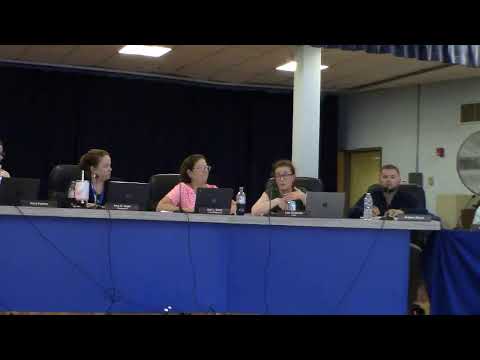
The Cumberland School Committee on Thursday voted to reverse a June decision to change elementary and middle-school start and dismissal times for the 2025–26 school year, citing new cost estimates for additional buses and uncertainty about state and federal grant funding.
The committee voted 4–2 to restore the schedule used in 2024–25 after a roll-call that split members over whether to absorb a sudden, larger-than-expected bus cost. The board earlier approved a motion to reconsider the June 26 vote (5–1), then approved a separate motion to reverse that earlier change (4–2). Ms. Feather made both motions; Ms. Smith seconded the reconsideration and Ms. Goldstein seconded the reversal.
Why it matters: members said the updated cost estimates — described in meeting remarks as “north of $400,000” in additional busing costs in some routing scenarios — and a likely reduction in some federal grant lines made the district’s fund balance projection riskier. Doctor Thornton, speaking as the district presenter, said the district’s fund balance stood at about 1.2 and that adding the new busing and grant reductions could lower it to about 1.07–1.08. Thornton also told the committee that Title I funding appeared secure but that Titles II, III and IV could be reduced or zeroed out, and said the IDEA special-education grant looked stable.
Committee members and Durham Transportation representatives debated whether recently supplied routing estimates adequately accounted for changes in which students must be transported this year, including an added fifth special-education program spreading special-education routes among elementary schools. Durham staff said they had begun routing work but that final bus counts depend on outstanding student-placement details such as kindergarten and preschool rosters.
Several committee members criticized the timing and volatility of the cost figures. “Less than 24 hours after our vote information that we received from Durham,” one member said, calling the swing from earlier estimates (one speaker cited $180,000) to roughly $400,000 “hard to have confidence” in. Another member who changed her vote said the short timeline, the size of the potential recurring cost and uncertainty about grants compelled returning to the existing schedule for 2025–26.
Technical details discussed: district staff and Durham representatives explained that tighter bell-time spacing between tiers — for example, between the high school dismissal and middle-school arrival — reduces available drive time and can force additional buses because a vehicle cannot be in two places at once. Staff also noted that a fifth elementary special-education program typically uses minibuses and that some private-school reimbursement (Mount Saint Charles) might be available — about $40,000, but not until July 2026 — so it would not offset this fiscal year’s costs.
Numbers and capacity: district staff told the committee there are about 179 students receiving specialized transportation (about 17.9 per special-education bus on 10 special-needs buses) and an additional roughly 30 preschool riders. Committee members discussed per-day contract rates cited in the meeting (a regular bus figure of about $512 per day and higher rates for 71-seat buses) and the operational limits that prevent larger buses on some roads. Staff also flagged that some state guidance (discussed with RIDE legal counsel) may be needed before pursuing an “opt-out” or waiver approach to required student busing under the cited statutory provision (transcript reference: 16-21-1).
Next steps: the committee agreed to hear an outside vendor presentation at its July 17 meeting. Staff said a company on the state contract (named in the meeting as Transpar) has proposed an inter-district efficiency review for $14,000; staff said results could be available by late fall, with boundary analysis as a possible additional cost and any operational changes potentially implemented for fiscal year 2027. The committee also discussed forming a daytime transportation and school-boundaries subcommittee but agreed to postpone formal appointment until the policy subcommittee can amend FERPA-related policy language to permit appropriate review of student-directory information; that appointment is expected at the July 17 meeting.
Votes at a glance: • Motion to reconsider the committee’s June 26 vote changing elementary/middle start times — motion by Ms. Feather, second Ms. Smith; roll-call: Yes — Mr. Dean, Ms. Feather, Ms. Smith, Ms. Goldstein, Chair (name recorded in roll call); No — Mr. Bacon. Result: 5–1 to reconsider. • Motion to reverse the committee’s June 26 vote and restore the 2024–25 start times (referred to as “Model A”) — motion by Ms. Feather, second Ms. Goldstein; roll-call: Yes — Ms. Feather, Ms. Smith, Ms. Goldstein, Chair; No — Mr. Dean, Mr. Bacon. Result: 4–2 to reverse.
What the committee did not decide: the board did not adopt a long-term routing plan or a district-wide opt-out policy for busing; members and staff repeatedly said more time and detailed routing work are needed to produce a firm budget number.
The committee adjourned after approving the meeting agenda at the start and voting to adjourn at the end of the session.