Get Full Government Meeting Transcripts, Videos, & Alerts Forever!
Get email alerts on the Sjr 9 Immigration Raids topic
No spam. Unsubscribe anytime.
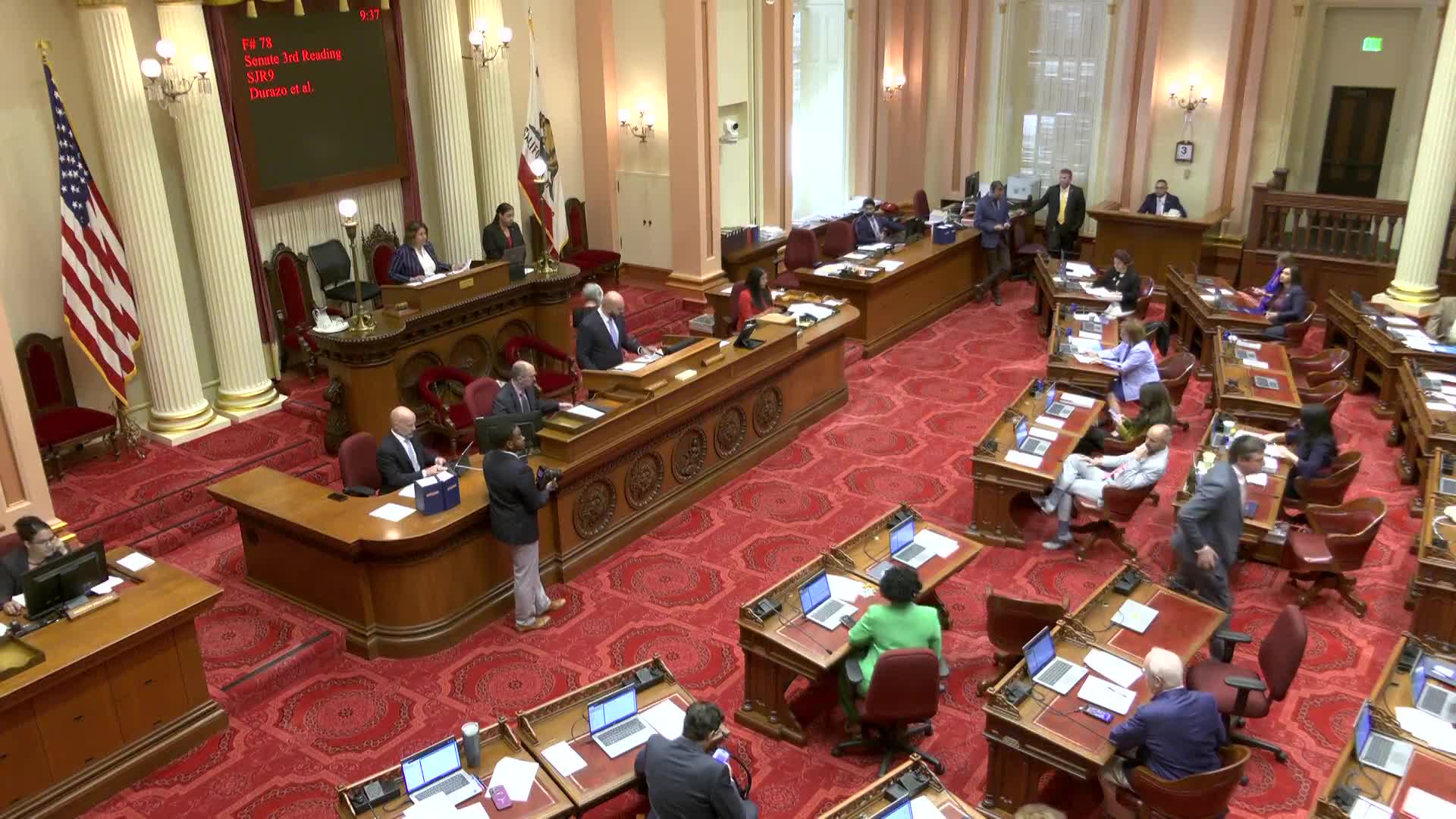
Senate adopts resolution denouncing federal immigration raids and militarized enforcement (SJR 9)
Summary
The California State Senate adopted Senate Joint Resolution 9, condemning recent federal immigration enforcement actions in the state, including warrantless arrests and use of federalized troops and National Guard elements. The resolution passed after extended floor debate and votes to lay competing amendments on the table.
SACRAMENTO — The California State Senate adopted Senate Joint Resolution 9 on Friday, a measure denouncing recent federal immigration raids and related militarized enforcement tactics that multiple senators said have terrorized immigrant communities across the state.
Senate Joint Resolution 9, introduced by Sen. María Durazo, drew extended floor debate and personal testimony from senators across the political spectrum before the chamber voted to adopt the measure. The final roll call on passage was ayes 29, noes 6.
The resolution condemns warrantless arrests, the use of masked and unidentified enforcement officers, and the federal activation of National Guard and military elements in California communities. Supporters described raids in Los Angeles and other counties that, they said, have resulted in U.S. citizens and long‑time residents being detained and families left in fear.
“Remembering people who are too often invisible or forgotten is important,” Durazo said in presenting the resolution, urging colleagues to support it. Several members recounted instances that they said showed due‑process violations and racial profiling; Senator Alex Padilla called the tactics “not the American way” and said the conduct bordered on “flirting with tyranny.”
Competing amendments and procedural votes
The bill drew two sets of floor amendments that were debated and then laid on the table by the Senate.
• Senator Strickland offered amendments (Set 1) to substitute language that would have expressed support for a bipartisan U.S. House resolution (H.R. 516) praising federal and National Guard responses to public disorder in Los Angeles. That amendment was laid on the table by a Senate vote of ayes 28, noes 9.
• Senator Valadares offered a second set of amendments (Set 2) that would have added context attributing recent raids to state policies such as SB 54 and urged more cooperation with federal authorities. Those amendments also were laid on the table by a vote of ayes 28, noes 9.
Floor debate and testimony
Legislators offered wide‑ranging remarks. Supporters of the resolution described mask‑worn enforcement teams detaining people at workplaces, schools and in public spaces and told stories of U.S. citizens and long‑time residents who were seized. Senator Richard Gonzales, speaking for the Latino caucus, described “masked men” and flash‑bang devices used in neighborhoods and said communities had been “terrorized.” Senator Padilla urged colleagues to view the raids as a moral and constitutional crisis.
Several speakers emphasized economic and public‑safety consequences — including estimates read into the record that mass deportations could cost California billions in tax revenue and economic activity; those figures were attributed on the floor to third‑party economic studies and caucus briefings rather than to the resolution itself.
Opponents and procedural context
Opponents argued the state had imposed policies limiting cooperation with federal immigration enforcement and that the raids were a predictable response when federal authorities could not rely on local identification of certain individuals. Senator Choi and others urged focusing on practical solutions and coordination with the federal government rather than symbolic measures.
Final vote and outcome
After debates and the procedural votes to lay the proposed amendments on the table, the Senate adopted SJR 9 by a roll call of ayes 29, noes 6. The resolution is a formal statement of the Senate condemning the described enforcement tactics and affirming the chamber's support for due process and protections for community members affected by enforcement actions.
What the resolution does and does not do
SJR 9 is a legislative resolution expressing the Senate's position; it does not change state law or impose enforcement requirements on federal authorities. Multiple senators acknowledged the measure is symbolic but said that a clear statement from the legislature is necessary to record the state's position and to support constituents experiencing fear and family separation.
Ending
The debate included personal testimony, policy argument and repeated references to state law SB 54, federal enforcement practice, and economic studies. The resolution's passage signals the Senate's formal objection to the enforcement tactics described in the chamber and will serve as an official statement of the Legislature's position.