Get Full Government Meeting Transcripts, Videos, & Alerts Forever!
Get email alerts on the Film And Tv Tax Credit topic
No spam. Unsubscribe anytime.
Senate approves expansion of film and TV tax credit, urging immediate effect
Summary
The California State Senate voted to pass Assembly Bill 1138, which expands the state's film and television tax credit program to encourage production, add new eligible production types and strengthen diversity and hiring reporting. The measure passed on an urgency vote requiring 27 votes.
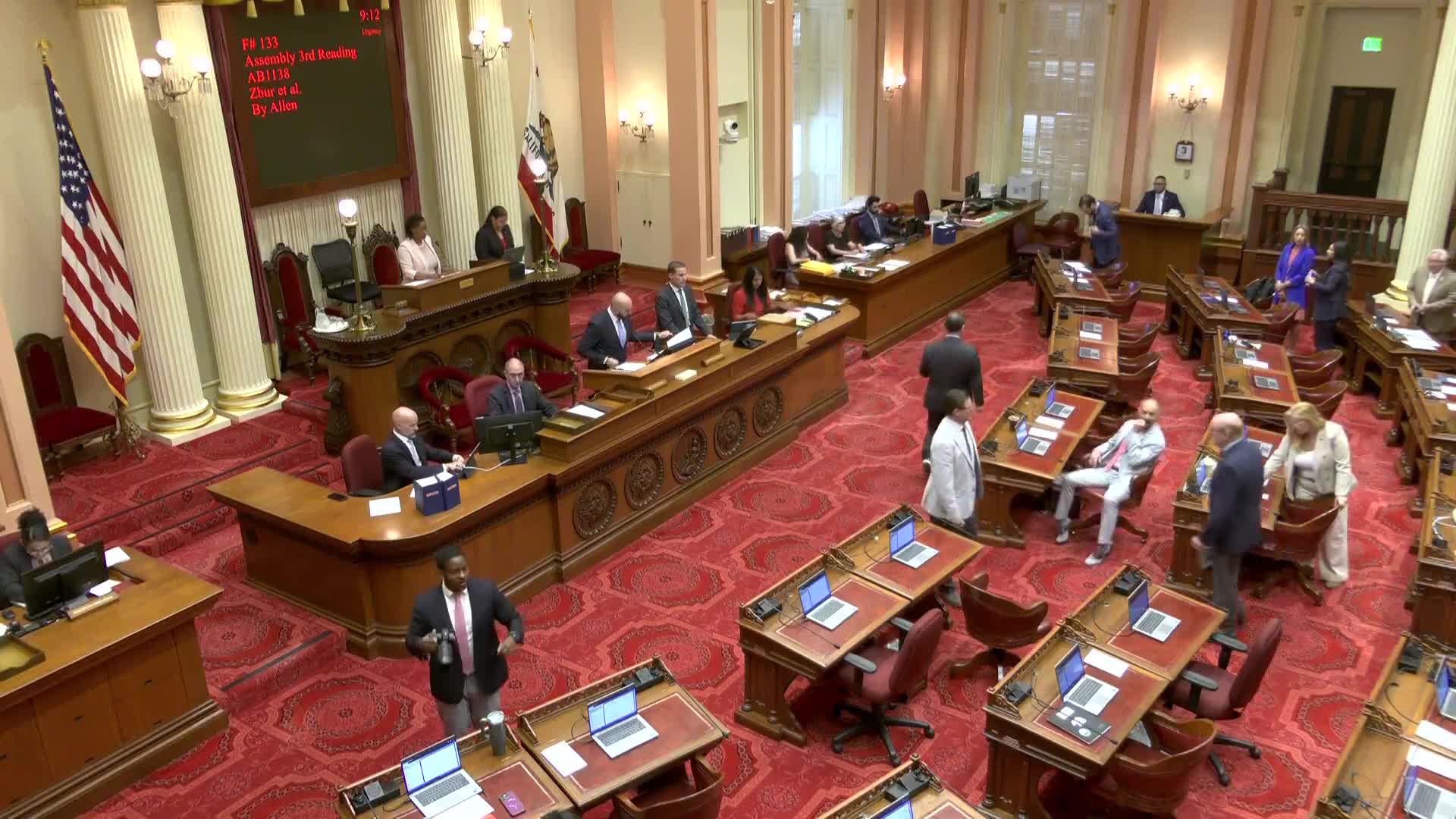
SACRAMENTO — The California State Senate on Friday approved Assembly Bill 1138, a measure to expand and modernize the state's film and television tax credit program, voting the bill out on an urgency vote so it could take effect immediately.
Senator Ben Allen, who presented AB 1138 on the Senate floor, said the bill “expands and modernizes the film and TV tax credit program to increase production and increase needed jobs for our workers in the entertainment industry,” and framed the measure as building on funding recently approved in related legislation.
The bill drew floor debate over whether the state should use incentives to retain film production. Senator Niello spoke in opposition, citing a Legislative Analyst's Office finding that “there is currently no compelling evidence to suggest that film tax credits have a positive effect on the size of the state's economy overall” and warning about the opportunity cost of dedicating state resources to transient production activity.
Supporters said the credit preserves a key California industry and benefits workers and nearby small businesses. Senator Valadares said the incentive is “an investment in over 700,000 jobs,” and argued productions create ripple effects for restaurants, vendors and schools. Several senators emphasized provisions in the bill meant to expand access and equity: Senator Smallwood Cuevas highlighted new diversity tracking at the ZIP-code level and reporting on veteran hiring, and Senator Allen noted the bill for the first time explicitly includes animation production and includes a special uplift for production done outside of the Los Angeles area.
The Senate also debated the bill's role in retaining long-term production investment versus creating only temporary, on-location work. Senator Niello called the competition for credits “a race to the bottom,” while proponents pointed to new soundstage construction and studio investments as evidence private investment will follow the policy.
On the urgency clause, which requires 27 votes, the Senate voted aye 32, no 2; the measure passed that procedural threshold on the floor and then proceeded through the legislative process. The roll call on the urgency motion showed broad bipartisan support on the floor for the measure as presented.
What the bill does
AB 1138 modifies California's existing film and television tax credit program. Sponsors say the changes aim to (1) broaden eligible production types (including animation), (2) provide incentives for work done outside Los Angeles County, and (3) strengthen workforce diversity and local-hiring reporting so the state can track whether jobs are reaching workers in neighborhoods where filming takes place.
Voices on the floor
• "I'm so pleased to stand and present AB 1138," Sen. Ben Allen said while urging colleagues to approve the bill.
• Opposing the measure, Sen. Niello said the credit "works" to attract productions but questioned whether it produces a net economic benefit to the state's economy as a whole.
• Sen. Valadares said the legislation "is an investment in over 700,000 jobs" and stressed the sector's statewide economic ties.
Formal action
The Senate approved the urgency motion for AB 1138 (required for immediate effect) on a roll call of ayes 32, noes 2. The procedural vote was announced on the floor; the bill then continued through the legislative process toward final enrollment and transmittal to the governor.
Next steps
Because the bill was considered with an urgency clause on the Senate floor, it requires the additional steps in statute for a bill to become law — including transmittal to the governor after final passage in both houses. The transcript does not record a gubernatorial action.
Ending
Supporters called AB 1138 a way to retain and grow California production jobs and to expand career pathways for behind‑the‑scenes workers. Opponents characterized it as a subsidy that may not yield permanent statewide economic growth. The Senate vote on the urgency clause indicates the chamber's intent to expedite the measure.