Get Full Government Meeting Transcripts, Videos, & Alerts Forever!
Get email alerts on the Community Health Photovoice topic
No spam. Unsubscribe anytime.
Public health officials expand 'photo voice' in CHIP; aim to translate community images into policy and services
Summary
Lexington Fayette County Health Department presented its Community Health Improvement Plan work on July 3, 2025, highlighting use of photovoice participatory research, a 400+ behavioral health resource directory, membership growth and proposed partnerships to address transportation and access barriers. Next CHIP meeting Aug. 21 at Marksbur
LEXINGTON, Ky. — On July 3, 2025 the Lexington Fayette County Health Department briefed the Social Services and Public Safety Committee on the Community Health Improvement Plan (CHIP), describing how a photovoice participatory method is centering residents' lived experience in program design.
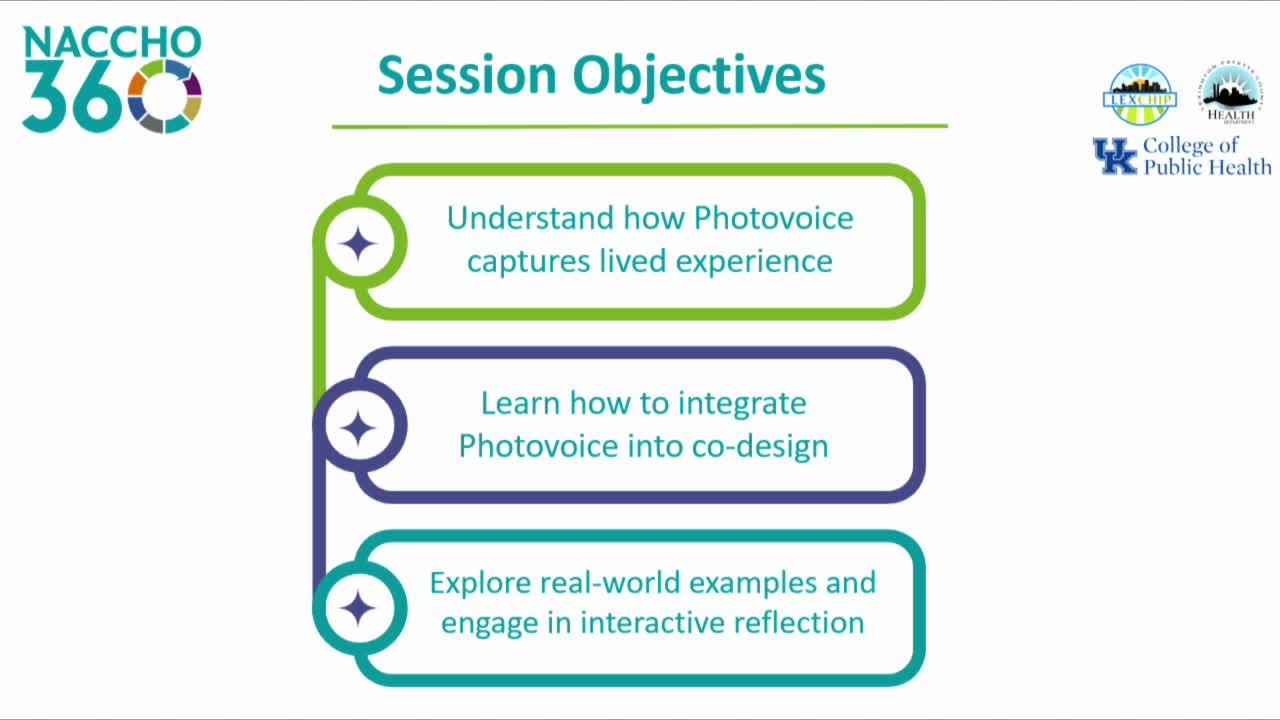
Jeanette Hart and a colleague identified in the presentation as Christy described photovoice as a method that asks residents to take photographs that illustrate barriers and strengths related to health access and to attach short narratives. Hart said the process moves "from designing on our own to designing with our communities," and credited partnerships with LexArt and the University of Kentucky College of Public Health.
Why it matters: Health department staff said images and participant narratives revealed practical barriers — stigma, transportation, housing instability and social isolation — that affect behavioral health access and helped the department shape specific CHIP objectives.
Key outcomes and pilot ideas
- Resource directory: The health department reported creation of a 400-plus behavioral health resource directory developed with the University of Kentucky. - Participation and reach: Staff said CHIP membership grew more than 300% over a year; they reported average meeting attendance around 75 people and a one-time release event with more than 100 participants. Survey results presented showed 96% of respondents rated meetings productive or very productive and 90% said they felt comfortable sharing opinions. - Photovoice examples and derived objectives: Two participant photographs shown in the presentation were titled "Transportation Barriers to Behavioral Health" and "Doors to Recovery." The department said those images shaped CHIP objectives to improve resource awareness and transportation access. - Partnerships under discussion: Staff said they are exploring transportation voucher options with United Way 2-1-1 to reduce travel barriers to appointments and services. - Next meeting: The department invited committee members to a CHIP meeting on Aug. 21, 12–2 p.m., at the Marksbury Library.
Council engagement and requests
Council members asked how photovoice-derived insights move from community input to formal action. Hart said the health department sees itself as a connector and an advocate: it can perform "warm handoffs" to existing services and can build collaborative partnerships, and staff welcomed the possibility of presenting formal recommendations to the council in the future.
Ending
Committee members expressed support for the participatory approach and for a future channel to present data-driven policy or program recommendations to city decision-makers.