Get Full Government Meeting Transcripts, Videos, & Alerts Forever!
Get email alerts on the Public Safety Staffing topic
No spam. Unsubscribe anytime.
Public safety chiefs report staffing gains; corrections vacancies fall to 18
Summary
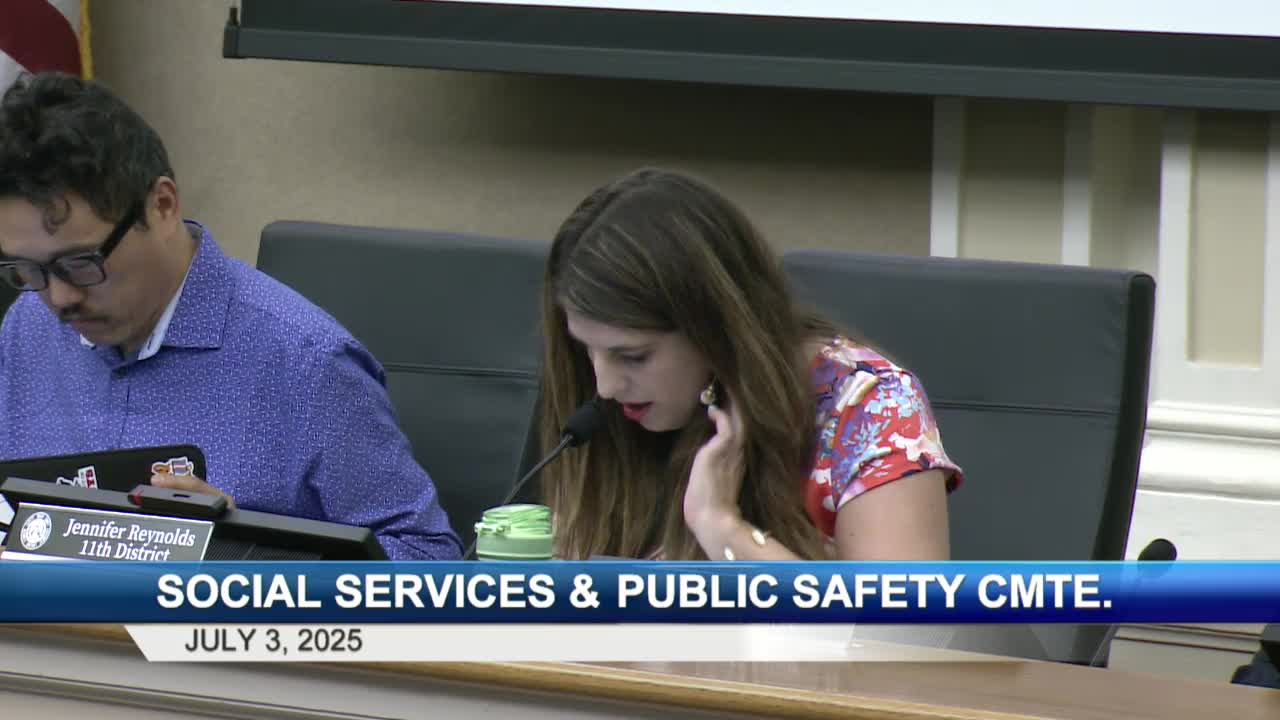
At a July 3, 2025 Social Services and Public Safety Committee meeting, chiefs from Lexington's public safety divisions gave an annual update on recruitment, retirement and retention, reporting notable gains but warning staffing levels will continue to fluctuate.
LEXINGTON, Ky. — At a July 3, 2025 Social Services and Public Safety Committee meeting, chiefs from Lexington's public safety divisions gave an annual update on recruitment, retirement and retention, reporting notable gains but warning staffing levels will continue to fluctuate.
The update, presented by Chief Colvin (Corrections), Chief Weathers (Police) and Chief Wells (Fire), emphasized a mix of paid incentives, targeted recruiting and expanded wellness and mentoring supports as drivers of recent improvements. "We pay new employees a $3,000 sign on bonus. You can get $1,000 for bringing a member to the division," Chief Colvin said, and noted that police also receive a "$3,000 lump sum" tied to state incentive funds.
The chiefs gave several concrete measures and metrics. Chief Colvin said corrections vacancies have fallen from a reported low of 124 vacancies to 18. Police provided digital-recruiting numbers dating to April 2023: 8,302,528 impressions, a unique reach of about 771,000, 27,705 landing-page views and 5,280 completed applications. Chief Wells said the fire division's vacancy count on the slide was 14 and that a recruit class is under way; the department expects retirements in January that will influence future vacancy planning.
Why it matters: staffing in corrections, police and fire affects response times, case clearance and service continuity. Committee members praised the coordinated approach: Councilwoman Gray called the cross-division cooperation "an honor to work in" and said Lexington's public safety teamwork is unusually strong.
How chiefs said they achieved the gains
- Targeted incentives: sign-on bonuses and referral bonuses were cited by corrections leadership; police said a state incentive program provided an additional lump-sum payment. - Broad recruiting channels: chiefs said social media, bus ads, career fairs, partnerships with Fayette County Public Schools and referral by current employees were primary applicant sources. Police cited use of recruitment platforms named in the presentation (Interview Now and Red Tag) and a forthcoming video produced with Studio 46. - Retention and rehires: departments reported rehiring some retirees in part-time or civilian roles to retain experience and to handle backlog work (for example cold-case follow-up), and increasing safety-officer and peer-support staffing to reduce frontline workloads. - Wellness and mentoring: all three divisions highlighted wellness programs (behavioral-health services, an athletic trainer, wellness coordinators, peer support teams and family-accessible resources) and early, targeted mentoring for recruits as retention strategies. Chief Wells said the fire division's Brenda Cowan camps brought more young women into the pipeline; police and corrections are using mentoring and family outreach to reduce early attrition.
Council questions and clarifications
Council members pressed for details on uniform stipends (Council member Beasley); chiefs said amounts vary by division and some allowances are bargained through collective bargaining agreements. Chiefs and council members also discussed recruitment of women and community-based recruiting in neighborhoods with lower trust in police; Chief Weathers said Lexington is increasing efforts and cited a diversity recruitment committee that meets quarterly.
Limits and next steps
Chiefs noted planned retirements, upcoming bargaining-unit contract expirations and routine fluctuation in vacancy counts as ongoing constraints. Several chiefs said they will continue to hold multiple application cycles or one continuous application process depending on division needs.
Ending
Committee members commended the divisions for progress and asked chiefs to continue reporting staffing metrics and implementation details at future meetings.