
Riley County weed program tightens rules for discounted herbicide sales; sets HHW and paint collection dates
Get AI-powered insights, summaries, and transcripts
Subscribe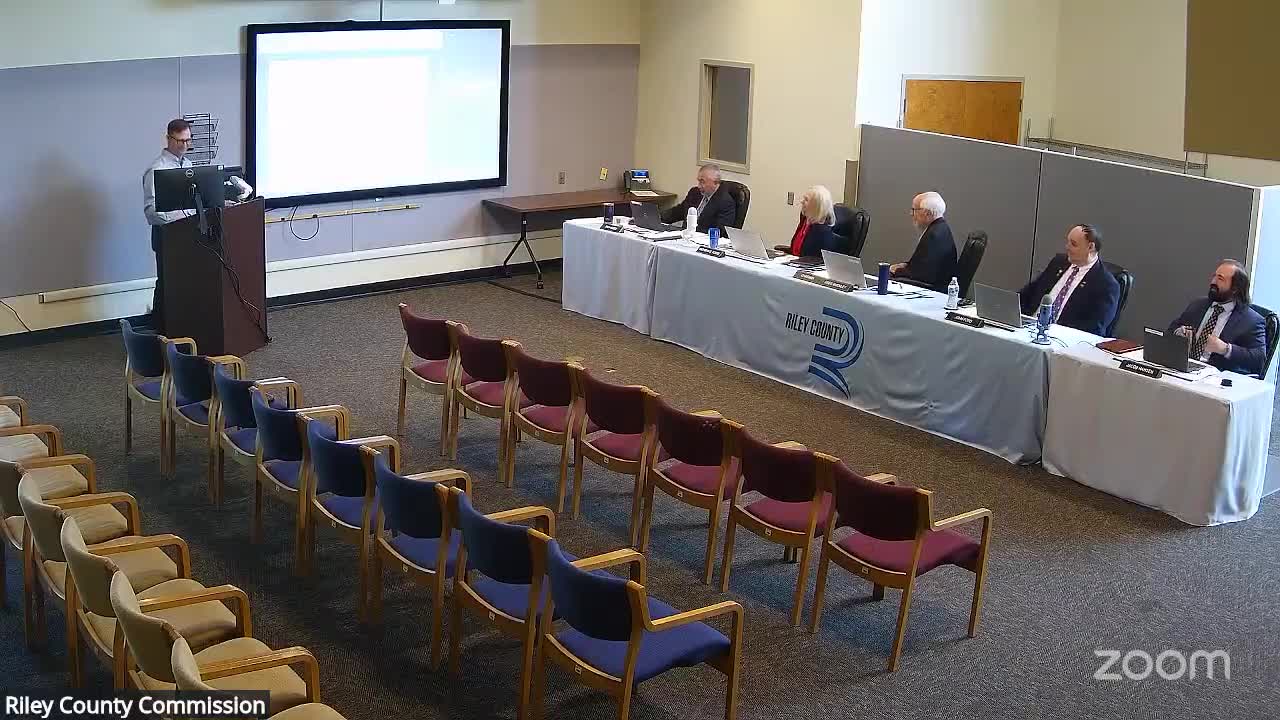
Summary
Noxious weed staff proposed new guidelines for cost‑share chemical purchases, announced a household hazardous waste collection and warned the public about poison hemlock after a July 3 update to the county commission.
Riley County’s noxious weed and household hazardous waste (HHW) staff told the commission July 3 they will tighten rules for the county’s discounted cost‑share herbicide program and reminded residents of upcoming HHW services.
Mike Kohler, Riley County noxious weed and HHW staff, told commissioners the program remains intended to make chemical treatment affordable for landowners with documented weeds, but a small number of users have attempted to obtain large volumes and use subsidies “off target.” To reduce misuse and comply with state requirements, Kohler proposed several operational changes the county will publish publicly.
Key changes Kohler described include: purchases over 65 gallons in a spray season will require a land inspection to verify noxious weed presence; landowners must be present at the time of purchase and one buyer cannot purchase for multiple landowners; payment will be required at the time of purchase; and all sales will be final. Kohler said 65 gallons would treat “well over 100 acres” and represents roughly 95% of current sales, so the rule targets a small number of very large purchasers.
Kohler said the Kansas Department of Agriculture has been reviewing county chemical programs and that the county has consulted with the department on the proposed guidelines. He also noted the schedule for state contracts and township spraying varies annually and confirmed county operators will continue regular roadside mowing and follow‑up spraying where needed.
On HHW, Kohler said the county’s household hazardous waste collection is scheduled for Saturday, July 12 from 8 a.m. to noon and that recycled latex paint remains available at the county facility. Kohler and staff also attended lithium‑ion battery training and visited a Colorado paint recycling operation to study programs that fund paint recycling through a small retail processing fee.
Kohler closed with a seasonal reminder about poison hemlock, a plant that can reach about 6 feet tall and remain toxic after it goes dormant. He urged residents to avoid ingestion and to report large patches; he noted poison hemlock is not currently classified as a state noxious weed because it is considered indigenous, although county roadside spraying can reduce local populations.
Commissioners asked how the county would implement the new rules; Kohler said rules and point‑of‑sale notices will be posted and the department will do targeted outreach to large purchasers.