Get Full Government Meeting Transcripts, Videos, & Alerts Forever!
Get email alerts on the Land Use Rezoning topic
No spam. Unsubscribe anytime.
Hempstead board hears monthslong debate on Woodmere Club rezoning; decision reserved
Summary
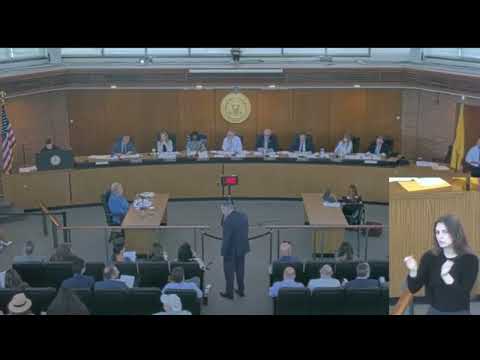
The Town of Hempstead Town Board on July 1 held a public hearing on an application from WG Woodmere LLC to rezone about 55.6 acres of the former Woodmere Country Club that lie inside the town from the Coastal Conservation District to a CA residence district.
The Town of Hempstead Town Board on July 1 held a public hearing on an application from WG Woodmere LLC to rezone about 55.6 acres of the former Woodmere Country Club that lie inside the town from the Coastal Conservation District to a CA residence district. The applicant said the change would allow a 160‑unit, age‑restricted (55+) condominium development on roughly 34 acres in the northern part of the parcel and preserve about 21.6 acres of open space in the southern portion. After testimony and public comment, the board closed the hearing and reserved decision for a later date.
The applicant’s legal and technical team told the board the plan concentrates development on higher ground away from wetlands and flood zones and provides larger setbacks than the CA district requires. Jack Martins, attorney with Harris Beach, introduced the proposal and presented principals and consultants. Kevin Walsh, chief engineer for BHB, described two three‑story residential buildings (46 feet high as measured by the town code) over largely below‑grade parking, a two‑story clubhouse, amenities including a pool and courts, and about 428 parking spaces overall. The team said the project would seek a variance for height (the CA zone limit is two stories and 35 feet) and that the proposed density — roughly 4.71 units per acre on the 34‑acre development parcel — is well below the CA zone maximum of 20 units per acre. Utilities would be connected to county sewers with public water by Liberty Water and electricity and gas by PSEG Long Island and National Grid, the applicant said.
Traffic and environmental analyses were presented. Patrick Lenahan of VHB said a traffic impact study examined AM and PM commuter peaks, Saturday midday and Sunday midday to capture local religious peaks; it modeled nearby intersections and concluded the site would be a modest traffic generator and would not cause “significant impacts” within the study area under the proposed access scheme. The plan as described includes two full access driveways on Broadway (opposite Prospect and Linden), and a limited, controlled access on Meadow Drive intended primarily for service, emergency use and controlled egress; there would be no access from Keene Lane. David Wortman of VHB summarized an expanded environmental assessment and a Part 1 EAF, saying the development footprint was chosen to avoid wetlands and floodplains and that low‑lying, flood‑prone areas would be preserved as open space.
Residents, village officials and other stakeholders gave mixed testimony. Supporters included Jake Harmon, mayor of the Village of Woodsburg; Sam Demias, mayor of the Village of Lawrence; Mary Foreman, a member of the Nassau County Planning Commission and president of School District 15 in Lawrence; Jerry Castro, Lawrence village administrator; and several nearby homeowners who said the plan balances development and open space and resolves long‑running litigation tied to the property. South Shore Audubon president Russ Como said a pair of bald eagles recently nested on the property and urged preservation of habitat within the overall project.
Opponents raised traffic, parking, flooding and process concerns. Neighbors and nearby homeowners said Broadway and Meadow Drive are already congested, questioned the traffic study’s timing (several speakers noted school dismissal periods were not separately studied), and expressed skepticism about the impact of 400+ parking spaces and the likely number of vehicles entering and leaving the site. Several speakers pressed the board to require a conservation easement held by an independent steward (for example, a municipality or a qualified land trust) and asked that deed restrictions be explicit that preserved acreage remains permanently unbuildable. Other concerns included building height on portions of the site and the placement of the development relative to adjacent villages; speakers asked the board to ensure setbacks and uniform height limits are enforced across the site.
Board action and next steps: After closing the hearing, the board voted to reserve decision; no final zoning action was taken July 1. The roll call recorded Supervisor Don Clavin, Councilman Dunne, Deputy Supervisor Dorothy Goosby, Councilwoman Miller, Councilman Muscarella, Councilwoman Ryder and Councilman Schneider all voting “Aye” on the motion to close the hearing and reserve decision. The applicants and their team said they will submit detailed engineered site plans, at which point county and town technical reviews (including review by the Nassau County Department of Public Works and the County Department of Health) and required subdivision approvals would follow. The board said written public comments submitted to the town would be included in the record and considered before any final vote.
Why it matters: The property has been the subject of litigation and multiple proposals for nearly a decade; the decision will affect floodplain management, open‑space preservation, traffic patterns and the character of adjacent villages. The July 1 hearing produced technical presentations, both supportive and skeptical local testimony, and explicit questions the board will need to resolve as part of any zoning decision.
The board’s decision remains pending; parties on both sides of the proposal said they will submit further comments and documentation for the board’s consideration before a final vote.