
Riley County budget review flags service cuts, treasurer proposes ending in‑office driver’s license processing
Get AI-powered insights, summaries, and transcripts
Subscribe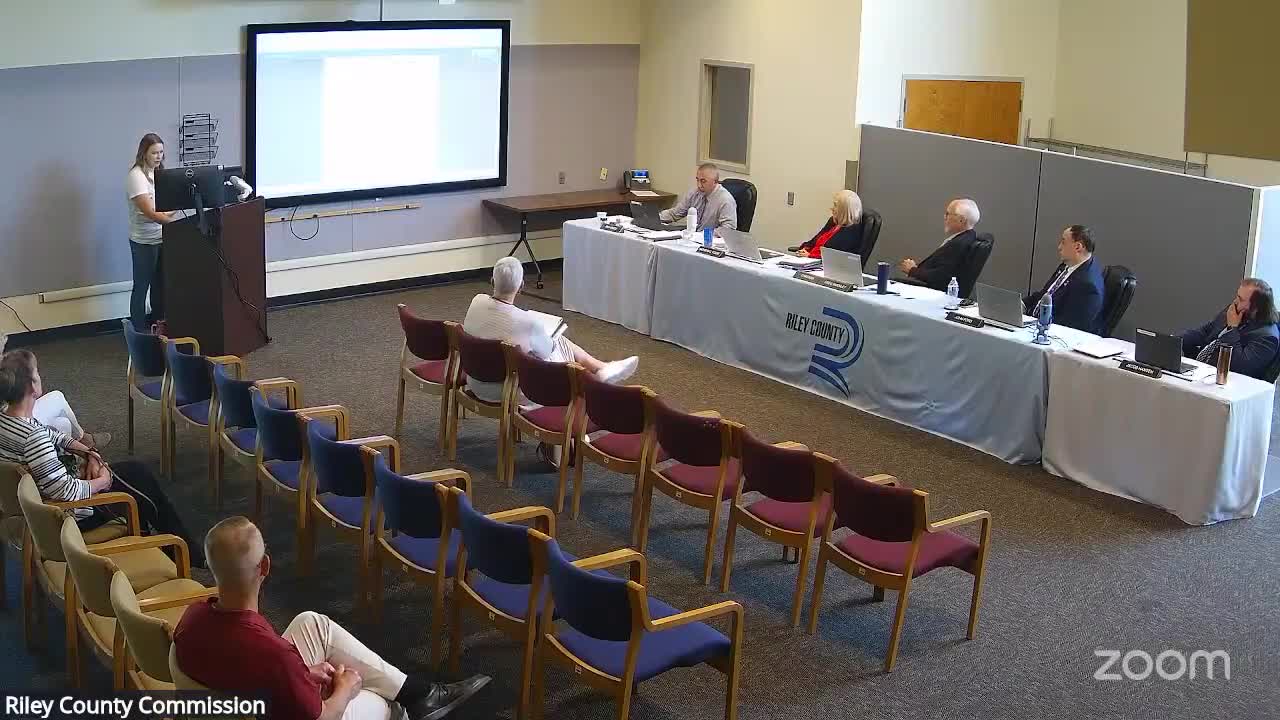
Summary
At a July 3 budget work session, Riley County staff outlined a list of proposed reductions to meet revenue targets; the county treasurer proposed ending in‑office driver’s license services, adding a small facility fee and reconsidering other county services to close gaps.
Riley County commissioners heard a budget work session July 3 that outlined proposed cuts and new revenue options as staff try to close a multi‑million dollar gap and avoid going below the county's revenue neutral rate.
Budget and finance officer Britney Phillips told commissioners that falling “below the revenue neutral rate” could create deficits, force service cuts or borrowing and damage the county’s fiscal credibility. Phillips presented a list of changes that have already been made to bring the budget closer to balance and identified areas for further review, including the health department, public works and county services funded in part by the general fund.
Phillips said recent edits reduced several departmental requests, and she listed larger reductions including $338,027 in the health department budget. She said some of that reduction reflects timing and grant‑related carrying amounts: "staying at or above the revenue neutral is critical for policy credibility and fiscal stability," Phillips said.
Riley County Treasurer Shiloh (first name used in the meeting) answered commissioners’ request to identify services that are not statutorily required and could be trimmed. Shiloh recommended several options for reducing costs or increasing revenues: ending the county’s in‑office driver’s license processing, reconsidering whether the county should continue some commercial and IRP (interstate registration) vehicle services, evaluating the building receptionist position and adopting a modest facility fee for motor vehicle transactions handled inside the county office building.
Shiloh estimated ending in‑office driver’s license services and not replacing an employee scheduled to retire could save roughly $50,000 through attrition; she noted most driver’s license transactions are a small‑volume courtesy to local residents and that a full‑service driver’s license office exists in an adjacent county. She also estimated a facility fee of $2.50 per in‑office motor‑vehicle transaction could yield $50,000–$75,000 in additional revenue, which would reduce the county’s general‑fund subsidy for motor vehicle operations.
Commissioners discussed tradeoffs. Several said they disliked adding fees but recognized the county has limited tools if the state does not increase funding for mandated state functions handled locally. One commissioner asked staff to pursue legislative assistance on state funding and fee structures; another said eliminating in‑office driver’s license services would likely cause public complaints but could be feasible. The board asked staff to return with precise numbers and implementation details.
The meeting record shows no final board vote on any of these specific cuts during the July 3 session; commissioners directed staff to prepare follow‑up information and to continue reviewing appropriations and program options ahead of budget adoption.
Ending note: staff said they will bring a detailed appropriation list and updated budget worksheet to upcoming meetings and will supply commissioners with clearer line‑item breakdowns before any final decisions are made.