Get Full Government Meeting Transcripts, Videos, & Alerts Forever!
Get email alerts on the Interchange Overlay topic
No spam. Unsubscribe anytime.
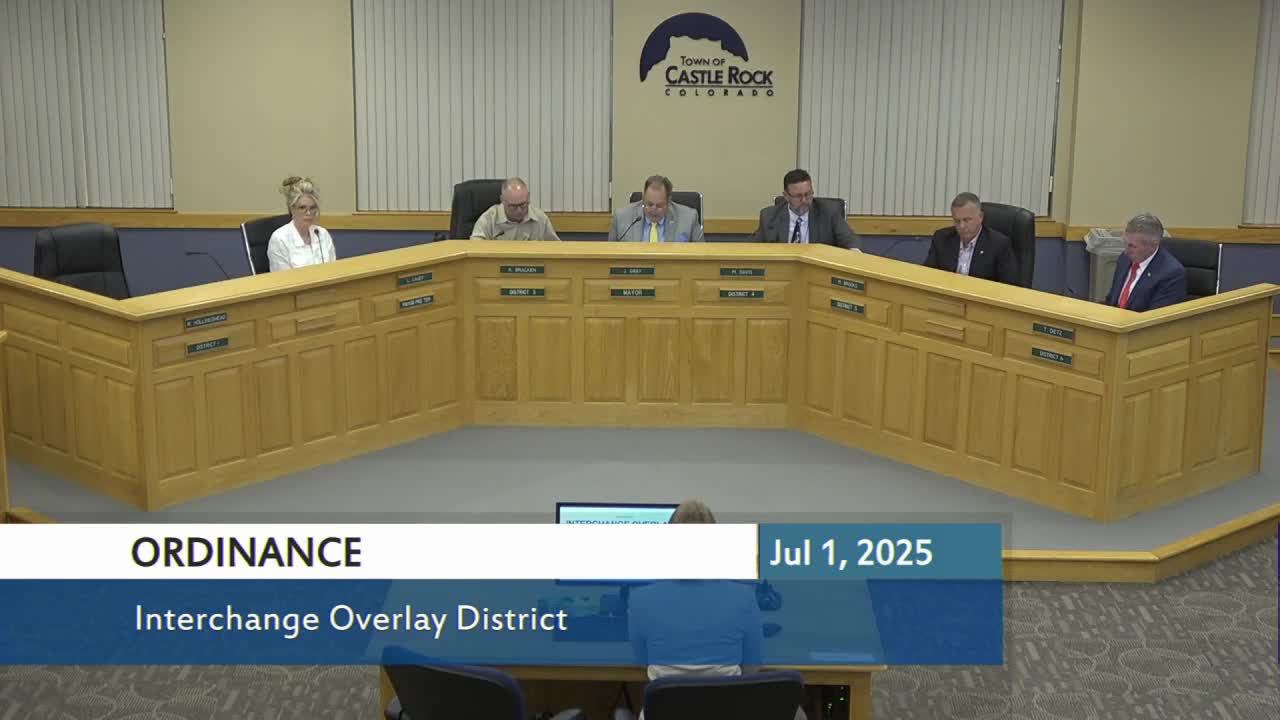
Vote on eliminating interchange overlay district deadlocks; council does not adopt repeal
Summary
A proposed ordinance to remove the interchange overlay district from town code failed on a tie vote after residents and landowners asked for more time and information about consequences for unincorporated parcels near planned corridors.
Council considered an ordinance that would prevent any additional properties from using the interchange overlay (IO) zoning option in the future. The IO district is a voluntary zoning tool adopted in 2010 that was intended to allow mixed‑use and increased building heights near interchanges; only two properties have used IO to rezone since its adoption.
Planning staff explained the ordinance would preserve existing IO zoning but would remove the IO option from the code effective September 1, 2025, so new properties could not opt into that specific overlay. Staff emphasized it would not prevent property owners from proposing custom planned developments under the normal rezoning process.
Several landowners and non‑residents, including Glenn Burmeister and Lauren Temple representing 3 Oaks Ranch, urged the council to table the ordinance. They said some parcels likely to be annexed or otherwise impacted by future right‑of‑way changes have relied on the IO provisions in discussions with developers and that removing the option without broader outreach would disadvantage unincorporated property owners.
After discussion, the council voted on the proposed ordinance. The roll‑call vote resulted in a tie; the motion failed and the IO option remains available in code. The council did not adopt the proposed change and staff said they would not modify the mapping or IO language without further direction.