Get Full Government Meeting Transcripts, Videos, & Alerts Forever!
Get email alerts on the Public Comment topic
No spam. Unsubscribe anytime.
Public comment dominated by calls to condemn antisemitism and divided views on data centers
Summary
The July 1 public‑comment period drew large, coordinated testimony demanding the board condemn antisemitic rhetoric and arguing for and against data centers. Board leadership prioritized speakers who addressed items on the agenda before other public comment.
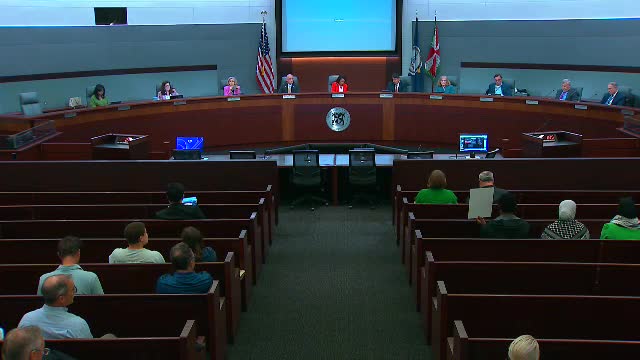
The Loudoun County Board’s public comment period for the July 1 meeting was dominated by two recurring themes: widespread calls for the board to publicly condemn antisemitic speech that several speakers said had recurred at prior meetings, and an intense debate over data centers, especially the Cross Mill Center application under consideration.
Organized public input: Dozens of speakers—many identifying themselves as Jewish community members, allied supporters, or representatives of nonprofits—asked the board to explicitly condemn antisemitic rhetoric. Several speakers said the board’s past silence or inaction had allowed hateful speech to persist in public meetings. Olga Goncharov told the board that "the board's continued silence on this matter effectively legitimizes hate by allowing it to go unchallenged." Many speakers urged the board to revise public‑comment rules to prioritize agenda items and limit off‑topic and abusive rhetoric.
Countervailing testimony: Other speakers used public comment to support the Cross Mill data center application, arguing it would bring tax revenue and jobs. Small‑business owner Jeff Hadlock said, "The data center industry creates a ripple effect that benefits small local business like mine," and other contractors and landscape firms described steady work from data‑center construction and operations.
Board process changes: Chair Phyllis Randall said she would call first on speakers who signed up to address items on the meeting agenda (or future scheduled items), and only then take general public comment. Several supervisors and staff acknowledged the need to manage the public‑comment session to allow those with business before the board to be heard, while others urged stronger actions—such as explicit condemnations or rule changes—to prevent hateful speech.
Why it matters: The tenor of public comment reflected deep community divisions: some residents asked for clearer enforcement of rules and for the board to speak against antisemitism; others said protests against data‑center policy and the county’s relationship with the technology and development community raised valid concerns that deserved to be heard in public. The board did not adopt new public‑comment rules at the meeting but acknowledged the issue and invited further engagement.
Next steps: Several community leaders and supervisors said they plan additional meetings and outreach on both topics. The board did not vote on a formal resolution condemning antisemitic speech at the July 1 meeting.
Representative quotes: Olga Goncharov: "The board's continued silence on this matter effectively legitimizes hate by allowing it to go unchallenged." Jeff Hadlock: "The data center industry creates a ripple effect that benefits small local business like mine."