Lifetime Citizen Portal Access — AI Briefings, Alerts & Unlimited Follows
U.N. outlines 'UN80' reform plan; secretary-general to propose 15–20% budget reductions and about 20% staff cuts
Loading...
Summary
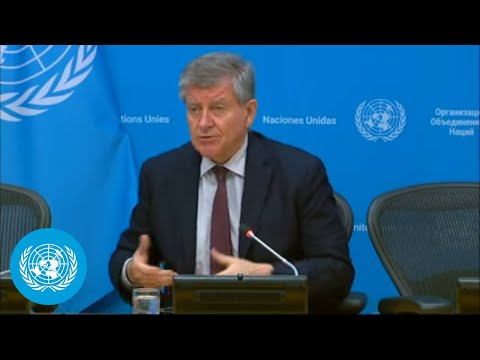
Guy Ryder, the Under‑Secretary‑General for Policy, told reporters at a United Nations press briefing that the secretary‑general will present revised budget proposals in September that are expected to include “reductions in posts of some 20% and reduction in the level of the budget of 15 to 20%.”
Guy Ryder, the Under‑Secretary‑General for Policy, told reporters at a United Nations press briefing that the secretary‑general will present revised budget proposals in September that are expected to include “reductions in posts of some 20% and reduction in the level of the budget of 15 to 20%.”
Ryder said the announced UN80 initiative is organized in three linked work streams: (1) revised budget proposals and efficiency measures, (2) a systematic review of implementation of mandates, and (3) a review of U.N. structures and possible program realignments. He said the mandate review is the most policy‑focused element and that the secretary‑general will present a report “by the end of this month.”
Why it matters: the proposals would affect staffing, program delivery and the U.N. Secretariat’s ability to meet requests from member states. Ryder said leaders are trying to balance financial constraints with the need to preserve core functions and the U.N.’s three pillars — peace and security, development and human rights.
Ryder described the mandate review as a data‑driven effort intended to address what he called a “very heavy corpus” of resolutions and decisions that generate meetings and reports. He said the secretariat’s analysis shows roughly 4,000 mandates in the corpus under review and that the aim is to identify duplication and opportunities to implement mandates more efficiently rather than simply singling out specific mandates because of cost.
On timing and process, Ryder said the budget proposals will follow established U.N. budgetary review procedures and will go through the Advisory Committee on Administrative and Budgetary Questions (ACABQ) and the Fifth Committee at the General Assembly. He said the SG’s budget submission in September will be necessarily time‑constrained and that member states will quickly move to center stage in deciding what to do with mandates and any structural proposals.
Member states’ reactions, according to Ryder, have been mixed: many view the initiative as timely and necessary and have encouraged “boldness and ambition,” while others urge caution so that valued functions are not lost in a rush to cut costs. Ryder said he has engaged with the U.S. government and other delegations; the United States, he said, is “following the process with interest” and offered an intervening comment during recent briefings but has not yet spelled out how it would judge final outcomes.
Ryder also discussed possible relocation of certain functions from high‑cost to lower‑cost locations and said the secretariat is looking first at “backroom” functions that do not depend on proximity to diplomatic missions. He cautioned relocations carry costs and that savings are not automatic; for example, costs for international professional posts can be similar across duty stations while locally recruited general‑service positions present different savings opportunities.
On technology, Ryder said the secretariat is already applying artificial intelligence in its analytic work and expects AI to be part of efficiency gains, while signaling careful management of implementation and governance as the use expands.
Ryder highlighted the longer funding context but distinguished UN80 from the broader global financing gap for sustainable development, saying the secretariat is focused on the United Nations’ internal budgetary and organizational issues. He noted the Secretariat is operating this year at about 83% of its originally adopted assessed budget level and that 112 member states had paid assessed contributions in full for the year.
What’s next: Ryder said the secretary‑general’s report later this month will deepen the data analysis and outline options and objectives for member states to consider; any intergovernmental process or formal decisions on mandates, structures or staffing would be for member states to authorize.