Get Full Government Meeting Transcripts, Videos, & Alerts Forever!
Get email alerts on the Water Resources topic
No spam. Unsubscribe anytime.
Water board notifies Ramsey County of snag-and-clear project, commissioners discuss recording meetings
Summary
The county received notice that the Water Resource District approved a Newbury snag-and-clear project and assessment changes; commissioners discussed allowing the water board to record or stream meetings to increase public access and accessibility features such as closed captioning.
Ramsey County commissioners received a written notice that the county’s Water Resource District approved bringing a proposed Newbury snag-and-clear project to the county commission and that the water board had set assessment rates for associated districts.
County staff relayed the water board’s actions: the water board asked the county to set a public hearing and approved a resolution to allow public comment under the county code cited in the packet; the water board also set an assessment for the "Grand Harbor assessment district" at $2.50 per acre and reduced the Hamer Sullivan assessment from $1.50 per acre to $0.75 per acre. The water board’s office manager also approved increasing weekly hours from 30 to 35, the notice said.
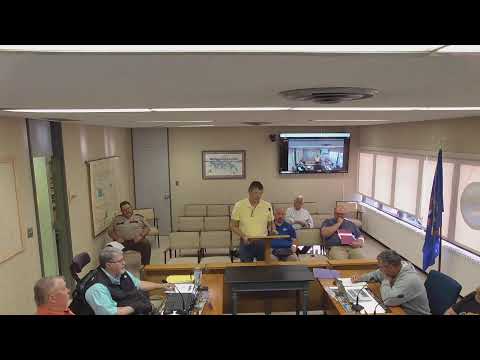
Commissioners discussed a request from residents to improve public access to water-board proceedings. Commissioner Garland (identified by surname in the meeting) urged that water-board meetings be recorded and made available — with closed captions — so landowners and heirs who no longer live locally could review the rationale for decisions. "Recorded county commission meetings also contain closed captions for viewers with hearing apartments," Garland said while urging similar access for the water board; he asked whether the water-board meetings could use the commission room and equipment or schedule a different time to enable recordings.
Several commissioners noted the water board must agree to any change in its meeting schedule and that water boards have specific statutory posting requirements enforced by the state. The commission agreed to raise the proposal with the water board and to present Garland’s suggestion to that body for their decision. No county-level vote or directive was recorded to force the water board to change its meeting policies.
Why it matters: The water-board actions affect local assessment rates for landowners and set operational hours for the district office; the accessibility discussion responds to residents’ concerns about transparency and the ability of nonresident landowners and people with hearing impairment to review meeting rationales.
Next steps: The county will contact the Water Resource District to present the option of recording or otherwise making meetings available through the county’s existing equipment, and county staff will follow up on scheduling and logistics if the water board is willing.