Get Full Government Meeting Transcripts, Videos, & Alerts Forever!
Get email alerts on the Anti Poverty Programs topic
No spam. Unsubscribe anytime.
Department of Human Services presents Community Services Block Grant plan; legislators ask for outcome data on poverty impact
Summary
DHS presented its federal Community Services Block Grant (CSBG) state plan for FY2026–27. DHS highlighted agency partnerships, leverage ratios and program examples; lawmakers requested longitudinal outcome data and county‑level poverty trends.
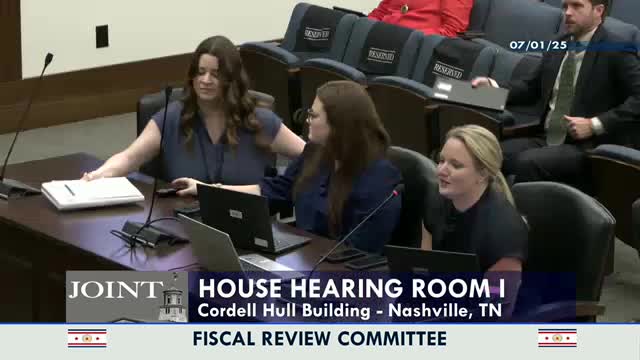
Department of Human Services staff presented the required triennial legislative briefing on the Community Services Block Grant (CSBG), outlining the state plan for federal fiscal years 2026–27, the network of community action agencies and recent performance measures.
Lindsay Whitten, CSBG program director at DHS, said Tennessee’s CSBG network includes 20 community action agencies covering all 95 counties. DHS reported that in FY2023 community action agencies served 337,468 individuals and 170,824 households and that CSBG funds are leveraged heavily: the department said community action agencies leveraged $21.84 from other sources for every $1 of CSBG in 2023, up from $11.21 in 2020.
Whitten described state priorities including training and technical assistance, performance management, and strengthened linkages with local partners. DHS said it reworked a 62‑page policy manual into 10 policies to reduce administrative burden and reported improved satisfaction on the federal American Customer Satisfaction Index survey (score 87, up from 62 in 2021). DHS staff highlighted local program examples: an empowerment initiative that paired emergency shelter with job training, a transportation repair pilot to reduce barriers to workforce participation, and a property‑tax assistance program for low‑income seniors.
Committee members pressed DHS for outcome evidence. Chairman Watson and members asked whether Congress’s longstanding program had demonstrably reduced poverty in Tennessee since its consolidation in 1981. Whitten said DHS compiles annual reports and that FY2023 outcomes are published; she said FY2024 reporting is in review and offered to provide the committee with the completed reports and program dashboards. Senator Campbell and others asked for multivariate or county‑level trend analysis so the committee can better understand long‑term impacts and how CSBG interacts with other anti‑poverty efforts such as TANF and housing programs.
DHS said it has published county‑level poverty dashboards (developed with the department’s research partner) and will share evaluation material and the annual report to help the committee assess program effectiveness. The committee did not vote on policy in this presentation; the hearing fulfilled the statutory requirement for a triennial briefing.