Get Full Government Meeting Transcripts, Videos, & Alerts Forever!
Get email alerts on the Child Welfare Contracts topic
No spam. Unsubscribe anytime.
Children’s Services approves multiple Youth Villages amendments after committee questions on outcomes and cost increases
Summary
The committee approved several contract amendments with Youth Villages covering MST, Lifeset and regional case management. Members pressed the department for outcome data and clarification of scope and rate increases.
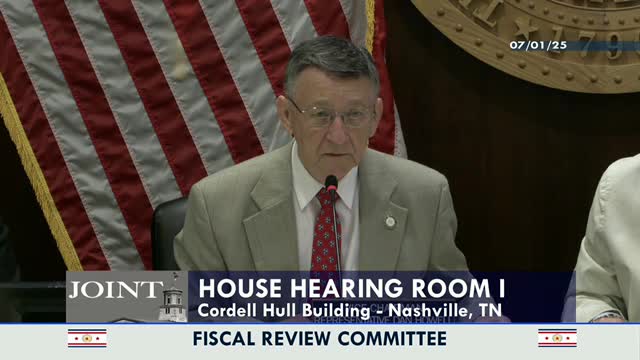
The committee approved a package of contract amendments and renewals with Youth Villages and related providers presented by the Department of Children’s Services (DCS). The items included an amendment to the department’s multi‑systemic therapy (MST) agreement, a larger amendment to the Lifeset program, and regional case‑management contract amendments that were voted as a block.
On the MST amendment (item 16), DCS requested a modest rate change: an increase in the daily service rate from $95 to $96.90 while keeping the contract’s maximum liability unchanged at $9,000,000. DCS described MST as an evidence‑based intensive in‑home intervention used to divert youth from state custody. Tony Nese, executive director of the division of federal programs, told members that "94 percent of the children who receive it do not come into care," a figure he cited when the committee asked about recidivism and the program’s effectiveness.
Item 17, the Lifeset contract amendment, prompted the longest discussion. Lifeset is a Youth Villages model for young people aging out of foster care; DCS said Lifeset helps with housing, employment, education and other independence skills. The department requested to split previously combined services into two separate contracts (Lifeset case management and extension‑of‑foster‑care case management), to increase the Lifeset daily rate from $15 to $50, remove a prior 25% philanthropic match requirement and raise the maximum liability for the Lifeset contract to $17,936,250. Lindsey Coleman, DCS executive director of statewide specialized support services, said philanthropic match funds that previously offset costs have been depleted and that Youth Villages’ philanthropic priorities are shifting toward residential bed capacity.
Several members asked for outcome data and clearer metrics. Senator Campbell asked for evidence on recidivism; Tony Nese pointed the committee to evaluation findings and the department said it would share Youth Villages’ published report and program metrics with members following the hearing. Members also asked whether philanthropic funds would flow to unrelated residential providers; Coleman clarified that Youth Villages’ philanthropic dollars support programs the organization operates and are not directed to other residential providers.
Items 18–23 were amendments to regional Youth Villages case‑management contracts. DCS said the amendments adjust service delivery by region and increase the daily rate from $22 to $26.50; some regional contracts sought an increase in maximum liability and others a decrease. The department said these case‑management contracts are used to maintain required caseload ratios when local hiring cannot immediately fill vacancies. The block of contracts was approved by voice vote.
After discussion, the committee approved the MST amendment, the Lifeset amendment and the block of regional case‑management amendments. Members repeatedly requested program metrics, independent evaluations where available, and clearer documentation of how rates and slot counts were calculated.