Get Full Government Meeting Transcripts, Videos, & Alerts Forever!
Get email alerts on the Strategic Enrollment Utk topic
No spam. Unsubscribe anytime.
UT Knoxville presents SEP 2030: aim for 55,000 students and 50,000 new graduates with large online growth
Summary
UT Knoxville outlined a five‑year strategic enrollment plan to expand campus and online offerings, prioritize Tennessee access and workforce alignment, and produce 50,000 new graduates toward the system’s 71,000‑student goal; the plan emphasizes online expansion, transfer pathways and affordability.
University of Tennessee Knoxville officials presented a comprehensive five‑year Strategic Enrollment Plan (SEP 2030) to trustees on May 31 that targets growth to 55,000 total students and aims to produce 50,000 additional graduates to meet Tennessee’s workforce needs.
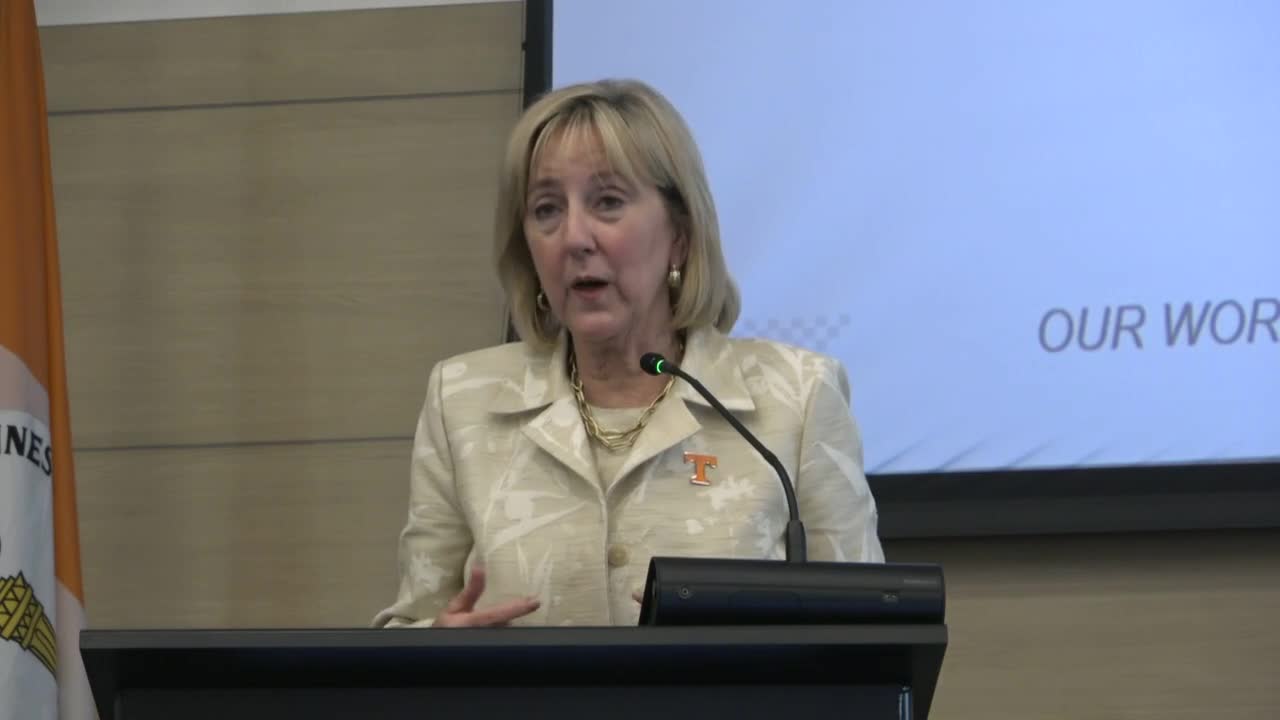
Plan foundations and priorities: Carrie Aldridge, the university’s enrollment leader, told trustees the plan is anchored in Tennessee access and an "unparalleled student experience." The plan combines undergraduate, graduate and online strategies and is built on record recent gains: UTK expects to surpass 40,000 enrolled students in fall 2025 and posted a record first‑year retention of 91.9% in fall 2024.
Key drivers: SEP 2030 relies heavily on online expansion — Aldridge said the majority of headcount growth in the plan is expected from online offerings — and on stronger transfer and graduate pipelines. The university plans to expand from 11 fully online undergraduate programs to about 30 tailored programs to meet market demand, and to recruit adults with some college credit and Tennesseans currently studying fully online out of state (an estimated 45,000 individuals). Aldridge said the campus will also continue guaranteed admission pathways and new transfer partnerships ("all roads lead to Rocky Top").
Affordability and workforce alignment: The plan stresses financial access (UT Promise, flagship and pledge scholarships) and workforce alignment, setting targets to deliver 20,000 graduates in STEM, education and allied‑health fields to meet statewide needs. Aldridge noted demographic headwinds — a projected dip in Tennessee high‑school graduates through 2028 — and said the plan incorporates those projection models but aims to "win Tennessee" by growing in‑state market share.
Measurement and campus capacity: SEP 2030 sets an 80% six‑year graduation target and commits to annual review and adjustment. Trustees asked for more detail on online execution (marketing, segmentation, analytics) and infrastructure planning (instructional capacity, housing alignment); campus leaders said online growth reduces immediate pressure on residence‑hall construction but that on‑campus undergraduate and graduate headcount will still require capacity planning.
Ending: Trustees praised the integration of access, workforce alignment and student success and asked campus teams to provide more granular plans for online marketing and for how the campus will close Pell/non‑Pell retention gaps cited in the presentation.