Get Full Government Meeting Transcripts, Videos, & Alerts Forever!
Get email alerts on the Enrollment Plan topic
No spam. Unsubscribe anytime.
UT Martin lays out enrollment plan aiming for 10,000 students by 2030; projects revenue gains and infrastructure needs
Summary
UT Martin presented a targeted five-year enrollment plan focused on degree expansion, dual enrollment pipelines, graduate growth and adult re-enrollment; the plan models ~1,075 new students over five years and anticipates cumulative net revenue while flagging housing and academic-space needs.
University of Tennessee at Martin officials presented a five‑year strategic enrollment plan to the system trustees on May 31 proposing sustained growth and a goal of 10,000 students by 2030.
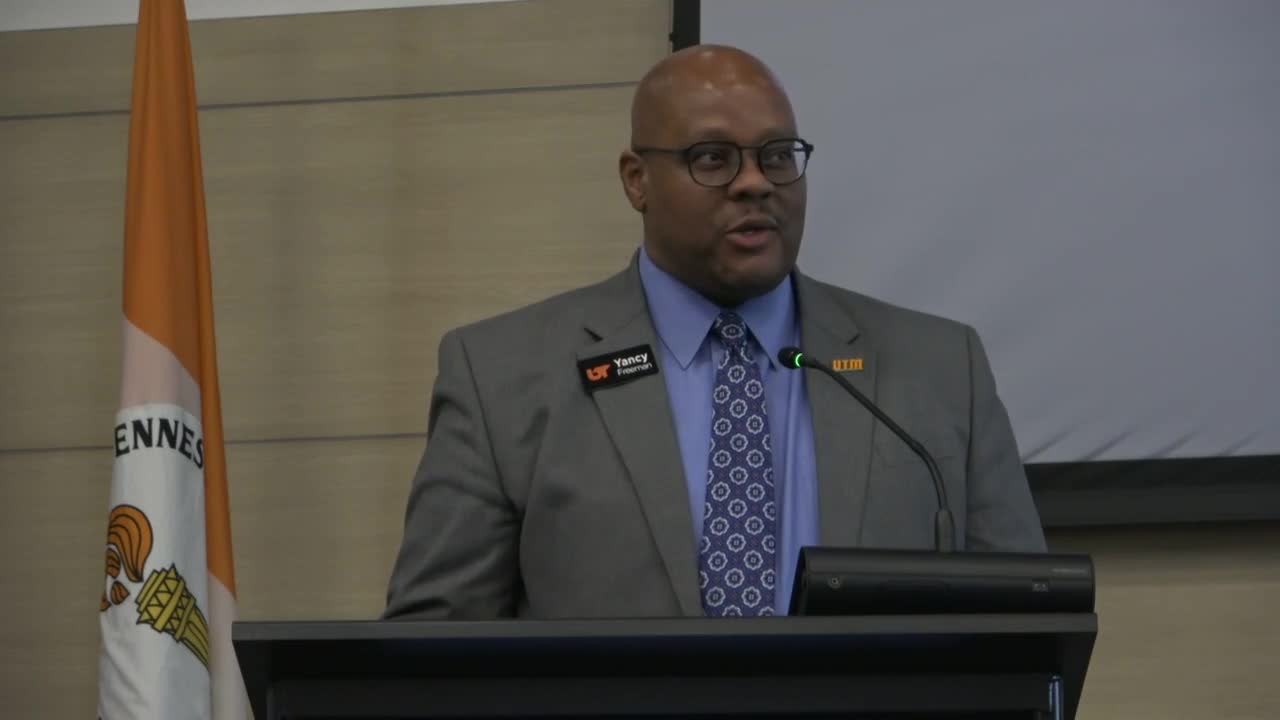
Chancellor Freeman's presentation summarized the campus’s recent recovery and growth since COVID and described the new strategic enrollment management plan (2025–2030) as a continuation of prior work that added new degree programs and marketing. "This plan supports that strategy and the strategic enrollment plan overall," a presenter said, noting the campus had the largest single-year enrollment increase in 20 years and expected another year of growth.
Key elements and projected yield: The plan lists prioritized program expansions and initiatives it estimates will add students: a Master of Public Health (estimated 52 students), expanded nursing intake (spring start, +114), expanded online computer science including a graduate program (+110), expanded regional‑center degrees (+62), and an expanded dual‑enrollment pipeline (+300). Other initiatives include targeted graduate recruitment (+75), increased veteran services (+48), comprehensive advising improvements (+157), adult re‑enrollment outreach (+76) and a scholarship‑reset pathway (+81).
Financial projection: The plan’s five‑year model anticipates a cumulative addition of about 1,075 students from the listed strategies and a projected cumulative net revenue of roughly $8.3 million after estimated investments over that period. Presenters cautioned that those revenue estimates assume enrollment targets and associated retention.
Infrastructure and other constraints: Trustees and campus leaders discussed campus infrastructure. The presenters acknowledged housing and academic‑space constraints as critical issues for continued growth and said they are working with system real‑estate staff and private developers on options. Freeman said the campus expects to work with system offices and private partners rather than rely solely on campus-built housing.
Trustee requests and next steps: Trustees asked for regular updates and noted that infrastructure planning should precede or accompany aggressive enrollment increases. Freeman said the campus has a detailed phase plan and that the campus would provide annual KPI reporting on enrollment, retention and space needs.
Ending: Freeman and trustees framed the plan as ambitious but achievable, noting the campus’s recent record enrollment and retention gains and urging continued attention to housing and service capacity as student numbers grow.