Get Full Government Meeting Transcripts, Videos, & Alerts Forever!
Get email alerts on the Gaza Humanitarian Crisis topic
No spam. Unsubscribe anytime.
UN: At least 1,500 families displaced in northern Gaza; schools, hospitals hit and fuel running out
Summary
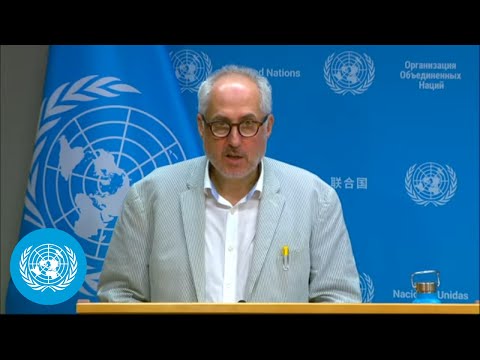
The United Nations said at least 1,500 families have been displaced from northern Gaza and parts of eastern Gaza after a displacement order, and that displaced families sheltering in schools and health facilities have been hit, causing deaths and injuries.
The United Nations said at least 1,500 families have been displaced from northern Gaza and parts of eastern Gaza after a displacement order and that displaced families sheltering in schools and health facilities have been hit, causing deaths and injuries.
UN spokesperson said the displacement and attacks are compounding an already dire humanitarian situation in Gaza and called for the opening of crossings and facilitation of predictable humanitarian operations. “This is a red flag that demands urgent action to secure the opening of all crossings and facilitation of all humanitarian operations, including meaningful flows of necessary life‑saving supplies,” the spokesperson said.
According to the spokesperson, partners on the ground reported that five school buildings sheltering displaced families in North Gaza were reportedly hit, with deaths and injuries reported. The World Health Organization told the briefing that a tent sheltering people in the courtyard of Al Aqsa Hospital in Darrel Bala was reportedly struck, injuring a number of people; the hospital’s internal medicine department sustained damage and an oxygen supply line was affected.
WHO has documented 734 attacks against health‑care facilities in Gaza since October 2023, the spokesperson said, and OCHA reiterated that civilians and civilian infrastructure must be protected under international humanitarian law.
Movement restrictions are severely hindering aid delivery, the spokesperson said. OCHA reported that, of 15 attempts to coordinate humanitarian movements inside Gaza on a recent day, eight were facilitated by Israeli authorities (including debris‑removal missions), three were denied outright, two were impeded and two were canceled because of security or logistical issues. The World Food Programme warned that “the window to push back starvation in Gaza is closing fast.”
Fuel shortages are threatening essential services. The spokesperson said Al Shifa Hospital Complex has suspended kidney‑dialysis services because of lack of fuel and that intensive care services have been reduced to only a few hours per day. “No fuel has entered Gaza since the ceasefire ended about 17 weeks ago, and stocks are depleted,” the spokesperson said, citing humanitarian colleagues who warned that more life‑saving and life‑sustaining facilities could shut down soon.
The spokesperson and UN agencies urged immediate, sustained access for humanitarian convoys, multiple points of entry and safe routes to reach people across Gaza. The briefing noted that many displaced families who fled to schools have returned to northern Gaza because of limited shelter options elsewhere.
The briefing covered other humanitarian crises; the spokesperson invited the permanent representative of Pakistan to brief on Security Council program matters and moved on after taking questions from journalists.