Get Full Government Meeting Transcripts, Videos, & Alerts Forever!
Get email alerts on the Housing Affordable topic
No spam. Unsubscribe anytime.
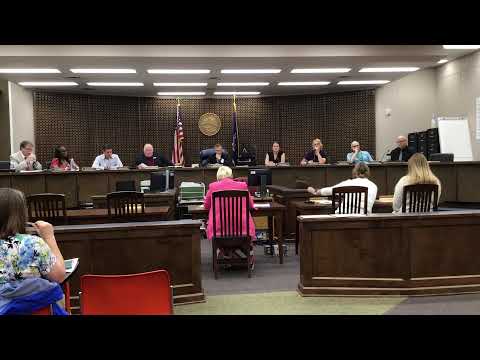
Jamestown holds public hearing on draft CDBG and HOME plan; resident questions CHDO share and public-safety allocation
Summary
The City of Jamestown convened a public hearing on its draft five-year consolidated plan for the Community Development Block Grant (CDBG) and HOME Investment Partnerships Program and the fiscal year 2025 annual action plan.
The City of Jamestown convened a public hearing on its draft five-year consolidated plan for the Community Development Block Grant (CDBG) and HOME Investment Partnerships Program and the fiscal year 2025 annual action plan. The clerk read the public notice, which said the final draft would be available beginning June 6, 2025, public meetings were scheduled for June 14 at Jackson Taylor Park and June 24 at 5:30 p.m., and written comments would be accepted through July 10, 2025, at 4:00 p.m.
A resident, identified in the record as Champ of 225 Bowling Street, commended the Department of Development’s outreach but pressed city leaders on several funding choices in the draft. Champ asked what a community housing development organization (CHDO) is, why the HOME allocation to CHDOs is proposed at 30% (noting the transcript dollar figure of $93,977.97), and why the plan earmarks only 3% of CDBG funds for community engagement and public-safety activities.
Champ said, “If you don’t know what a community development housing organization is and what they've done, I guess I'd question how you can vote on this,” and asked for data on CHDO outputs such as rehabilitated or built housing units. He also questioned the rationale for allocating only 3% to public safety and suggested that more funding could be directed to neighborhood-level efforts.
A Department of Development representative responded that the city previously increased its CHDO allocation from 15% historically to 30% through a significant amendment because local CHDOs — identified in the record as CRIC and Code Inc — are working on multiple-unit rental rehabilitation projects. The staff member said those projects can rehabilitate several dwelling units in one project, and that typical homeowner-occupied HOME funds usually serve a single-family household, making the higher CHDO percentage a way to support multiple households. The staff member said, “We actually increased our allocation to our CHDOs, which are CRIC and Code Inc, from 15% historically up to the 30%... That is because they have a number of projects that they are working on, rental apartment rehabilitations.”
On the community engagement/public-safety line, the staff member said the line has historically been used for public-safety engagement and events and for coordination with the police department, but that CDBG funds are not intended to subsidize police salaries. The staff member said the allocation has also been used in the past to support positions such as a community resource officer or a nuisance officer when those positions existed. The staff member further indicated there is some flexibility in how the line is used, subject to HUD program requirements, and confirmed neighborhoods or volunteer groups could potentially receive items like signs if the uses meet HUD rules.
When another participant asked whether the percentage allocations are flexible if the plan is approved, the staff member said flexibility is possible but that HUD rules must be observed and invited interested parties to follow up with staff. The staff member closed by inviting individuals to reach out for one-on-one discussion and by referencing the city’s upcoming submission schedule.
The hearing record includes the public-notice language stating the plan would be submitted to the U.S. Department of Housing and Urban Development (HUD) following the mandatory public-review period; the notice and staff comments provide the dates and contact points for public comment and follow-up.
Next steps: the draft plan is available for public review beginning June 6, 2025; public meetings are scheduled for June 14 and June 24; written comments will be accepted through July 10, 2025, at 4:00 p.m. Development staff encouraged residents with questions about specific budget lines or funding flexibility to contact the Department of Development for further discussion.