Get Full Government Meeting Transcripts, Videos, & Alerts Forever!
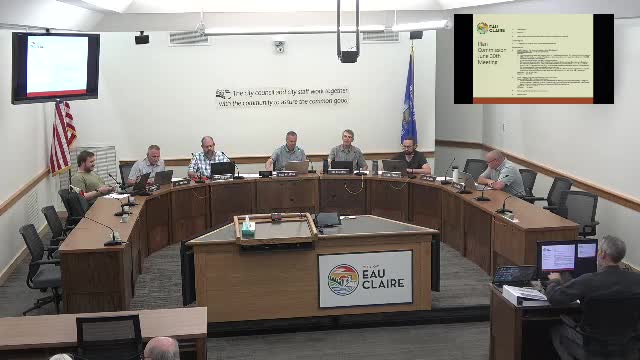
Eau Claire plan commission backs new land development code, approves two amendments after hours of debate
Summary
After a three-hour meeting and a lengthy public hearing, the Eau Claire Plan Commission voted unanimously to recommend a new Land Development Ordinance (LDO) and related code changes to city council, adopting two commissioner amendments and rejecting several others on tree rules and neighborhood rezoning.
The Eau Claire Plan Commission on June 30 recommended that the City Council adopt a comprehensive Land Development Ordinance that would replace the city’s existing titles 17 and 18 and update stormwater rules in title 19, moving the package forward with two amendments intended to reduce costs for smaller housing types.
The commission voted 7-0 to recommend the LDO and associated code changes after staff and consultants presented a multi-year rewrite intended to simplify development rules, increase housing options and affordability, and add objective standards for site and building design. The meeting included a public hearing with more than a dozen speakers who urged both stronger tree protections and more flexibility to preserve affordable housing.
City planners told the commission the proposal folds prior guidance and separate manuals into a single, user-friendly title 17 (the LDO), updates stormwater requirements to align with Department of Natural Resources (DNR) expectations, and creates new zoning districts and a revised zoning map to match the code changes.
Staff presentations
Planner Dan Noel and consultant Jackie Ebergh told commissioners the rewrite reflects more than two years of work with the Zoning Policy Advisory Committee (ZPAC), the Zoning Technical Advisory Committee (ZTAC), multiple open houses and targeted outreach to neighborhood groups and vulnerable populations. Deputy City Engineer Al Rinca described proposed stormwater amendments in title 19, saying they add clarity, bring city code into compliance with DNR rules, create a new land disturbance permit to capture smaller sites, and expand the city’s illicit-discharge detection and elimination provisions.
Why it matters
Supporters said the LDO is designed to help the city meet policy goals adopted in earlier plan updates: increasing housing supply and diversity, providing more predictable reviews for developers, protecting natural resources, and integrating sustainability measures such as bird-safe design and solar standards. The code would allow more housing units per acre in many residential districts, loosen some dimensional constraints, and introduce new subdivision formats (conservation design, green courts and carriage courts) intended to produce more units with less land consumption.
Key changes, incentives and trade-offs
Already have an account? Log in
Subscribe to keep reading
Unlock the rest of this article — and every article on Citizen Portal.
- Unlimited articles
- AI-powered breakdowns of topics, speakers, decisions, and budgets
- Instant alerts when your location has a new meeting
- Follow topics and more locations
- 1,000 AI Insights / month, plus AI Chat