Get Full Government Meeting Transcripts, Videos, & Alerts Forever!
Get email alerts on the Film Tax Credit topic
No spam. Unsubscribe anytime.
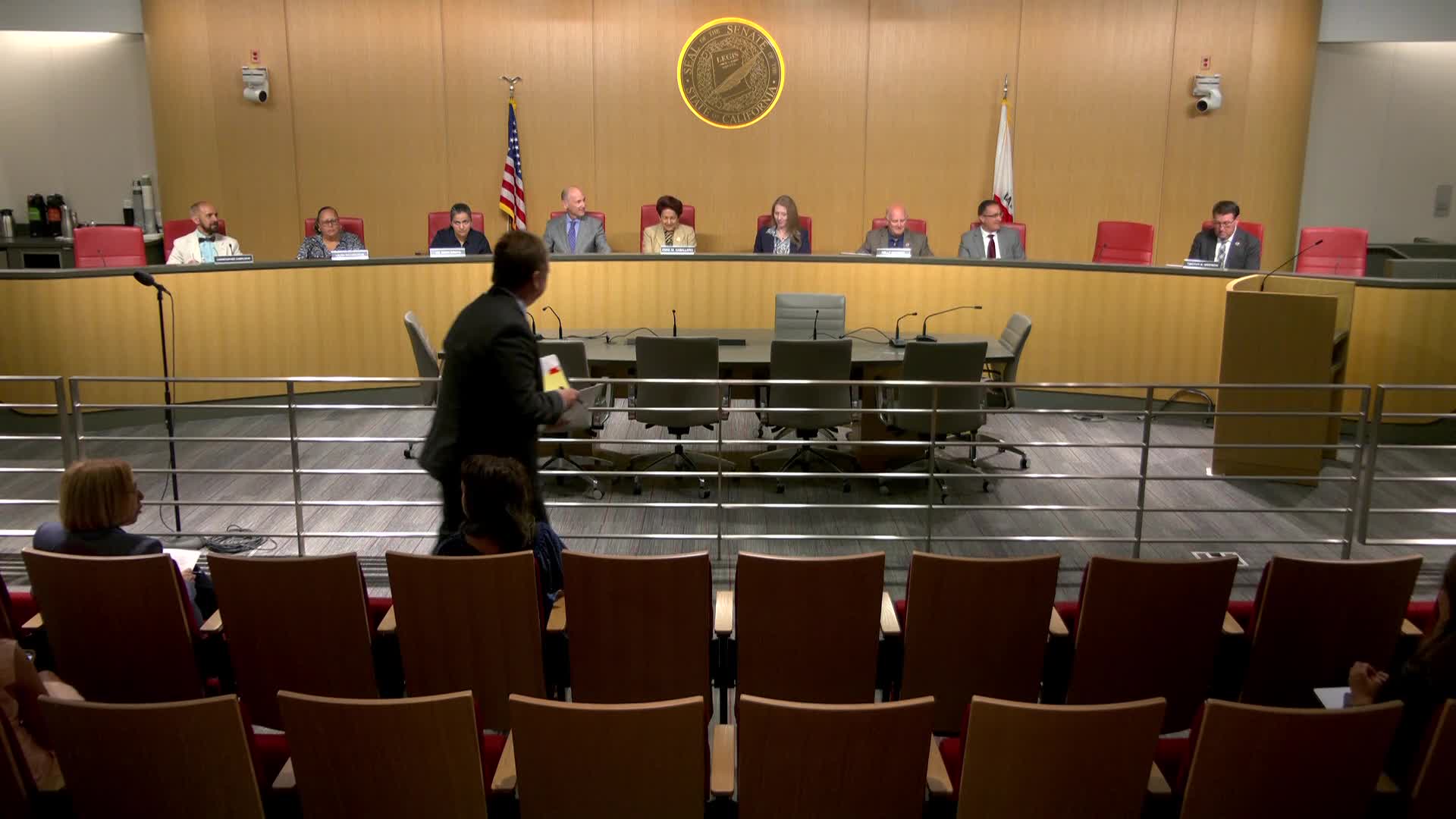
Senate appropriations committee sends AB 1138 to the floor to expand motion-picture tax credits
Summary
The California Senate Committee on Appropriations voted 6-0 to advance AB 1138, an urgency bill to modernize the state's film and television tax credit program by increasing credit rates, expanding eligibility and adding reporting requirements; analysts project added costs in later years.
The California Senate Committee on Appropriations voted 6-0 to send AB 1138, an urgency bill authored by Assemblymember Zabir and coauthored by Senator Allen, to the Senate floor. The bill would modernize the state's motion-picture tax credit program by increasing base credit rates, expanding eligible production types and adjusting qualified expenditures to better reflect full production costs.
Assemblymember Zabir told the committee the measure aims to retain and attract production jobs and businesses to California. He cited an analysis by the Los Angeles County Economic Development Corporation and said, “for every tax credit dollar spent resulted in economic output of $24.16 dollars in gross domestic product, 8, dollars and 60¢ in wages, and a dollar and 7¢ in state and local tax revenue.” Zabir said the bill's changes were guided by “the goal of retaining and bringing back high quality jobs and supporting our small businesses that support the industry.”
Melissa Ptak of the Motion Picture Association told the committee the bill does not add new budgeted dollars because the expansion is reflected in a budget trailer bill tied to SB 132, but she also cited the bill analysis’s fiscal estimate: “this bill may cost the state about $200,000,000 in out years, 2028 and 2029.” Ptak added that, on average, there is a lag of about four years between when credits are allocated and when they are applied and utilized.
Senator Allen, a joint author, said the state has seen “massive loss” in motion-picture jobs as competing jurisdictions increase incentives, and that roughly “three quarters of the projects that were unable to secure a tax credit through our program end up moving production out of state.” He characterized AB 1138 as a negotiated, multifaceted effort to restore production and the jobs associated with it.
A committee member who spoke during the hearing cautioned that the bill is not a cure-all for broader cost and competitiveness issues facing the industry but said he planned to support the measure as a short-term step. He told the committee, “I don't know that this is gonna fix it ... I'm gonna be supporting this today. And, but I hope we keep an eye on the ball and really figure out what's what's causing the exodus.”
Supporters who testified in favor included representatives from the Motion Picture Association, the Hollywood Chamber of Commerce, the Los Angeles Area Chamber of Commerce, the Directors Guild of America, Warner Bros. Discovery, the Writers Guild of America West, Paramount Global, Netflix, the Walt Disney Company, Teamsters and SAG-AFTRA, the Association of Talent Agents and Sony Pictures.
Committee Chair Powell called a due-pass motion and the committee approved advancing AB 1138 to the Senate floor. The roll call produced a 6-0 tally in favor. The authors and several witnesses said the bill will include reporting requirements from the film commission to provide data and monitor outcomes.
While supporters framed the bill as a jobs and revenue strategy that would make California more competitive with other tax-credit jurisdictions, witnesses and committee members also emphasized the measure is one piece of a broader set of challenges for the industry, including operating costs and other competitive factors that members said will require ongoing attention.
The committee moved the remaining measures on the agenda to the suspense file and adjourned.