Get Full Government Meeting Transcripts, Videos, & Alerts Forever!
Get email alerts on the Ceqa Reform topic
No spam. Unsubscribe anytime.
Senate budget committee approves CEQA trailer bill with $500 million for homelessness; critics say advanced-manufacturing exemptions, tribal and species reviews
Summary
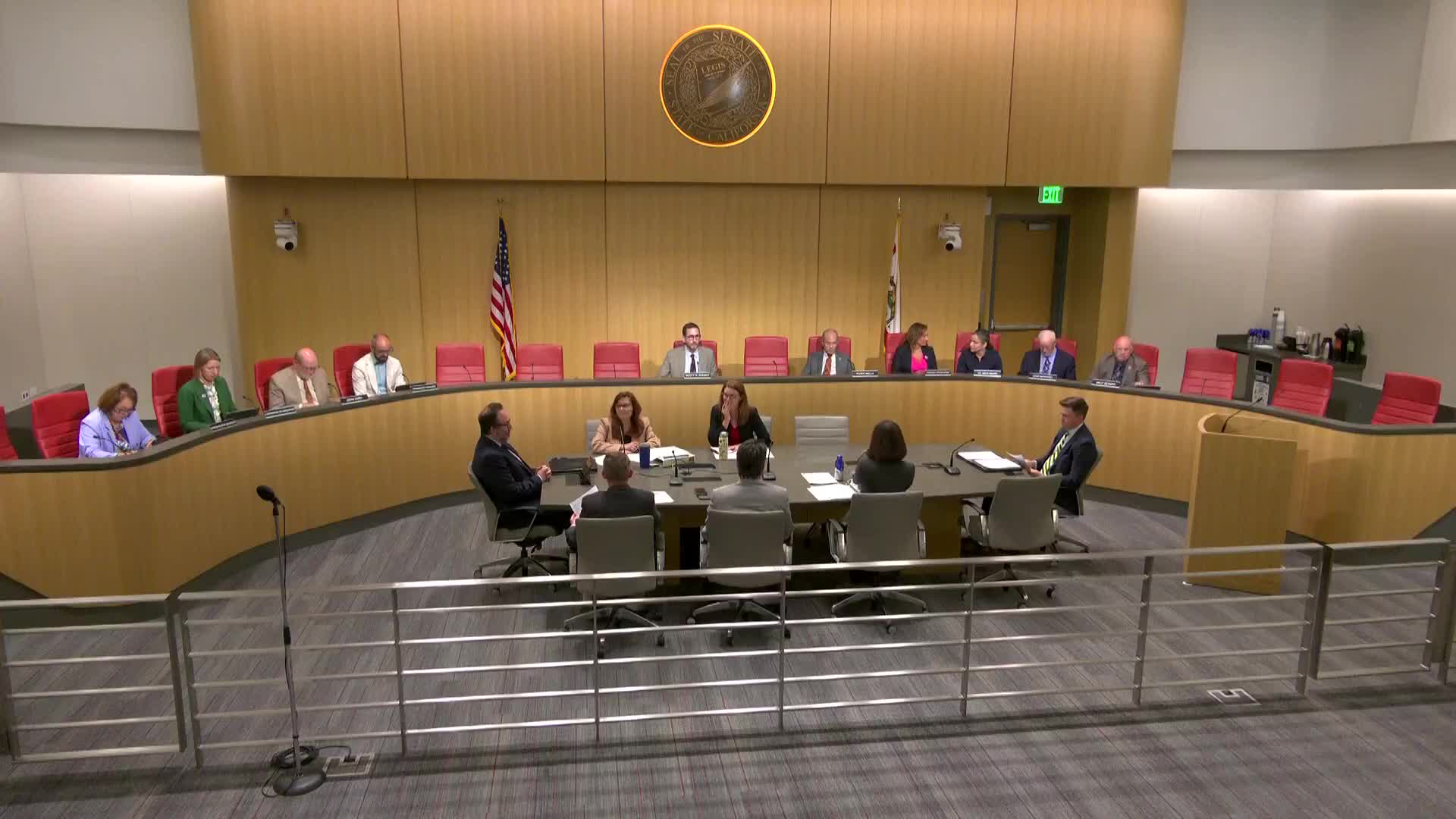
The California State Senate Committee on Budget and Fiscal Review on Thursday passed AB 1 31, a budget trailer bill that pairs a $500 million appropriation for the Homeless Housing Assistance and Prevention program with targeted changes to the California Environmental Quality Act (CEQA), including a new exemption for advanced manufacturing sited on industrially zoned land.
The California State Senate Committee on Budget and Fiscal Review on Thursday passed AB 1 31, a budget trailer bill that pairs a $500 million general fund appropriation for the Homeless Housing Assistance and Prevention (HAP) program with a series of changes to the California Environmental Quality Act (CEQA), including a new exemption for “advanced manufacturing” on industrially zoned land.
The bill was approved by the committee after several hours of discussion, public comment, and debate; the committee recorded a roll-call vote of 13 to 2 in favor. Supporters said the measure accelerates housing and infrastructure delivery and funds homelessness programs. Opponents — including tribal nations, environmental and environmental-justice groups, and some senators — warned the bill removes public review in ways that could harm endangered-species habitat and communities adjacent to industrial zones.
AB 1 31 links a proposed $500,000,000 general fund appropriation for an additional round of the Homeless Housing Assistance and Prevention program (HAP) to a set of CEQA changes. Department of Finance staff told the committee the funding is contingent on enactment of the trailer bill and related accountability metrics. "This targeted CEQA exemption is part of the broader budget agreement to accelerate housing and infrastructure delivery across the state," a Department of Finance presenter said during the committee session.
The bill contains multiple strands: - Housing streamlining: SB 1 31 (the trailer language) creates exemptions and a so-called “near miss” approach limited to housing projects. Under the “near miss,” if a project would otherwise meet an exemption but fails one criterion, environmental review would be narrowed to that specific shortcoming rather than reopening review of the entire project. - New CEQA exemptions: the bill enumerates exemptions for a set of projects including certain water and sewer projects, childcare centers, food banks, wildfire mitigation, and — controversially — facilities for advanced manufacturing located on land already zoned for industrial uses. - Administrative-record changes: the bill narrows the scope of documents that must be included in the CEQA administrative record, a change the author said is intended to prevent “gotcha” litigation based on peripheral or irrelevant internal emails. - VMT mitigation bank: the measure authorizes (not mandates) a statewide vehicle-miles-traveled mitigation bank as an optional mitigation mechanism for transportation impacts, Department of Finance staff said.
Supporters, including some senators and housing and business groups, argued that targeted streamlining will help unlock housing and critical infrastructure projects that otherwise face long delays.
"If we're going to try to ensure that we actually get building done in the state of California, I think this is probably one of the best ways to actually help address some of the delays that we have when addressing CEQA reform," Senator Choi said during the hearing.
Concerns voiced by legislators and dozens of public commenters were focused on three issues in particular: the exemption for advanced manufacturing, tribal consultation for cultural resources, and the bill’s treatment of habitat for endangered or threatened species.
Advanced-manufacturing exemption Department of Finance witnesses told the committee the advanced-manufacturing exemption points to an existing statutory definition in Public Resources Code section 26003 and applies only on sites already zoned for industrial use; the bill does not change local zoning or local permitting authority. "It won't change any zoning. Nothing in the bill changes zoning," a Department of Finance official said.
Despite that limitation, multiple senators and numerous public commenters said the exemption is too broad in practice, could be used to sidestep review of facilities that pose air, water or soil contamination risks, and would remove a key community review tool in many neighborhoods that border industrially zoned land.
Tribal consultation and cultural resources Tribal representatives and several senators said the bill was negotiated without sufficient tribal consultation and warned that exempting projects from CEQA removes the statutory trigger for AB 52 tribal consultation. Department of Finance and the bill author maintained that CEQA’s tribal consultation requirements remain intact where CEQA review still applies, and that many of the bill’s changes do not alter CEQA’s existing tribal-consultation framework. But witnesses and committee members said broader uncertainty remains when the legislature creates immunities or exemptions that remove CEQA as a trigger for consultation.
Endangered species and natural-protected-lands definitions Environmental groups, several senators and multiple public commenters argued the bill’s definition of "natural and protected lands" omits many types of habitat and therefore fails to protect biodiversity in unprotected landscapes. Committee members asked for cleanup language to ensure habitat for threatened or endangered species remains covered; the author and sponsors acknowledged there are items to revisit in follow-up legislation.
Administrative record and transparency The bill narrows the administrative record to limit inclusion of peripheral internal communications, which backers said is a needed fix after years of litigation that can overturn projects based on marginal documents. Opponents said narrowing the record will reduce transparency and make it harder for communities to hold agencies and project proponents accountable.
Public comment and next steps More than 100 people registered to speak during the public-comment period; tribal leaders, environmental-justice groups, conservation organizations, building trades, chambers of commerce and local governments all weighed in. Tribal leaders from the Amah Mutsun and others warned that exempting projects would risk desecration of cultural sites; environmental groups warned of habitat loss and pollution in disadvantaged communities; housing and business groups urged action to unlock development.
The bill passed the committee after a floor-style vote. Committee members and Department of Finance staff said they expect further negotiations and cleanup amendments on tribal consultation, endangered-species protections, and precise definitions tied to advanced manufacturing as the measure moves toward the full Senate and the Assembly.
A vote on the committee floor recorded 13 in favor and 2 opposed. The author and multiple senators said they would seek additional amendments and clarifications before final enactment.
"I strongly, strongly believe that tribal resources absolutely have to be protected and taken into account in streamlining laws," the committee chair said. "This issue is very much on the radar. We will continue to pursue cleanup and discussions with stakeholders."