Get Full Government Meeting Transcripts, Videos, & Alerts Forever!
Get email alerts on the Housing Disaster Recovery topic
No spam. Unsubscribe anytime.
Bill would let nonprofits buy wildfire‑damaged homes using CRA funds to preserve local ownership
Summary
Assemblymember Haribedian introduced AB 797 to let CRA‑backed securities, issued by the I‑Bank, funnel capital to qualified nonprofits to buy wildfire‑damaged homes at pre‑disaster fair market value, providing a voluntary option for homeowners and aiming to prevent predatory lowball purchases.
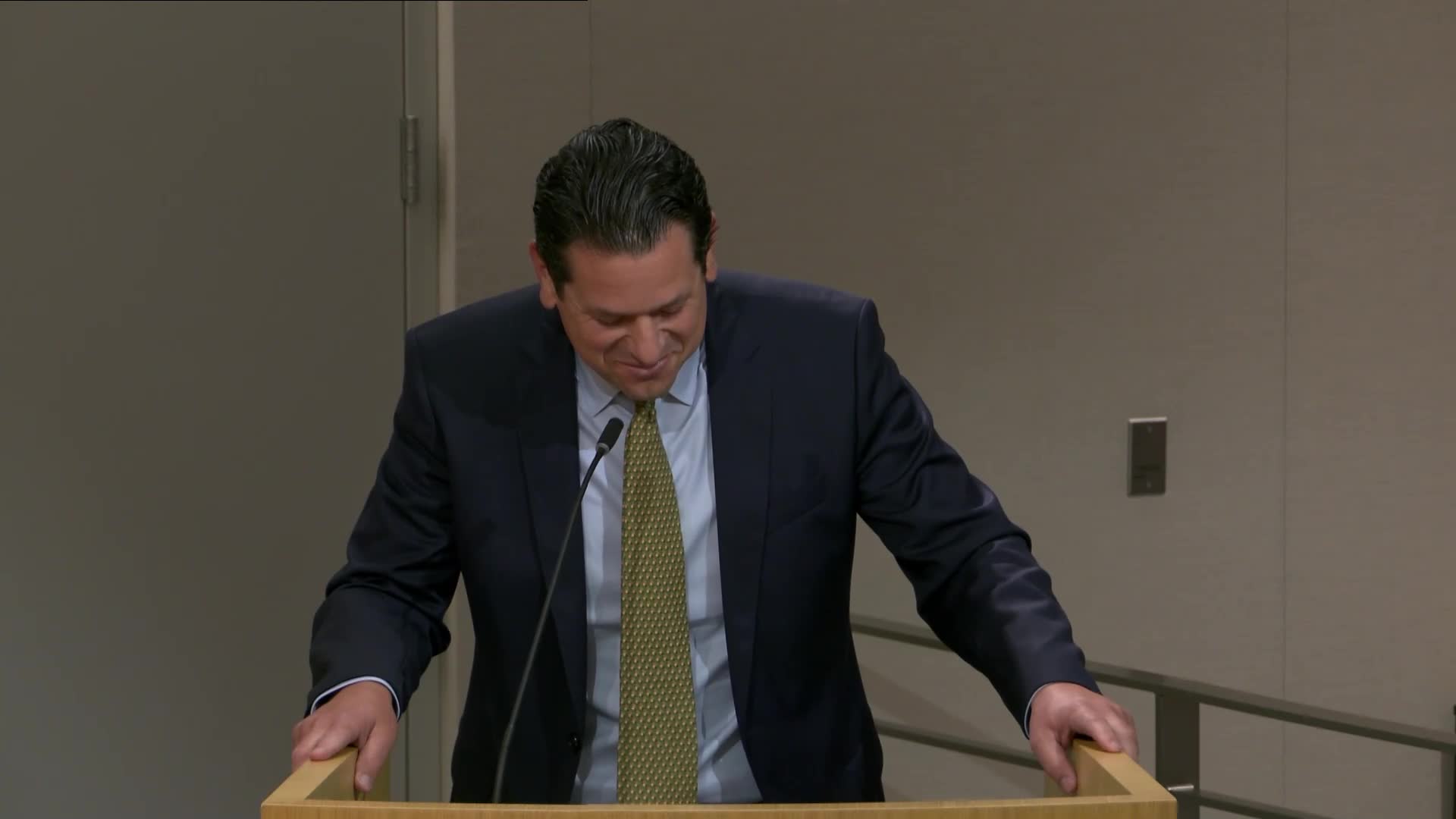
Assemblymember Haribedian introduced AB 797, the Community Stabilization Act, on June 30 at the California State Senate Business, Professions and Economic Development Committee hearing, proposing a state‑facilitated mechanism to give homeowners whose houses were destroyed by wildfires an option to sell to qualified nonprofits at fair market value.
The bill would authorize the California Infrastructure and Economic Development Bank (I‑Bank) to issue zero‑interest securities bought only by financial institutions subject to the federal Community Reinvestment Act (CRA). Those funds would be directed to qualified nonprofit investment entities to acquire and manage disaster‑affected properties. When properties are later monetized, 90% of profits would go to the CRA investors, 5% to the administering nonprofit, and 5% to the state; Haribedian said the measure would use no general‑fund dollars.
AB 797’s author framed the measure as a market‑based tool to protect homeowners from predatory lowball offers and to preserve neighborhood composition in places hit by recent fires, citing Altadena and the Palisades as principal examples. “For those that are selling, unfortunately, the marketplace has lent itself to lowball bids,” Haribedian said, adding that the measure is voluntary for homeowners and would not require anyone to sell to a nonprofit.
Committee members pressed the author on legal limits and design. Senator Nilo asked whether the bill would legally limit who could buy the securities; Haribedian said the bill restricts eligible buyers of the I‑Bank securities to CRA‑qualified institutions and described the investment as equity capital (no interest payments) with returns on the back end. Lawfulness of limiting purchasers to CRA investors was raised as a question; Haribedian said states often create vehicles that channel CRA dollars and that the bill simply directs CRA investment to disaster recovery in specific communities.
Senators also questioned why the program requires nonprofit managers. Nilo asked whether nonprofits would bid as aggressively as for‑profit buyers; Haribedian said the bill sets a floor: nonprofits must offer at least pre‑disaster fair market value (based on pre‑fire appraisals or assessor data). Haribedian said the intent is to give homeowners a dignified option and stabilize neighborhoods while allowing the market to operate once properties are rehabilitated, noting nonprofits would hold and manage properties for up to 10 years before refinancing or sale. The author and supporters said the bill does not dictate resale price at monetization; the statutory floor applies only to the initial purchase from the disaster‑affected owner.
Witnesses included Elise Borth of the California Community Foundation, who testified the foundation’s wildfire recovery fund had distributed more than $30 million and that the bill would “protect homeowners from predatory practices” and “prevent neighborhood destabilization.” The Los Angeles County Board of Supervisors, the NAACP, and local groups such as the Altadena Tenants Union were recorded as supporters.
After extended questioning and follow‑up suggested amendments to clarify definitions and guardrails, the committee moved the bill and recorded sufficient votes to advance it to the next committee. The roll call recorded six yes votes and two no votes; committee leadership left the item on call for additional members to register their votes.
If AB 797 advances, the author and committee staff indicated further technical amendments would be drafted—particularly to clarify how fair market value is calculated, how nonprofit managers are selected and regulated, and how CRA investment is restricted to qualified institutions.