Get Full Government Meeting Transcripts, Videos, & Alerts Forever!
Get email alerts on the Housing topic
No spam. Unsubscribe anytime.
Assembly adopts AB 130, housing trailer bill aimed at speeding homebuilding and protecting tribal cultural resources
Summary
The Assembly concurred in Senate amendments and approved AB 130, a housing trailer bill that pairs CEQA streamlining with tribal consultation and other provisions; proponents called it transformative while opponents warned of special‑interest tradeoffs.
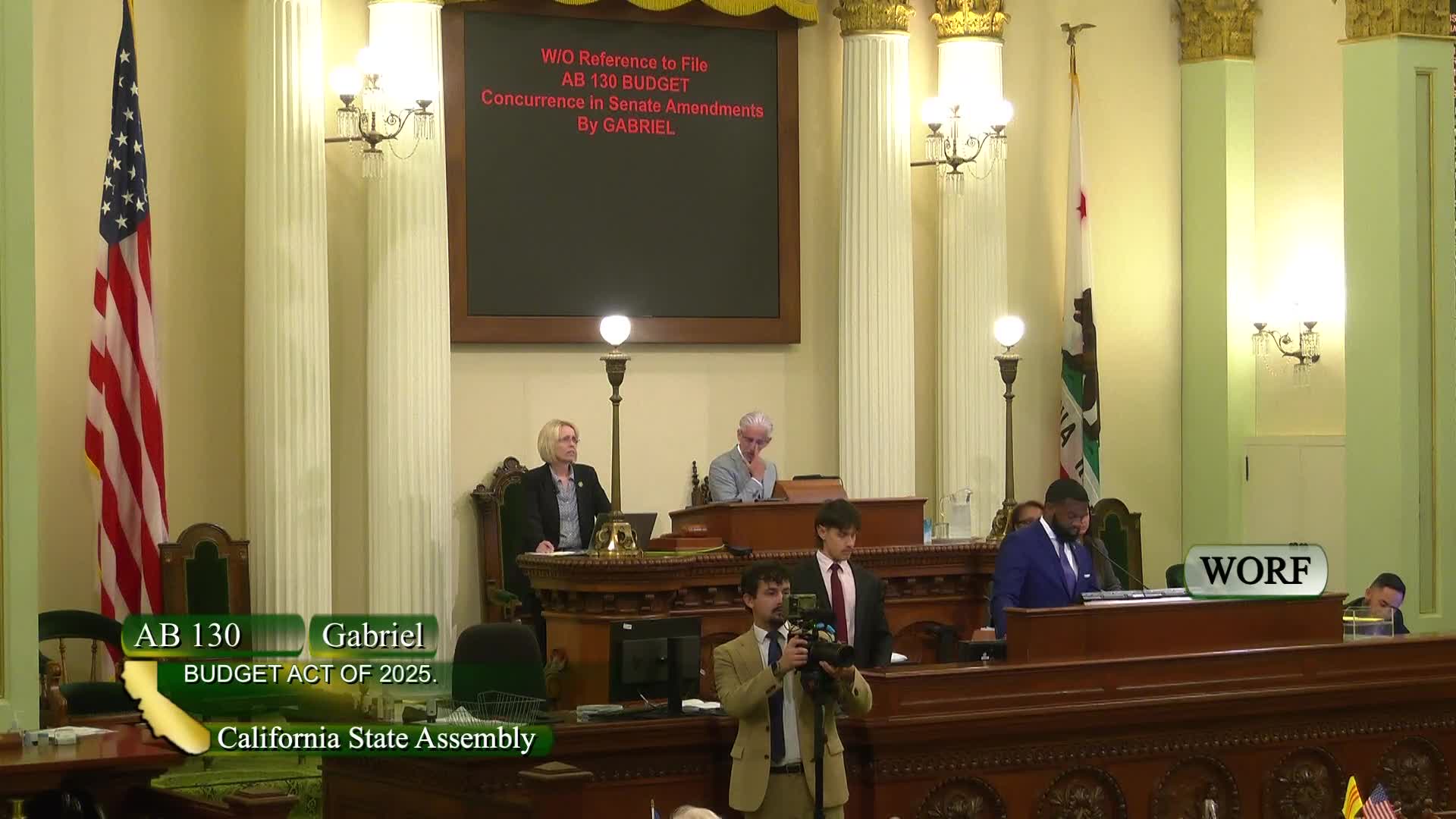
Assemblymember Gabriel presented Assembly Bill 130 and the Assembly concurred in Senate amendments, approving the measure on a roll call vote (Ayes 62, Noes 2) with immediate transmittal to the governor.
Supporters said AB 130 will reduce delays and lower costs that currently impede housing construction. "This bill will ensure that these investments are matched by policy that speeds housing construction, supports renters and homeowners, ensures that we stretch our dollars for maximum impact," Assemblymember Gabriel said as he asked for an aye vote.
The bill, described on the floor as the second of two budget‑related housing trailer bills, includes a package of streamlining measures for projects in certain circumstances and changes intended to speed housing production statewide. Proponents framed the package as an essential step to address a multi‑million‑unit housing shortfall.
Assemblymember Ramos, speaking in support, outlined negotiated additions addressing protection of tribal cultural resources. She described new or revised consultation procedures in AB 130 including: notice to affected California Native American tribes by certified mail and email within 14 days of local approval, an extended 60‑day response window for tribes (longer than some prior laws), a 60‑day consultation period (with a possible 15‑day extension), tribal monitoring for ground‑disturbing activities with compensation for monitors, and immediate work stoppage and statutory treatment protocols if human remains are found. "These are areas that we went to work on May 28… Today, in AB 130, we have protections," Ramos said.
Opponents warned the measure bundled streamlining with provisions that raise development costs or shift policy levers toward special interests. "Prevailing wage by at least 10%, typically 25% cost increase on projects…now we're going beyond public works projects into private development projects," Assemblymember DeMaio said, calling that and a proposed vehicle‑miles‑traveled (VMT) mechanism problematic. He urged a longer review and structural reforms to CEQA instead of the negotiated tradeoffs in AB 130.
Other members underscored competing priorities: some urged continued refinement of VMT rules and tribal consultation language; others emphasized the magnitude of the housing and homelessness crises and supported the measure as a necessary, urgent step. "This is a landmark moment. It could be a turning point in our fight for affordability, for opportunity," Assemblymember Speaker Rivas said in closing.
The bill carries detailed provisions across permitting, procurement and environmental review; members on the floor said some items will require continued oversight and technical fixes in implementation.
Votes at a glance: AB 130 concurred in Senate amendments (Ayes 62, Noes 2).