Get Full Government Meeting Transcripts, Videos, & Alerts Forever!
Get email alerts on the Short Term Rentals topic
No spam. Unsubscribe anytime.
Hocking County committee reviews draft short‑term rental rules focused on safety, taxes and noise
Summary
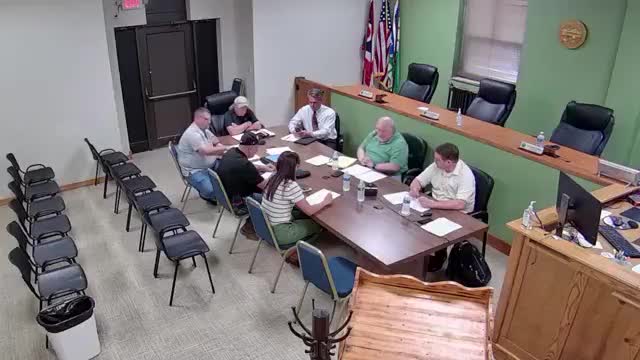
Consultant David Barrett of American StructurePoint presented a draft outline of short‑term rental regulations at a Hocking County zoning commission meeting, focusing on safety, tax collection and nuisance controls.
Consultant David Barrett of American StructurePoint presented a draft outline of short‑term rental regulations at a Hocking County zoning commission meeting, focusing on safety, tax collection and nuisance controls.
Barrett said the draft package being developed includes a short‑term rental permit, impact fees, a special event permit and site standards. He told the commission the materials are an outline of requirements the county could adopt, not a finished ordinance.
The draft short‑term rental permit would require a 24‑hour contact person who lives in Hocking County, a site plan or map that shows individual units (for multi‑cabin sites), and standardized addressing tied to a public road rather than a private driveway so emergency responders can locate units. "The devil's in the details," Barrett said, adding the project team reviewed other jurisdictions’ rules and intends to be transparent about any fee amounts before adoption.
The draft also proposes occupancy limits and, for some existing buildings, an engineer or licensed inspector to certify decks, balconies and similar elevated structures are safe for the posted occupancy. Barrett said that inspection would be a one‑time requirement for existing structures (not new construction) and that the short‑term rental owner would provide posted capacity information to renters.
To improve collection of lodging taxes, the draft includes a platform‑reporting requirement so that taxes are remitted directly through listing platforms; Barrett said the requirement is meant to ensure tax compliance, not to ban local providers. "It's much easier for the county to receive the tax money if it just automatically comes to you than than having to go through a court process to essentially seize it from someone," Barrett said.
On nuisance controls, Barrett recommended a countywide noise and nuisance ordinance rather than embedding noise rules only in the STR ordinance. He said a decibel‑based standard measured at the property line with different thresholds for short, loud events and for continuous noise is more defensible and easier to enforce than subjective wording. He cited a court decision involving a racetrack and described the city of Columbus' enforcement approach (a permit suspension after a set number of emergency calls) as one example the county could consider.
Barrett and participants emphasized emergency access and driveway standards. The consultant said American StructurePoint will coordinate with fire and EMS to identify vehicle dimensions and capabilities and propose objective driveway standards (width, grade, turning radius, tree clearance and parking) tied to that equipment. Barrett said if emergency personnel cannot reach a property with available equipment, the county should consider withholding an STR permit for that property; such a property could still be used as a long‑term residence, he said.
Other proposed permit elements noted in the presentation include proof of insurance, a notice‑to‑renters requirement (rules provided to guests), and a mechanism to suspend or revoke permits for bad‑faith owners (for example, repeated emergency calls tied to owner negligence). Barrett said the team will follow up with the county attorney to clarify when law enforcement should treat a problem as a contract dispute and when it is a criminal or public‑safety incident.
Next steps: Barrett asked the commission to schedule follow‑up stakeholder meetings with fire/EMS, the county auditor, the mapping office, 9‑1‑1/dispatch and the county attorney. He proposed an in‑person follow‑up in mid‑July to gather technical information the engineers need, then a single public open house on the draft and an opportunity for zoning commission and county commissioners to review the drafts before the public meeting.
Votes at a glance - Approval of previous meeting minutes: motion made and seconded; voice vote "aye"; motion carries (approved). - Acceptance of the meeting agenda: motion made and seconded; accepted (approved).
The commission spent most of the meeting on the STR outline and scheduled technical follow‑ups; Barrett said he will provide the presentation materials to staff for distribution.
Provenance: the presentation and discussion of the STR permit, access, noise and enforcement topics began when the chair turned the meeting to the consultant and concluded with scheduling of follow‑up meetings and the plan for a public open house.
Ending: The zoning commission agreed to additional technical meetings with emergency providers and county offices, and staff will circulate the consultant's presentation to stakeholders before the next meeting.