Get Full Government Meeting Transcripts, Videos, & Alerts Forever!
Get email alerts on the Short Term Rentals topic
No spam. Unsubscribe anytime.
Consultant outlines short-term rental permit, emergency-access and nuisance rules for Hocking County
Summary
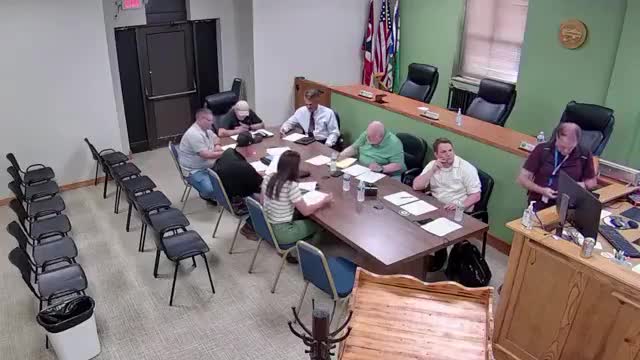
David Barrett, a consultant with American StructurePoint, presented a preliminary outline for short-term rental regulations and related site standards to the Hocking County zoning group, saying the proposals are intended to address safety, emergency response and tax collection rather than to raise county revenue.
David Barrett, a consultant with American StructurePoint, presented a preliminary outline for short-term rental regulations and related site standards to the Hocking County zoning group, saying the proposals are intended to address safety, emergency response and tax collection rather than to raise county revenue. "The fees will be put in place, hopefully, only to cover our expenses," Barrett said.
The consultant said the project team is drafting four sets of regulations: a short-term rental permit, impact-fee rules, a special-event permit, and site standards for commercial uses. The presentation emphasized that the group is not recommending countywide zoning, county property-maintenance regulations, or a land-use moratorium at this time because Hocking County currently lacks zoning authority that would support some of those options.
Why it matters: Barrett and participants said the rules are intended to protect neighbors and ensure first responders can find and safely reach rental properties. Several suggested technical requirements aim to reduce delays and hazards during emergency calls, prevent nuisance impacts on nearby properties, and make tax remittance and enforcement more straightforward.
Key elements discussed
- 24-hour local contact: Barrett proposed requiring each permitted short-term rental to name a 24-hour contact who lives in Hocking County so emergency services and neighbors have a local person to call. He noted many jurisdictions allow a designated local contact and sometimes a secondary contact.
- Addressing and site plans: The draft would require clear addressing tied to a public road (not a private driveway) and submission of a simple site plan showing cabins or units on a parcel so dispatchers and responders can locate specific units. Barrett said the plan need not be an engineered drawing but must be legible and include unit labels (A, B, C) and directional placards where drives split.
- Occupancy and structural safety: The group discussed occupancy limits and possible building-safety checks for existing buildings with decks, balconies or similar structures. Barrett proposed that, for existing structures with decks, owners supply a certification from a registered professional (licensed engineer or licensed private building inspector) indicating the deck’s safe occupant load before a permit is issued. He described this as a one-time inspection for established buildings, not a recurring county inspection.
- Platform tax remittance: To simplify tax collection, Barrett described a platform requirement (used in many jurisdictions) that encourages or requires short-term rental platforms to withhold and remit taxes to the county. He said the requirement is meant to ensure taxes are actually collected and not to exclude local managers or providers.
- Noise and nuisance controls: The consultant recommended adopting a countywide noise/nuisance ordinance separate from the short-term rental rules. He recommended objective measures (decibel thresholds measured at property lines and time-of-day limits) and suggested different thresholds for short, loud events versus continuous noise. Exemptions (fireworks/time windows) would be written explicitly.
- Enforcement and suspension: Barrett cited an enforcement model from Columbus, Ohio, where repeated emergency calls can trigger suspension. He said Columbus ties suspension to three or more emergency calls within 12 months, though Hocking County would need to define the exact trigger and ensure the rule targets owner negligence or bad-faith actors rather than legitimate emergency medical incidents.
- Driveway and emergency-access standards: Barrett said the team will work with fire and EMS providers to define minimum driveway access standards (width, turning radii, grades, clearing) tied to the actual equipment used locally. If emergency vehicles legally cannot reach a unit, the county may not issue a short-term rental permit for that location; Barrett stressed this would affect some existing rentals.
- Impact fees and site standards: Impact fees were discussed as a tool to fund public infrastructure upgrades (public roads, water, sewer), not private driveways. Separately, the team proposed site standards for commercial and industrial uses that invite the public or employ staff to reduce neighbor impacts (parking, screening, odor/noise prevention).
Examples and comparators: Barrett referenced Sevier County, Tennessee (Sevier County/Gatlinburg area) and Charleston County, South Carolina, as jurisdictions with stricter or longer-running programs; he noted Sevier County charges a $250 annual permit and conducts yearly inspections. He also cited Columbus, Ohio’s enforcement approach as a recent example of suspending permits after multiple emergency responses.
Next steps and public process: Barrett said the team needs follow-up technical meetings with fire and EMS, the county auditor, the mapping office, 9-1-1 dispatch, and the county attorney to fill outstanding details. He and staff expect to hold those stakeholder meetings (the consultant suggested a possible in-person date of July 15 for some sessions) and then prepare a full draft for zoning commission and county commissioner review before a public open-house meeting and subsequent formal public hearings.
Meeting actions recorded: At the start of the session the commission approved previous minutes and accepted the agenda; the motions were seconded and the chair called the vote "aye" and stated the motion carried. No substantive ordinance or regulation was adopted at this meeting.
Staff and participants said they will circulate the consultant’s slides to stakeholders; Barrett agreed to provide a PDF of the presentation.
Ending note: Barrett repeatedly reminded the group that "the devil's in the details" and that the draft regulations are a preliminary outline intended to be refined after technical meetings with emergency services, mapping, the auditor and the county attorney.