Get Full Government Meeting Transcripts, Videos, & Alerts Forever!
Get email alerts on the State Budget topic
No spam. Unsubscribe anytime.
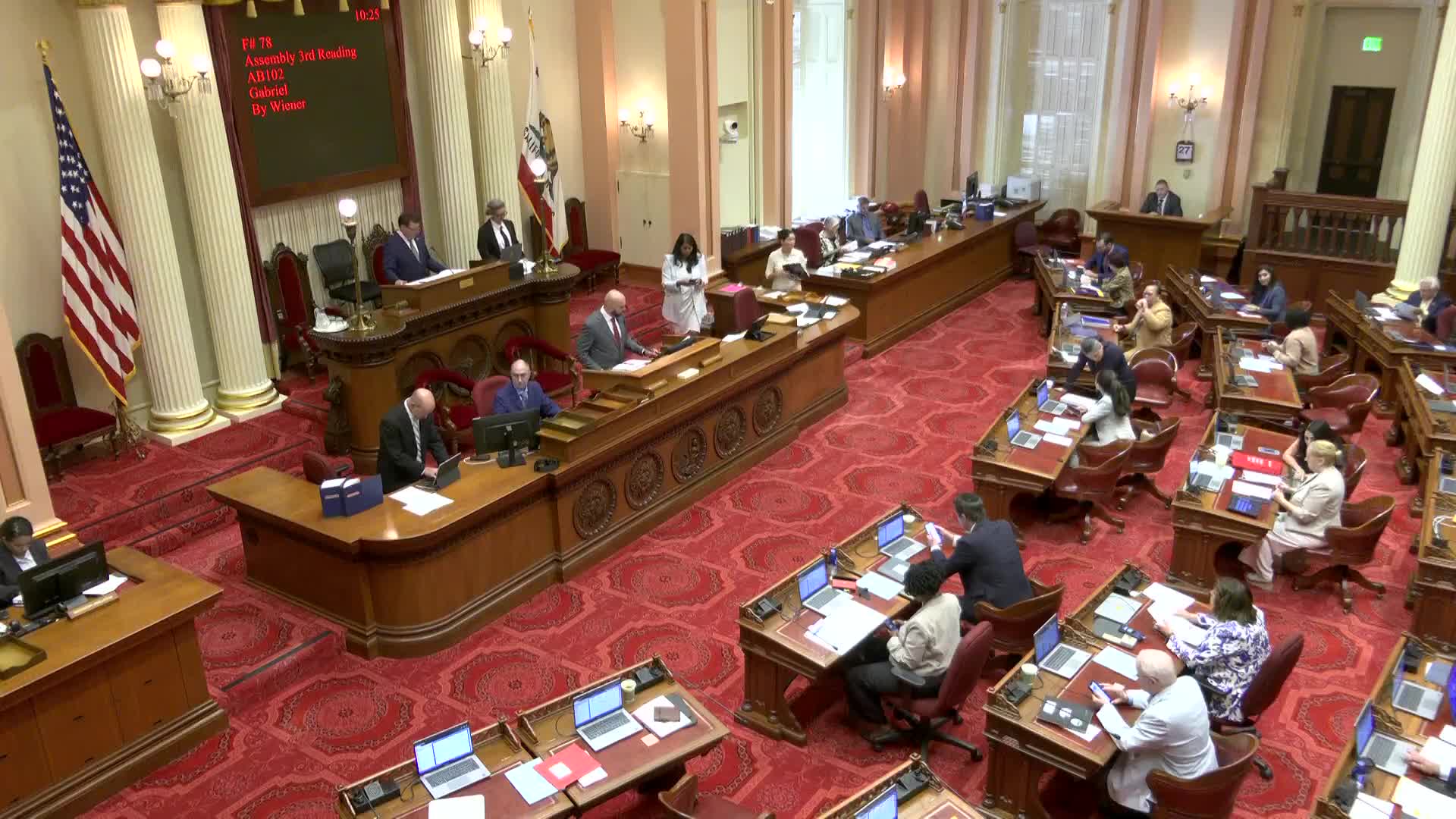
California Senate approves 2025 budget package after heated floor debate
Summary
The California Senate approved the fiscal 2024–25 budget package (AB 102) after hours of floor debate over process, reserves and program funding. The bill passed after roll call 29–8.
The California State Senate voted to approve the Legislature’s 2024–25 budget package, passing Assembly Bill 102 on a 29–8 roll call after several hours of debate Friday.
The bill, described on the floor as the final budget agreement between the Legislature and the governor, was presented by Senator Wiener. Wiener said the package “is balanced for the fiscal year,” and outlined its scale: roughly $321.1 billion in total spending, including about $228.4 billion from the General Fund. He said the plan preserves education funding, invests in affordable housing and homelessness programs, supports wildfire recovery in Los Angeles, and preserves access to long-term care services.
Senate opponents pressed two lines of criticism: process and substance. Senator Nilo — who led several objections on procedural grounds during the session — said the format and timing deprived many members of adequate subcommittee review and transparency. “This is the worst experience that I've had relative to navigating the frustrations of the lack of transparency and the lack of the transparency of the process itself,” Nilo said, urging a no vote.
Republican critics focused on spending levels and priorities. Senator Strickland said the state has an ‘‘addiction to spending’’ and argued the budget does not address structural spending growth; he urged a no vote and cited concerns about long-term deficits. Other members faulted the package for not fully funding implementation of Proposition 36 and for particular policy choices placed inside the budget rather than separate trailer bills.
Supporters emphasized tradeoffs forced by a tighter revenue outlook and by federal actions. Senate President pro Tempore Maguire and other supporters highlighted new investments in housing and education and argued the package protects vital services without new taxes on families and small businesses. Senator Laird disputed claims that California is losing population and stressed the larger context of the last decade of budget reforms and newly built reserves.
Members on both sides pointed to particular line items that drew cross‑aisle interest. Wiener and other proponents cited targeted allocations including $500 million for low‑income housing tax credits, $300 million for a down‑payment assistance program called California Dream for All, $120 million for the multifamily housing program, $100 million for encampment resolution, and $500 million for Homeless Housing, Assistance and Prevention (HHAP) support for local jurisdictions. The budget also appropriates $1 billion from greenhouse gas reduction funds for Cal Fire operations and funds to transition seasonal firefighters to permanent positions.
On criminal justice and behavioral health, the budget includes $100 million for initial implementation of Proposition 36; supporters including the chair of the Public Safety Committee stressed that the allocation was an initial investment and that full implementation will be phased in over multiple years and require continued state–local collaboration.
Senators raised narrower concerns on the record. Senator Padilla asked that language be corrected in print to ensure two public hospitals in his district were included in a loan relief provision; he said he expected the omission to be corrected in subsequent fiscal documents. Senator Richardson and others pressed for clarity about funding to support wildfire recovery, firefighters’ transitions to permanent status, and community resilience grants.
After the close of debate, the secretary called the roll. The final vote on AB 102 was 29 ayes and 8 noes; the Senate announced the bill passed.
The Senate also moved to consider and pass multiple budget trailer bills and related measures on the floor during the same session; those items were handled separately on the record.
What changed (nut graf): The Senate approved a balanced budget package that protects education and funds housing, homelessness, fire response and selected public safety and social services priorities, but several members registered strong objections over process and the scale of ongoing spending. The measure advances to the next step of the budget enactment process after the Senate’s vote.
Ending: The Senate indicated it will return to additional budget-related votes on Monday, June 30, and members and budget staff said trailer bills and technical fixes will continue to be refined as the Legislature finalizes enactment documents.