Get Full Government Meeting Transcripts, Videos, & Alerts Forever!
Get email alerts on the Public Health Tobacco Vape topic
No spam. Unsubscribe anytime.
Board refers county resolution urging state to raise legal purchase age for tobacco, vape and certain cannabinoids to 21
Summary
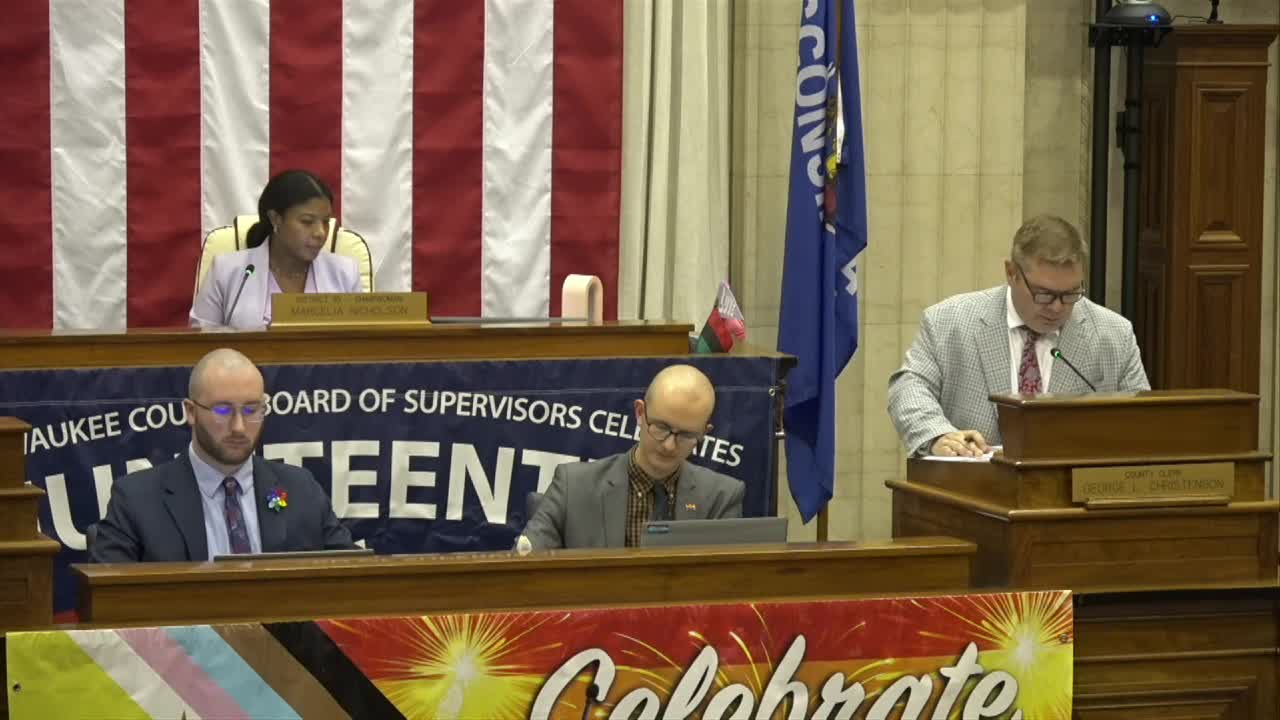
The Milwaukee County Board on June 26 voted to send a resolution urging state legislators to set a minimum purchase age of 21 for tobacco products, vapes, marijuana products and related paraphernalia back to the Intergovernmental Relations Committee for further work and coordination with the city and stakeholders.
Milwaukee County supervisors voted on June 26 to refer a resolution urging state lawmakers to enact legislation that would set a minimum age of 21 to purchase tobacco products, vaping products, marijuana (including Delta‑9 products) and related paraphernalia back to the Intergovernmental Relations Committee for additional work.
Supervisor Sheila Vincent introduced the resolution and described neighborhood concerns about vape shops located near schools. Several supervisors expressed support for the resolution’s public‑health goals but raised concerns about criminalizing young adults between 18 and 21 and about how enforcement would be structured at the county level. Supervisor Mark Martinez said he would vote against the measure as drafted, citing concerns about criminalizing 18‑ to 21‑year‑olds.
Supervisor Evan Rowland moved to refer the matter back to the Intergovernmental Relations Committee for further work. The clerk recorded the referral vote at 16 ayes, 0 noes; the item will return to committee for possible amendment, stakeholder consultation and coordination with the City of Milwaukee effort referenced during the floor discussion.
The transcript records no changes to state law — the board’s resolution is a formal request to state lawmakers and does not itself change any statute. Members of the board signaled interest in pursuing retailer‑focused enforcement language and in examining restorative or noncriminal enforcement approaches during the committee process.