Get Full Government Meeting Transcripts, Videos, & Alerts Forever!
Get email alerts on the Education Funding topic
No spam. Unsubscribe anytime.
District officials and state lawmaker say governor’s veto clouds education funding; district built budget conservatively
Summary
Business manager Daniel Schuler and State Representative Bynum briefed the board on June 25 about the governor's line-item vetoes affecting education funding, transportation increases in HB57 and uncertainty about how DEED will allocate funds under the vetoed appropriation.
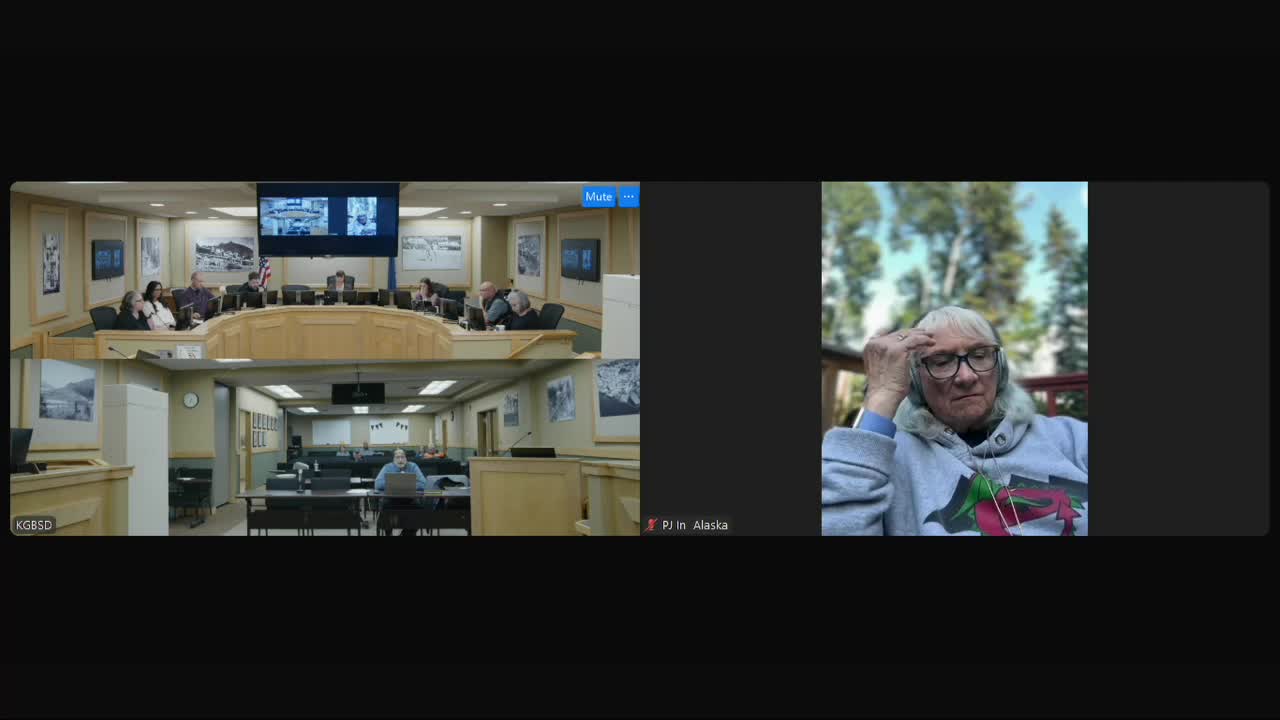
District business manager Mr. Schuler and state Representative Bynum updated the Ketchikan Gateway Borough School District Board of Education on June 25 about pending state-level funding changes and the local budget outlook.
Mr. Schuler told the board that Governor Dunleavy’s line-item veto reduced the legislature’s increase in the Base Student Allocation (BSA) and that the district had prepared the FY2026 budget using a $6,80-based assumption and deliberately held back roughly $750,000 of the expected outside-the-cap revenue when planning the budget. "What the net reduction is for us worked out to be about $500,000 and reduced our surplus that we're projecting to somewhere in the neighborhood of 6 and a half," Mr. Schuler said, later clarifying the district's projected surplus from operations was about $665,000 at that time.
Representative Bynum, joining by Zoom, described the legislative process this session, including bills that sought larger BSA increases and the path that led to HB57 (an omnibus education package that included a $700 BSA increase and policy items). He said the governor vetoed appropriations connected to education and that "the specific impacts of the governor's veto on the school districts remains unknown at this time," adding his office was seeking clarity from the Department of Education and Early Development (DEED), legislative legal, and legislative finance.
Bynum summarized other outcomes of the session relevant to the district: an increase to transportation funding formulas (he said HB57 included about a 10% increase in transportation funding), ongoing work on the REEDS Act, passage of HB75 (amending PFD eligibility rules for certain maritime and college students), and that Secure Rural Schools reauthorization remained in motion in Congress and could affect local district funding if enacted.
Mr. Schuler also briefed the board about a DEED emergency regulation that would change the definition of local contributions; he said the proposed change could bring services provided by the borough — such as fire-district services and recreation facilities — into the local-contribution cap calculation and estimated that reported services could amount to roughly $180,000 for the district if included. DEED has opened a 30-day comment period on that regulation and staff and advocates have requested data and analysis from DEED on retroactive impacts.
On enrollment, Mr. Schuler reported that the district’s OASIS certified count was 1,955; the district’s live count at the time of the board update was 1,923, down 32 from the certified OASIS count. Rep. Bynum and Mr. Schuler advised the board to plan conservatively for a possible $200 BSA-equivalent reduction and to expect further guidance in the coming months.
Board members asked questions about timing, possible veto overrides, and the mechanics of how DEED will distribute funds under the revised appropriation. Representative Bynum said a veto override would likely require a large majority and could take place only in a later session unless leaders call a special session.