Get Full Government Meeting Transcripts, Videos, & Alerts Forever!
Get email alerts on the Courts Truancy topic
No spam. Unsubscribe anytime.
Justice of the Peace Riley raises backlog and furniture problems, seeks staff support for rising truancy caseload
Summary
JP Judge Riley told commissioners her court’s case-conversion issues have left thousands of dismissed cases showing as pending in the system, she requested funding to replace worn furniture (estimated $42,000–$45,000), and she described a significant increase in truancy and parent-contributing caseloads.
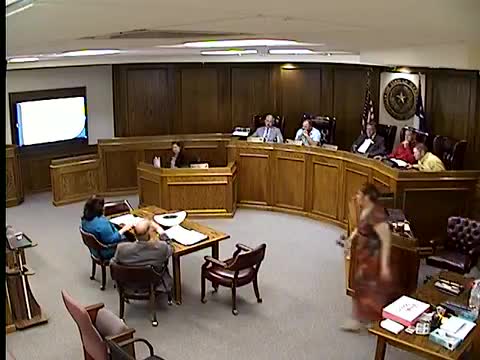
Justice of the Peace Judge Riley discussed operational issues and budget requests for her JP court at the June 26 Lubbock County work session, telling commissioners that an Odyssey/Tyler conversion left many dismissed cases still showing as open and that the court needs ergonomic furniture and additional administrative support to handle rising truancy filings.
Riley said large volumes of legacy misdemeanor and civil-ticket records carried forward at conversion and that county staff and vendor contacts advised a correction should be feasible. “I had close to 30,000 cases that were still out there,” Riley said of the pre-conversion backlog she inherited, and she told the court that roughly 11,000 cases still show as pending despite having been dismissed in earlier processing.
Riley asked the court to prioritize two operational items: replacing worn public-counter and clerk workstation furniture and addressing rising truancy and parent-contributing caseloads. She presented a vendor estimate her office had requested and said a complete workstation replacement would run about $42,000–$45,000; she asked the court to consider that allocation for FY26. Her presentation also described heavy truancy volumes after the court took on more school filings during the year; Riley said participation and filings for parent-contributing-to-nonattendance cases increased substantially as several schools began filing with her court.
On staffing, Riley said she had budgeted a part-time clerk previously but did not hire that position and proposed reallocating available funds for furniture in the near term. She also asked the court to consider a path for increasing the pay of her clerk, arguing workload justifies a modest raise. Separately, Riley mentioned that some jurisdictions have awarded judges handling large truancy dockets modest supplements and said she may pursue the formal grievance or statutory process for adjusting elected-official pay if the court does not provide relief.
No vote or final decision occurred; commissioners agreed to discuss funding reallocation and review the furniture estimate and the status of the part-time position during later budget deliberations.
—Reporters’ note: case-count figures and the furniture estimate are drawn from Judge Riley’s presentation to the court and her discussion with county IT and facilities.