Get Full Government Meeting Transcripts, Videos, & Alerts Forever!
Utah Court of Appeals hears arguments in State v. Gilling over expert statistics, late alibi notice and ineffective-assistance claims
Summary
The Utah Court of Appeals heard oral argument in State v. Gilling on April 18, 2023, focusing on whether a prosecution expert improperly offered anecdotal statistical evidence about false allegations, whether the district court abused its discretion in excluding late alibi witnesses rather than granting a continuance, and whether defense counsel’s handling of the alibi notice amounted to ineffective assistance.
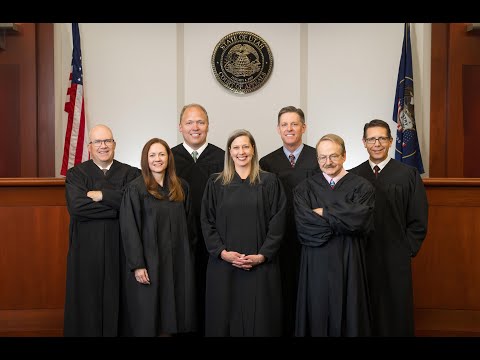
The Utah Court of Appeals heard argument in State v. Gilling on April 18, 2023, as a three‑judge panel chaired by Judge Oliver considered whether (1) a state's expert improperly offered anecdotal statistical evidence about false allegations, (2) a district court abused its discretion by excluding late alibi witnesses rather than granting a continuance, and (3) defense counsel provided ineffective assistance by the timing and handling of the alibi notice. Defense attorney Hannah Levitt Howe argued for Mister Gilling; Daniel Boyer argued for the state. Judges Oliver, Orme and Tenney directed questioning throughout the hour‑plus argument.
Defense counsel opened by saying “Mister Gilling possessed 3 issues on appeal,” and focused first on the admissibility of the prosecution’s expert testimony. Levitt Howe told the court the expert’s testimony amounted to “impermissible anecdotal statistical evidence,” and that the state had no answer except to argue the defense either invited the error or opened the door. She argued the record shows defense counsel repeatedly objected and that the district court had already ruled on the evidentiary question before any suggestion of invitation could be made. Levitt Howe further emphasized that the prosecutor’s closing argument relied on the expert’s clinical recollection — which she quoted as, in part, “in his 14 years as a clinician, that roughly 2 to 4 of them” — and that the prosecution’s framing converted those anecdotal comments into a numeric claim (the state’s counsel had argued the count equated…
Already have an account? Log in
Subscribe to keep reading
Unlock the rest of this article — and every article on Citizen Portal.
- Unlimited articles
- AI-powered breakdowns of topics, speakers, decisions, and budgets
- Instant alerts when your location has a new meeting
- Follow topics and more locations
- 1,000 AI Insights / month, plus AI Chat