Get Full Government Meeting Transcripts, Videos, & Alerts Forever!
Get email alerts on the Criminal Appeal Evidence And Procedure topic
No spam. Unsubscribe anytime.
Utah Court of Appeals hears arguments in State v. Gilling over expert statistics, late alibi notice and ineffective-assistance claims
Summary
The Utah Court of Appeals heard oral argument in State v. Gilling on April 18, 2023, focusing on whether a prosecution expert improperly offered anecdotal statistical evidence about false allegations, whether the district court abused its discretion in excluding late alibi witnesses rather than granting a continuance, and whether defense counsel’s handling of the alibi notice amounted to ineffective assistance.
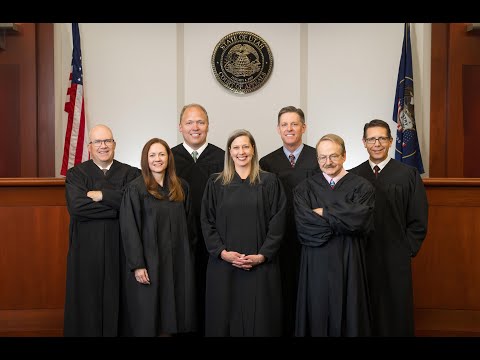
The Utah Court of Appeals heard argument in State v. Gilling on April 18, 2023, as a three‑judge panel chaired by Judge Oliver considered whether (1) a state's expert improperly offered anecdotal statistical evidence about false allegations, (2) a district court abused its discretion by excluding late alibi witnesses rather than granting a continuance, and (3) defense counsel provided ineffective assistance by the timing and handling of the alibi notice. Defense attorney Hannah Levitt Howe argued for Mister Gilling; Daniel Boyer argued for the state. Judges Oliver, Orme and Tenney directed questioning throughout the hour‑plus argument.
Defense counsel opened by saying “Mister Gilling possessed 3 issues on appeal,” and focused first on the admissibility of the prosecution’s expert testimony. Levitt Howe told the court the expert’s testimony amounted to “impermissible anecdotal statistical evidence,” and that the state had no answer except to argue the defense either invited the error or opened the door. She argued the record shows defense counsel repeatedly objected and that the district court had already ruled on the evidentiary question before any suggestion of invitation could be made. Levitt Howe further emphasized that the prosecutor’s closing argument relied on the expert’s clinical recollection — which she quoted as, in part, “in his 14 years as a clinician, that roughly 2 to 4 of them” — and that the prosecution’s framing converted those anecdotal comments into a numeric claim (the state’s counsel had argued the count equated to “less than 1%”). Levitt Howe urged the appellate court to treat probabilistic statements about how often individuals lie as legally inappropriate tools to decide whether a particular allegation was true, citing the Utah Supreme Court’s observation in Rammell (as discussed in argument) that probabilities cannot conclusively establish whether a single event occurred.
The panel pressed defense counsel on standard of review and whether a district court’s finding that a party “opened the door” is reviewed for abuse of discretion. Levitt Howe said evidentiary rulings, including opening‑the‑door determinations, should be reviewed for abuse of discretion and that here the record did not support a finding that defense counsel effectively invited the testimony. The judges probed whether jurors would, absent numeric testimony from the state, simply do their own informal math and whether that possibility justified allowing a follow‑up numeric question from the prosecutor; Levitt Howe replied that allowing the state to offer a percentage (for example, “0.2%”) changes the role of the jury by offering a concrete probability that might improperly suggest the likelihood a specific event occurred.
On the second main issue, the parties debated the effect of the state’s allegedly late alibi notice and the district court’s decision to exclude the proposed alibi witnesses. The briefing and argument referenced a statutory 10‑day alibi‑notice requirement (the parties described the statute’s subsection 3 language that “the court may exclude the evidence offered” where notice is untimely). Levitt Howe said the alibi notice arrived late by roughly a day and a half (filed on Sunday when the 10‑day deadline would have fallen on Friday), listed multiple possible alibi witnesses (defense counsel described five or six names), and — she argued — the prosecution had said a short continuance would have been acceptable, so the court should not have excluded the witnesses. She told the panel that the district court’s denial of a continuance effectively penalized the defense’s ability to present a complete defense and that a continuance likely would have changed the outcome.
Daniel Boyer for the state responded that the statute assigns the burden to the defendant to show good cause to obtain a continuance; he said the alibi notice lacked adequate detail (several witnesses lacked addresses or specific whereabouts) and arrived late on a Sunday afternoon, leaving insufficient time to prepare cross‑examination and investigation. The prosecutor told the court the trial judge reasonably weighed the length of any continuance (the court was told it could be seven months) against the case’s two‑year pendency and the broader interests of victims and court scheduling. Boyer argued the district court’s choice to exclude rather than continue lay squarely within discretionary bounds.
The panel also devoted time to whether counsel’s alleged failure to timely and fully pursue the alibi notice raised a valid direct appeal claim of ineffective assistance of counsel (IAC). Levitt Howe argued that counsel had given an on‑the‑record reason for the late filing (confusion about the date requirement) and that the record therefore was not silent; she said the state’s insistence that the record is incomplete improperly invites speculation about counsel’s motives. The state urged the court to apply Strickland v. Washington principles and related Utah precedent, arguing that when an IAC claim turns on communications between client and counsel, the defendant must provide non‑speculative facts — typically by affidavit or a Rule 23B proffer — showing when and what the defendant told counsel. Boyer told the panel that without a clear factual proffer the record cannot sustain relief because courts must not engage in fishing expeditions about what conversations occurred.
Throughout argument the judges returned repeatedly to standards of review: whether a district court’s opening‑the‑door or exclusion decision was discretionary and thus reviewable only for abuse of discretion; what showing of prejudice would be required to find a continuance was necessary under Utah precedent (the court discussed State v. Peraza and the Peraza framework); and whether the presence or absence of a 23B proffer or affidavit meaningfully affects an IAC claim on direct appeal. Both advocates acknowledged recent Utah authority and conceded the appellate panel has decided several similar evidentiary and IAC issues in the past 18 months.
The Court took the case under advisement and said it would issue a written decision. No ruling was announced from the bench at the conclusion of argument.