Get Full Government Meeting Transcripts, Videos, & Alerts Forever!
Get email alerts on the Courts topic
No spam. Unsubscribe anytime.
Court administration seeks AV upgrades, staffing continuity and planning to handle bail-reform reporting
Summary
The court administration presented FY26 departmental budget items including courtroom audio-visual upgrades, increased interpreter and transcript costs, and recommended functional-analyst roles to preserve institutional knowledge as SB6 and SB9 expand reporting and magistrate duties.
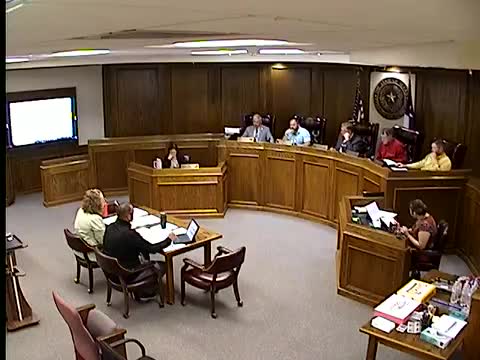
Dean Stanzione, director of Court Administration, and Sammy Smith briefed Lubbock County commissioners on court operations, technology upgrades and potential budget impacts from recent and pending state criminal-justice laws at the June 26 work session.
The presentation focused on three connected needs: courtroom audio-visual (AV) upgrades completed and planned to improve recordings and public access; rising costs for transcripts and interpreters; and new reporting, data and staffing burdens from state bail-reform measures that require additional magistrate and pretrial reporting.
Stanzione reviewed recent AV improvements in county courtrooms and said the county had replaced decades-old systems to ensure reliable recording and public access. He noted remaining work to ensure streaming and administrative-open-court compliance for hearings held in the detention center’s courtroom.
Smith outlined caseload and indigent-defense trends. He told commissioners that appointed-attorney and expert services have risen, particularly in complex felony and capital cases, and that the county’s regional public-defender (RPDO) and local public defender (LPDO) arrangements affect budget certainty: counties pay RPDO premiums as an insurance model but face large, one-off costs when RPDO conflicts occur. “Those two line items alone this year so far are sitting around $450,000,” Smith said, referring to professional services tied to capital and complex cases.
Both presenters warned that SB6 (prior bail-related reforms) and SB9 (pending, with phased effective dates) add new electronic-notice and reporting requirements and could require a designated county recipient for electronic notices and more magistrate documentation. Smith said the court team is still charting some SB9 deadlines and workflows but flagged additional staff time and technical needs as likely budget impacts.
To reduce single-point knowledge loss and speed system changes, Stanzione and Smith recommended building functional-analyst capacity — staff embedded in departments who understand workflow end to end and can work with IT on Odyssey/Tyler and associated court systems. They argued that the county’s ongoing Odyssey/Tyler work depends on local subject-matter expertise and that grant-funded or ongoing projects should preserve cross-functional knowledge.
Stanzione and Smith also asked the court to note rising fixed costs: interpreter fees and transcript costs have trended upward and can spike for multi-day trials or when multiple language or sign-language interpreters are required. They recommended keeping close oversight of claims, transcript and contracted services budgets.
No formal action was taken; presenters asked the court to consider AV follow-ups, staffing prioritization for functional analysts, and budgeting for increased interpreter and transcript costs when drafting the FY26 budget.
—Reporters’ note: discussion referenced SB6 and SB9 by name and identified several one-time and recurring costs in court operations and indigent-defense spending.