Get Full Government Meeting Transcripts, Videos, & Alerts Forever!
Get email alerts on the Pid And Parkland topic
No spam. Unsubscribe anytime.
Residents press city over Tesara PID, park ownership and misleading marketing; city and counsel outline limited legal options
Summary
Tesara residents told the Lago Vista City Council they felt misled by developer marketing and buyer disclosures after learning some amenities they thought were private are in public ownership or under disputed maintenance arrangements.
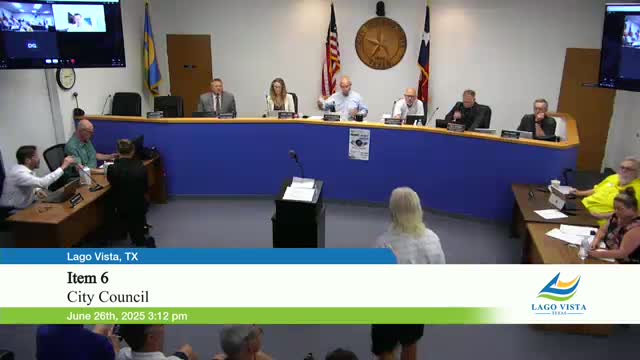
About two dozen Tesara homeowners pressed the Lago Vista City Council on Tuesday over disputed park ownership, alleged misleading marketing by developers and whether private fees are properly funding public amenities.
Speakers from Tesara described examples in which promotional materials and buyer disclosures said amenities were exclusive or otherwise different from the current state, raising complaints that homeowners paid PID (public improvement district) assessments and HOA dues expecting private or exclusive amenities but found public access, deferred maintenance or disputed ownership.
City attorney Brad Bullock and bond counsel Bart Fowler told the council that many of the issues plaintiffs raised are legal and factual questions that will require document review. Bullock said the PID Act treats improvements and assessed benefits holistically, covering roads, drainage, water/wastewater, and public amenities together. Courts generally evaluate the “special benefit” as an overall enhancement; he said there is no Texas case law he could identify that allows a court to separate out a single amenity (for example a pool or playground) from the total PID benefit and require a refund on that basis.
Bullock and Fowler said: (a) the PID Act and related precedent are complex and require review of the precise statutes in effect when the PID and related documents were adopted; (b) bond documents issued in 2020 may be callable only after the 2030 call date, so paying the PID debt earlier to disentangle ownership would be legally possible in theory but practically constrained by bond and tax rules; and (c) correcting deeds and commemorating the property transfers will require pulling old minutes and recorded deeds to determine whether scrivener’s errors exist and what legal instruments would be needed to fix them.
Bond counsel Fowler told the council that one route would be for residents or the HOA to prepay assessments to retire debt associated with specific amenities, but he cautioned there are federal tax-law complications and that even a successful prepayment would not change municipal parkland rules: if a parcel was dedicated as public parkland, state law generally requires a vote of the full electorate to change that designation.
City staff, Bullock and Fowler identified the practical next steps: gather the original 2019–2020 transaction documents, deeds and minutes; confirm exactly which parcel(s) were intended for dedication; determine what deeds were executed; and, if errors exist, bring parties together (developer, administrator, city) to agree on corrective documentation. The city manager said he had requested such follow‑up and expected the involved parties (city attorney, developer representatives and bond counsel) to meet to reconcile the paperwork.
Andrea Barnes, representing p3 Works (the current PID administrator), told the council that assessment schedules and annual service & assessment plan (SAP) updates are public documents and that the administrator posts many details online and provides payment quotes upon request. She said different lot types in the development carry different assessment amounts, and she reminded residents that PID assessments typically appear on the Travis County property tax bill and may be looked up there.
Homeowner representatives asked the council to (a) demand clearer marketing and buyer disclosures, (b) require the developer to remediate misleading collateral that suggested exclusive amenities, and (c) consider whether the city could use its authority or leverage to expedite documentation corrections. Councilors said the city could post clear notices of what amenities are city‑owned versus privately maintained, help residents access public PID financial documents, and continue to convene developer and legal counsel to resolve deed and resolution inconsistencies.
Ending: City counsel and bond counsel will review the 2019–2020 documents and the city manager said he will arrange a meeting between city attorneys, developer representatives and counsel to identify corrective deeds or instruments required; any change to dedicated parkland would still require voter approval.