Berrien County officials seek funding to expand mobile access to computer-aided dispatch for police, fire and EMS
Loading...
Summary
County staff presented a proposal to give 50 local agencies mobile access to the county's Computer-Aided Dispatch system, citing officer and responder safety, with year‑one costs and a requested county assistance figure. A resolution and memoranda of understanding will go to the Admin Committee for review.
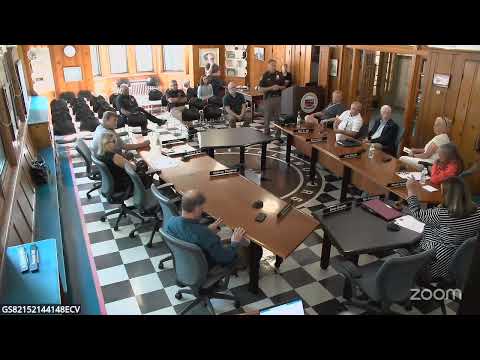
County staff on the Berrien County Admin Committee presented a plan to expand countywide access to the county's Computer-Aided Dispatch (CAD) system so law enforcement, fire and EMS can view unit locations, call narratives and alerts from mobile devices.
Caitlin, county emergency-services staff and project presenter, told commissioners the primary motivation is safety: "Ultimately, the most driving factor of this is safety." She said the rollout would include mobile tablets for fire and EMS and mobile-data terminals for law enforcement, with mapping, geofencing and secure messaging features that show unit locations and provide pop-up "be on the lookout" notifications.
The proposal would connect roughly 50 local agencies to the county CAD system — about 20 law-enforcement agencies and 30 fire/EMS agencies — and would require agreements and cost-sharing. The presenters said law enforcement connections must meet Criminal Justice Information Services (CJIS) security requirements and need a secure VPN to connect to the county CAD servers. "We have to make sure that that connection is reliable, robust, and and secure," County IT staff member Chris added.
Why it matters: Project proponents said shared CAD access reduces radio congestion, keeps sensitive information off open radio channels, helps responders see who is en route and where colleagues are at a glance, and can speed response during critical incidents. Undersheriff [title used in transcript] said in some incidents "seconds count," and described a case where timely CAD information aided an arrest.
Costs, funding and agreements
Presenters provided several figures during the discussion. They said the county already has budgeted a $3,000 annual mobility hosting fee. They gave year‑one cost estimates for the vendor and implementation: "the year 1 total estimate is just over 503,000" for the law-enforcement side and about "996,400" for fire and EMS in year one, according to the presentation. Separately, they said the total project assistance the agencies were seeking from the county was $596,650 (as presented). The presenters did not identify which portions of the larger year‑one totals the county would be expected to cover beyond the stated assistance request.
Caitlin and Chris said ongoing maintenance fees would be the agencies' responsibility after year one. The presenters described a user-based formula to divide costs in an MOU: law enforcement would be billed by number of users accessing the system; fire costs would be apportioned by apparatus (how many vehicles access the system). The presenters said the county's IT staff would have additional personnel responsibilities for setup, updates and support.
Next steps and funding timeline
Staff said there is not a currently identified grant that fully covers the project but that the state Public Safety Trust Fund — if created and funded by the Legislature — would be an appropriate source. Caitlin and Chris said they have met with multiple state legislators to make the case for the project. They said a realistic target, if funding can be obtained, would be implementation within about six months but emphasized the timeline depends on where funding comes from.
Administrative process
The presenters said a resolution in support of the project and draft MOUs for participating agencies will be routed to the Admin Committee for discussion and counsel review. No formal vote was recorded during the presentation; staff said the draft MOU will be reviewed by corporate counsel and the item will return for formal committee consideration.
What proponents and officials asked
Commissioners asked about agency participation (staff said agencies must sign the MOU to participate), cross-border interoperability (staff said there is currently no CAD-to-CAD link with neighboring counties or Indiana; radio remains the backbone for cross-jurisdiction calls), officer distraction and practical use while driving, and who would pay if a municipality chooses not to participate. Presenters and chiefs said the mobile CAD is used routinely in other counties and that training and rules would apply; they stressed officers are trained to reduce distraction and that the system also supports tracking officers when they leave vehicles.
The presentation described technical protections, including secure messaging and the ability to attach files and photos to CAD records. Presenters said agencies commonly use other mapping tools (e.g., consumer mapping) that can misroute responders; moving all responders to the county's authoritative maps should reduce those problems.
Ending
County staff asked the committee to refer the resolution and MOUs for review; staff said additional details about long-term staffing and the precise county share of costs will be addressed in the Admin Committee review. The project proponents emphasized the safety benefits and said they would continue to pursue state funding through the Public Safety Trust Fund and other avenues.