Get Full Government Meeting Transcripts, Videos, & Alerts Forever!
Get email alerts on the Urban Forestry topic
No spam. Unsubscribe anytime.
Residents press council to expand tree planting and heat‑island measures
Summary
Multiple residents, academics and environmental advocates urged the City Council to accelerate tree planting, fund a public-facing plan for reforestation and address Bakersfield’s urban heat‑island effects; speakers cited scientific studies and recent local tree losses.
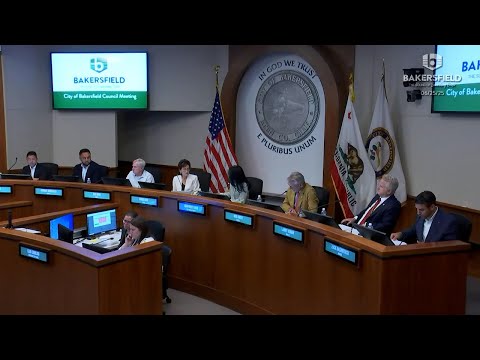
Residents, academics and local environmental advocates urged the Bakersfield City Council on June 25 to accelerate tree planting, expand tree preservation and adopt stronger measures to reduce the urban heat‑island effect.
Antje Lauer, a biology professor at California State University, Bakersfield, praised the city’s tree advisory group and distributed scientific reviews she said would help secure grant funding. “A green city promotes mental health and also physical health,” Lauer told the council, and she highlighted a recent National Oceanic and Atmospheric Administration climate summary showing more extremely hot days.
Several residents described loss of mature street trees and urged more aggressive replacement and maintenance. Sharon Brielle said three liquid‑amber and two valley‑oak trees on Scarlet Oak Boulevard — each about 40 years old — died from inadequate drought protection and estimated, using tree‑appraisal standards, the combined loss at roughly $60,000 to $100,000. “Letting 40‑year‑old trees die is not good stewardship,” she said.
Eddie Lane of the Sierra Club and others said progress has been made — including recent plantings at Truxtun Lakes — but they called for a publicly visible commitment to replace lost canopy, especially in neighborhoods with fewer trees. City staff and Recreation and Parks Director Darren Budak participated in the presentations; Budak and the council noted the parks department has begun a tree inventory.
Vice Mayor Coore thanked speakers and said the city’s tree and heat‑island work will continue; he noted planting a tree can reduce temperature directly beneath it by as much as 15 degrees, citing examples from other cities and a Louisville study referenced by speakers.
Councilmembers signaled support for continuing the tree‑plan work and for community‑level outreach. Staffers were asked to continue inventory work and to consider including the scientific reviews and grant language presented by community members when applying for funding.